


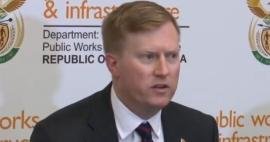
Minister for Public Works and Infrastructure Dean McPherson hailed this week’s National Building Summit as a “historic” milestone, saying it reaffirmed the government’s commitment to rebuilding South Africa’s construction industry through regulatory reform, improved project delivery and increased accountability.
The 2025 Summit, currently being held in Boksburg, is hosted by the Construction Industry Development Board (cidb) in collaboration with the Department of Public Works and Infrastructure (DPWI).
Themed “Enabling Infrastructure: Improving Construction Industry Performance,” the summit will bring together leaders from government, business, labor and civil society to plan ways to improve infrastructure efficiency and industry performance.
Mr McPherson told the media on Thursday that the summit provided an important platform for the public and private sectors to assess progress, identify needed changes and accelerate infrastructure development.
He reiterated that the government remains focused on delivering infrastructure “faster, smarter and more affordable” under the Construction Action Plan, strengthening new measures such as strengthening the social facilitation framework.
Mr Macpherson welcomed new labor market data showing the construction sector accounted for more than half of the new jobs created in the third quarter, demonstrating the sector’s strong potential to drive economic growth and reduce unemployment.
“The latest Quarterly Labor Force Survey confirms what we are seeing on the ground: 130,000 new jobs were created in construction in the third quarter of this year, representing more than 50% of all new jobs in the economy over the same period.”
“Since our first summit in Durban last year, when we committed to addressing the shutdown of construction sites to reinvigorate the industry, we are starting to see green shoots of growth starting to take root,” the minister said.
The Minister also reported that significant progress had been made in tackling disruption and extortion at construction sites, commonly referred to as the construction mafia.
“Since the Durban Declaration was signed last year, more than 770 cases of construction-related extortion and intimidation have been reported, resulting in 241 arrests and 176 convictions. In KwaZulu-Natal, disturbances have decreased from more than 60 incidents per month to less than 10, demonstrating the effectiveness of coordinated action by law enforcement, businesses and public bodies,” Mr MacPherson said.
CIDB Chairman Kurile Nzo has announced that 40 contractors have been deregistered for allegedly colluding with some CIDB employees to obtain inflated ratings.
“There are too many unfinished projects. Unfortunately, contractors are colluding with cidb individuals to receive assessments that do not reflect their true capabilities. We need to be rigorous,” Nzo said.
Enhanced infrastructure delivery
On Friday, the final day of the summit, Deputy Minister of Public Works and Infrastructure Sihle Zikalala reaffirmed the government’s commitment to reforming the construction sector, eradicating corruption and ensuring timely payments to contractors.
The Deputy Minister highlighted the government’s major initiatives aimed at strengthening infrastructure development, including:
• Restructure the Infrastructure Budgeting Institution (BFI) to operate four bid slots per year.
• Issuance of a R15-billion infrastructure bond to provide affordable and dedicated financing for projects.
• Establish an Infrastructure Finance and Implementation Support Agency by March 2026 to support project preparation and implementation.
• Introduction of guidelines on unsolicited bidding to facilitate project implementation.
“These measures reflect the government’s commitment to strengthening performance, accountability and inclusive growth in South Africa’s construction sector,” Zikalala said.
DPWI Director-General Sifiso Mdakwe stressed that a high-performing construction industry ensures that projects are completed on time, on budget and in accordance with specifications, and that all those involved in projects operate in a safe environment and with dignity.
“As South Africa grapples with challenges related to urbanization, climate change, technological advancement, economic growth and economic transformation, there is an increasing need for an independent body to oversee and coordinate engineering activities and infrastructure development.
“The Engineers General (EG) is envisaged to provide the necessary leadership to close regulatory gaps, ensure compliance with engineering standards and oversee large-scale engineering projects that are essential to South Africa’s economic growth,” Mudakan said. – SAnews.gov.za
