


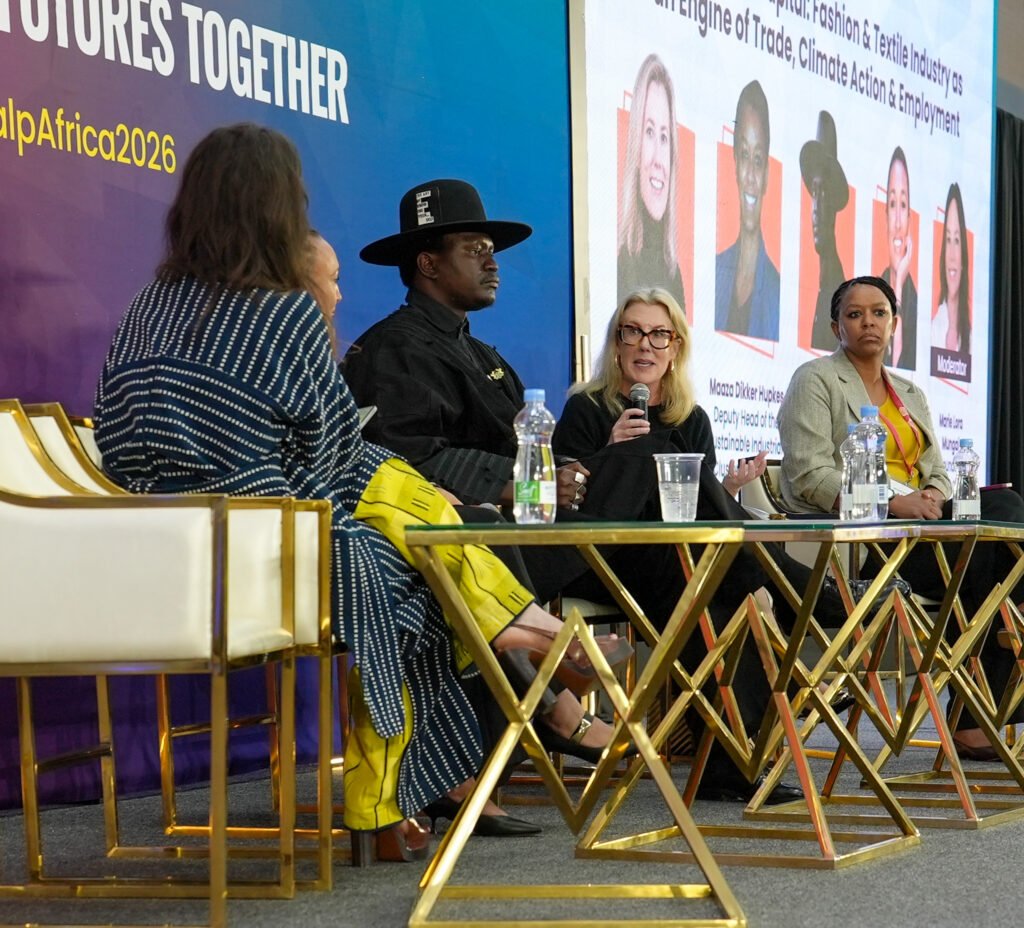
At the Sankalp Africa Summit 2026 held recently in Nairobi, one message cut through the usual startup buzz. Africa’s fashion and textile sector is no longer just about creativity and culture, but about capital, competitiveness and climate-smart growth.
For years, conversations about African fashion have centered on vibrant designers, rich fabrics, and global runway moments. But beneath that creative energy lies a vastly undervalued industrial opportunity that development and retail investors are beginning to take seriously.
Sectors with strong fundamentals
In Kenya alone, the textile and apparel industry generates an estimated annual export value of US$450 million and directly employs tens of thousands of workers, including more than 65,000 in businesses operating under the African Growth and Opportunity Act (AGOA). The broader apparel market across East Africa is valued at approximately US$14 billion, underpinning the region’s growing consumption and production base.
Beyond Kenya, fashion and textiles support the livelihoods of millions across the Global South. The sector supports the manufacturing ecosystem, drives export earnings and provides an accessible entry point for micro, small and medium enterprises (MSMEs), especially those led by women and youth.
It is also at the center of the climate change debate. From sustainable cotton sourcing to circular production models and waste reduction, this industry can either contribute to greater environmental damage or become a platform for greener industrialization. Global buyers are increasingly demanding the latter.
The real constraint: the “lost middle”
Despite demand, talent and market access, African fashion manufacturers often struggle to scale up. Gap is not creativity. It’s capital.
Small and medium-sized creative manufacturers often find themselves stuck in what investors call the “missing middle.” They are too large for microfinance, too small or informal for commercial banks, and often lack the structured financial records and compliance standards needed for institutional investing.
Without patient growth capital, fit-for-purpose financial products and effective policy frameworks, many promising companies will plateau before they can integrate into global value chains.
IFC’s efforts to build an investable pipeline
The International Finance Corporation (IFC) is betting that this gap is an opportunity.
Through the SME Fashion Program, IFC has been piloting support for fashion and design companies in West and North Africa, including Ghana, Senegal, Nigeria, and Morocco, combining advisory services with pathways to private investment. Initial results show that participating companies have the potential to achieve 3-5x revenue growth, along with significant job creation, particularly for women and young people.
The next phase aims to extend support to 30 high-potential African SMEs, with a focus on investment readiness, compliance with international standards, and operational upgrades to attract private capital.
The strategy is clear. It’s about turning creative makers into investable assets.
Why timing is important
Global supply chains are changing. Brands are diversifying their sourcing beyond traditional locations. At the same time, sustainability standards are becoming stricter. Countries and companies that can demonstrate reliable production, ethical labor practices, and climate-smart operations may reap disproportionate benefits.
For African governments seeking export diversification and industrial competitiveness, textiles offer a proven path. This sector offers investors a scalable manufacturing platform linked to both domestic consumption and international trade.
A common theme that emerged during Sankalp’s panel discussion, titled “From Craft to Capital – Fashion and Textiles as Drivers of Trade, Climate Action and Employment,” was “adjustment.”
Investors are looking for scalable, structured opportunities rather than one-off pilots. Policy makers increasingly recognize fashion and textiles as a strategic industry sector. When capital and policy signals align, entrepreneurs are poised to grow.
Convert momentum into action
This opportunity is no longer theoretical. What is required now is execution.
In other words:
Financial products tailored to the actual circumstances of creative manufacturing small and medium-sized enterprises. A policy environment that promotes regularization, sustainability and export competitiveness. Collaboration between founders, investors, and development partners to build a consistent deal pipeline.
Sectors once dismissed as informal or niche are becoming central to trade competitiveness and employment strategies across emerging markets. In Africa, fashion and textiles are proving that industrialization doesn’t have to start with heavy machinery. Industrialization can start with upgrading design studios, sewing floors, and supply chains to meet global standards.
Investment projects are hidden in plain sight.
The real question is not whether Africa’s fashion sector can expand. The key is how quickly capital, policy and execution can converge to accelerate what is already underway.
Mary Porter Peszka is IFC’s Director of East Africa, based in Nairobi, Kenya.
