


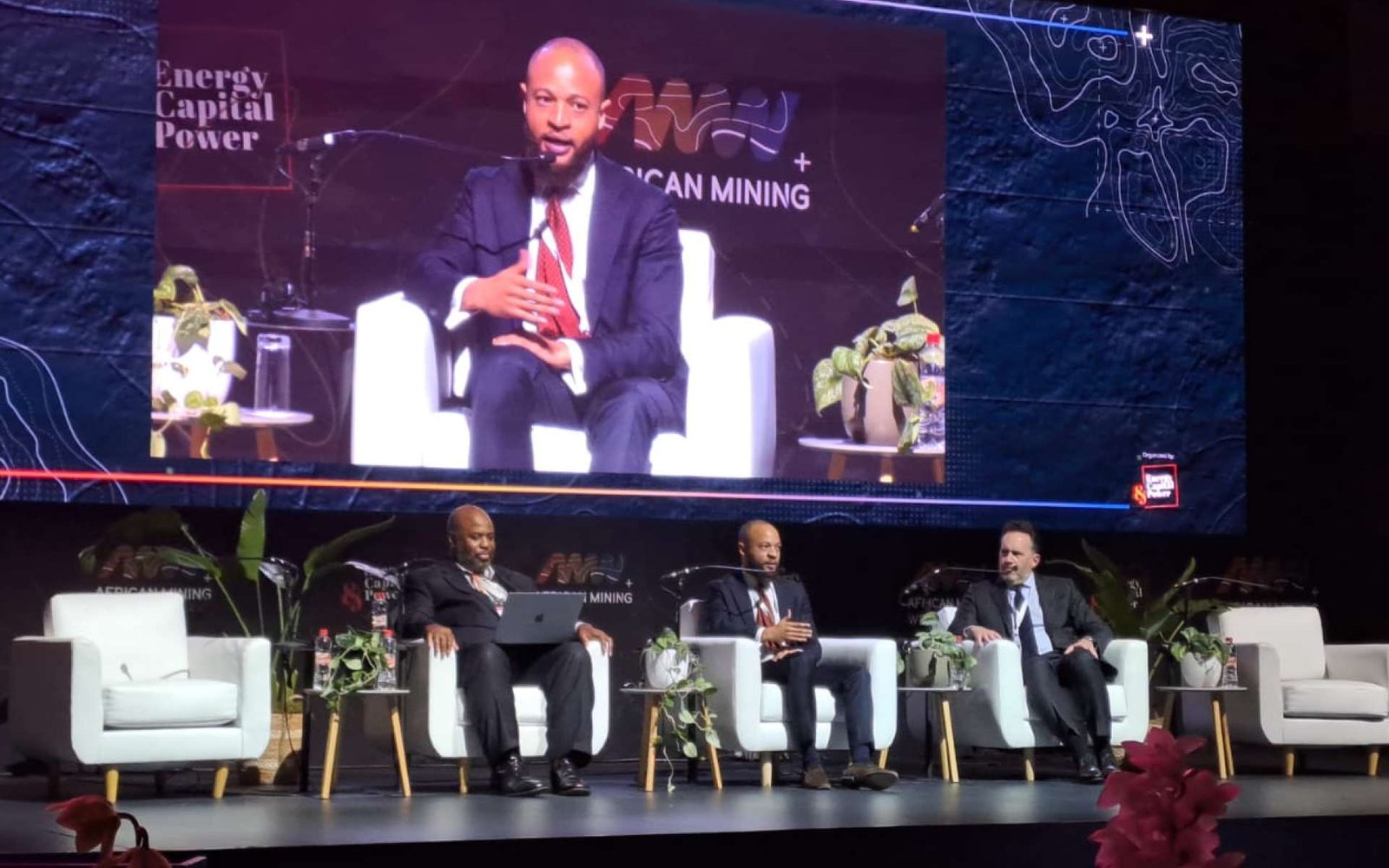
Opportunities for mergers, acquisitions and partnerships in Africa’s mining sector are growing, but ensuring long-term resilience for companies involved in these deals remains critical, a panel discussion on ‘Mergers, Acquisitions and Partnerships: Building Resilience in an Integrated Industry’ at Africa Mining Week 2025 emphasized.
Jude Kearney, managing partner at Africa-focused law firm ASAFO & Co., says that while consolidation often improves efficiency and profitability for host countries, it can also leave gaps if the acquired company’s activities are not taken over by the acquirer.
Zac Kauraisa, head of advisory at Namibian private equity firm Eos Capital, highlighted that one of the key drivers of mining M&A activity is the ability to unlock synergies through cost reduction and revenue optimization. In Africa’s high-risk jurisdictions, consolidation may also strengthen the firm’s footprint, contribute more to government tax revenues, create more employers, and give it a more important economic role in the host country.
He explained that this not only strengthens bargaining power but also gives the combined companies a stronger social license to operate and a greater ability to reinvest in the local economy.
David Loney, chief executive officer of US-based global law firm Sidley Austin, said a wave of consolidation across Africa’s mining sector could serve to improve the continent’s environmental, social and governance performance and social license standards, especially when larger companies acquire smaller businesses. “Securing a strong social license to operate remains one of the most effective risk mitigation strategies for mining companies,” he stressed.
Mr Roney pointed out that alongside a strong social license to operate, companies also need to put in place complementary legal safeguards. These include the protection of investment treaties, host government agreements containing stability clauses, and compliance with principles of international law. All of this will help mining companies navigate regulatory uncertainty and strengthen resiliency in cross-border transactions.
Mr. Ronnie further noted that recent geopolitical changes and new industrial policies have increased regulatory scrutiny of foreign investment flows. He explained that M&A transactions are increasingly being evaluated through this lens, making the approval process even more complex. “We expect similar developments in Africa given the continent’s significant mineral reserves,” he said, noting that this could create a more complex investment environment in Africa.
Kaulaissa highlighted tensions between governments and mining companies over local benefits in Africa. While increasing local jobs, investment, taxes, and capital expenditures are important goals for governments, the private sector is often deterred by the low returns on beneficial activities.
“Government participation in the financing infrastructure will make these efforts more viable and attractive to mining companies as governments increasingly seek to increase domestic benefits,” he explained.
