


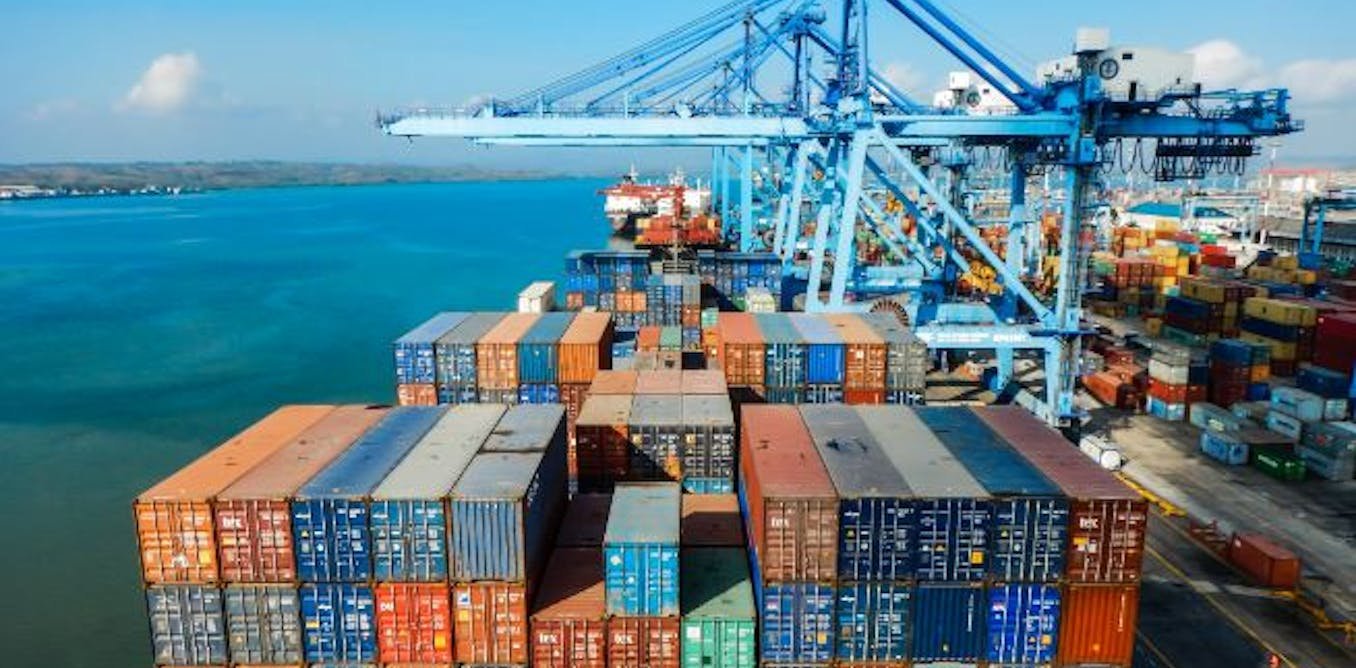
At a time when the global trading system is under attack, the African Union (AU) is celebrating the establishment of the African Continental Free Trade Area (AfCFTA), which entered into force on 30 May.
Following ratification by the required minimum of 22 countries, all member states of the AU now have a legal obligation to enable unrestricted trade in African products across the continent.
This is a great achievement. Not only does the AfCFTA cover the entire continent, it is progressing at a record pace. The agreement was signed on March 21, 2018. The agreement’s entry into force underscores the commitment of African leaders to pan-African economic integration, a goal as old as African independence in the 1960s.
Intra-regional trade in Africa has been minimal for many years, with intra-regional imports accounting for 13% and intra-regional exports accounting for 17% over the past seven years. Previous continental trade initiatives, such as the 1980 Lagos Plan of Action and the 1991 African Economic Community, have lagged far behind that ambition.
However, the practical impact of the Continental Free Trade Area will not be felt immediately. It takes a lot of effort to see visible results. Negotiations regarding tariffs, deadlines, and the location of the AfCFTA secretariat are still ongoing. And without effective public policy, trade liberalization risks negatively impacting many people on the continent.
African trade so far
The establishment of regional economic communities across the continent has created a complex pattern of overlapping but insignificant trading regimes. The continent’s only functioning customs union is the 109-year-old South African Customs Union, a relic of South Africa’s empire.
The last major attempt at trade liberalization in Africa, a tripartite agreement covering much of eastern and southern Africa, was launched in 2015. Only four out of 27 countries ratified the agreement, which was also highly hyped but ended up being stillborn.
Following the disappointing track record of African trade agreements, the AU believes that AfCFTA is finally the silver bullet. In fact, there are some encouraging signs that the stars are aligning well.
With the World Trade Organization declaring the worst global trade crisis since 1947 and China and the United States engaged in a trade dispute, African governments are collectively bucking the trend.
The AU leadership is keen to advance a long-term integration and institutional reform agenda. But it has struggled with what Rwandan President Paul Kagame, who chaired the AU in 2018, called an “implementation crisis.”
This reform process aims to reduce the AU’s priorities and enable the AU Commission to drive integration more effectively. It also aims to make the AU’s central budget financially independent from its international partners. This plan resonated with many Member States and the AU Commission. The creation of a Continental Free Trade Area fits well into the strategy.
Why AfCFTA is different
AfCFTA compliance has become a competition for the title of “who is the best Pan-Africanist”. This peer pressure to hop on a train before it leaves the station is behind the rapid ratification of the agreement.
The free trade area seeks to include 55 highly diverse countries. This seems arbitrary from an economic point of view. However, it corresponds to, and is likely to benefit from, an increasingly recognized and institutionalized ‘continentalist’ interpretation of Africa.
The AfCFTA is also sufficiently ambiguous to appeal to proponents of both trade liberalization and economic protectionism. At this stage, it could still be a stepping stone to global integration or a barrier to companies from outside the continent.
Obstacles to overcome
In fact, African trade remained unchanged on the night of May 30th. Three major obstacles still need to be overcome. If not, this deal could follow the same path as previous ill-fated agreements.
First, AfCFTA is putting the cart before the horse. Although currently in force, many of the actual rules still need to be agreed. The process of negotiating rules of origin, tariff schedules and service sector concessions will be long and tedious.
African countries often lack the expertise and capacity to conduct such negotiations. International partners such as the European Union and Germany have flocked to the AU Commission in droves to support the AfCFTA.
Their support may be fragmented through consultant placement and technical assistance. This does not bode well for ownership of the AfCFTA by AU member states and the AU Commission.
Second, the AfCFTA faces governance challenges. Details of the secretariat have not yet been revealed. What we do know is that the Secretariat will be a semi-autonomous body of the AU, with six countries vying to host it.
The likely geographical distance from the AU headquarters in Ethiopia will complicate coordination with the policy agenda of continental institutions. Budget cuts to the AU Ministry of Trade and Industry further impede temporary facilitation of the AfCFTA.
Finally, free trade areas always pose economic challenges for AU member states. The promise of free trade agreements is to create wealth through increased competition, equalized wages, and the substitution of imported goods for domestic workers.
International experience shows that benefits tend to be distributed unequally, especially when free trade areas involve a large number of diverse economies. Entire economic sectors and communities can be significantly affected by negative aspects such as wage cuts, unemployment, and environmental degradation.
So many questions. How will governments manage AfCFTA winners and losers when existing social protections are weak and informal markets dominate many sectors? Will the government honor the agreement even if it damages some of its own or state-owned enterprises? And how will we deal with the loss of customs revenue? Nigeria’s internal conflict and protectionism are a case in point.
There is still a long way to go for an effective free trade agreement that delivers results for Africans.
