


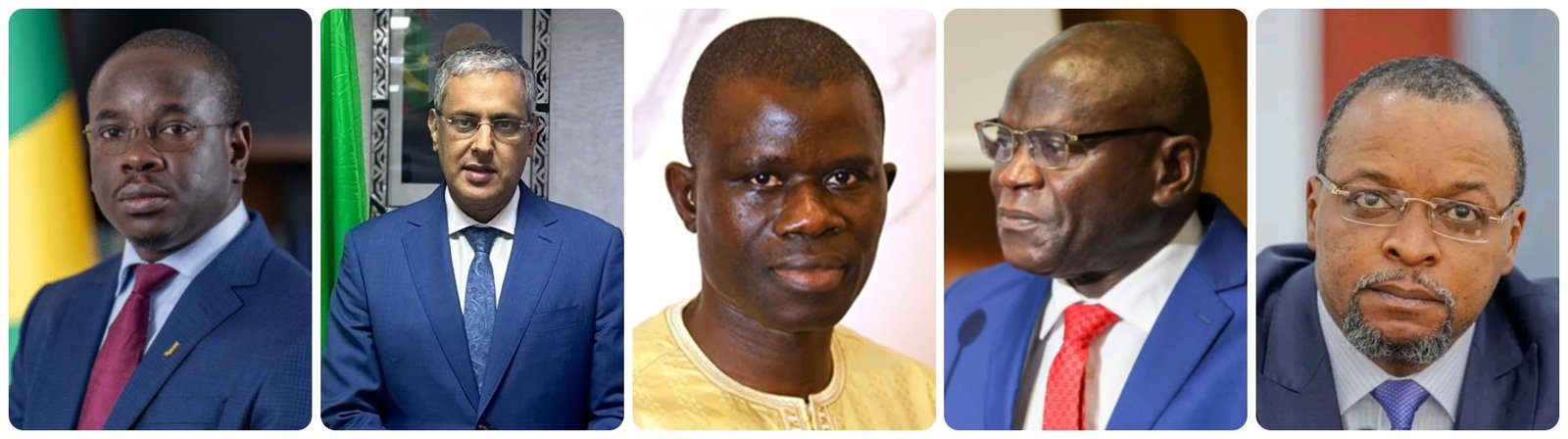
The MSGBC region stands on the edge of a new energy era defined by progress and partnership. With the launch of two landmark hydrocarbon projects and rapid advances in renewable energy and infrastructure, the region is turning its natural resources into a catalyst for sustainable development. MSGBC Oil and Gas Power 2025, to be held in Dakar, Senegal from 8 to 10 December, will feature a ministerial panel exploring how Africa is future-proofing its resource development.
Discussions will be led by regional ministers, including Mauritania’s Minister of Petroleum and Energy Mohamed Ould Khaled. Birameh Soulai Diop, Senegalese Minister of Energy, Petroleum and Mining; Nani Jwala, Gambia Minister of Energy and Petroleum; Malam Sambu, Guinea-Bissau Minister of Natural Resources; Mr. Aboubakar Camara, Minister of Energy, Hydropower and Hydrocarbons of Guinea-Conakry; Speakers are expected to provide project updates, highlight investment opportunities and highlight how policies are ensuring development is linked to concrete economic opportunities.
Explore opportunities, foster partnerships and remain at the forefront of the oil, gas and power sector in the MSGBC region. To secure your participation in the MSGBC Oil, Gas & Power 2025 conference, please visit www.msgbcoilgasandpower.com. To become a sponsor or participate as a representative, please contact sales@energycapitalpower.com.
Following the launch of the Greater Tortue Ameim (GTA) project, developed in partnership with Mauritania, and the development of the Sangomar oil field, Senegal is embarking on the next phase of its energy development. The country is seeking a partner to develop the Yacar-Telanga project, while pursuing downstream and midstream projects such as the expansion of the SAR refinery and the Réseau Gazier du Sénéga pipeline network. These projects not only ensure that Senegal makes the most of its natural resources, but also support regional development through cross-border energy distribution.
Mauritania is also looking to its future development. With the GTA as a backdrop, the country is looking for partners to promote Bir Allah development and has already taken steps to utilize GTA gas. In August 2025, the country launched a tender for a 230MW gas-fired power plant, including associated gas pipeline and power infrastructure. The country is also pursuing green hydrogen projects, including the 30GW AMAN development and the 10GW Project Noor. The country aims to strengthen resource monetization through policies. Notably, the country adopted a government ordinance regulating gas flaring in June 2025 and is preparing to auction 15 blocks as part of its bid to attract investment.
Guinea-Bissau is focused on frontier exploration, with energy giant Chevron acquiring two oil exploration blocks in November 2025. The company plans to assume control of Blocks 5B and 6B and utilize traditional 2D and 3D seismic data to evaluate oil system testing options. The deal follows Apas Energy’s acquisition of the Sinapa and Espelanca licenses in 2023 and subsequent drilling of the Atum-1 well. Beyond exploration, Guinea-Bissau is advancing policy activities in the oil and gas sector and has begun developing a cooperation framework with Azerbaijan to explore upstream opportunities.
Guinea-Conakry is finalizing the terms of a 22-block licensing round aimed at boosting exploration and unlocking offshore potential. To aid exploration, the country partnered with SLB and TGS to establish the National Seismic Data Visualization Center to facilitate geological understanding for prospective investors. Downstream, the country is building a $300 million LNG terminal at Kamsar Port to import regional gas products. The project includes the development of a 1,900 MW gas power plant and will also complete other power generation projects including the 450 MW Souapiti, 300 MW Amalia and 294 MW Koukutamba hydropower facilities.
For The Gambia, partnerships and policies are the cornerstone of the country’s energy strategy. The country is working on a new oil exploration, development and production bill to increase transparency in licensing and streamline the approval process. We have also established a partnership with Türkiye to strengthen cooperation in renewable energy and infrastructure investment. These initiatives aim to encourage foreign investment while promoting domestic energy projects.
“With major hydrocarbon projects coming online and green energy solutions taking off, the MSGBC region is taking bold steps to ensure resources are linked to long-term prosperity. The Ministerial Dialogue aims to shape policies that balance growth, equity and sustainability, setting a clear roadmap for the next generation of African energy leadership,” said Sandra Jeke, Project Director at Energy Capital & Power.
