


Posted by: David Schumb
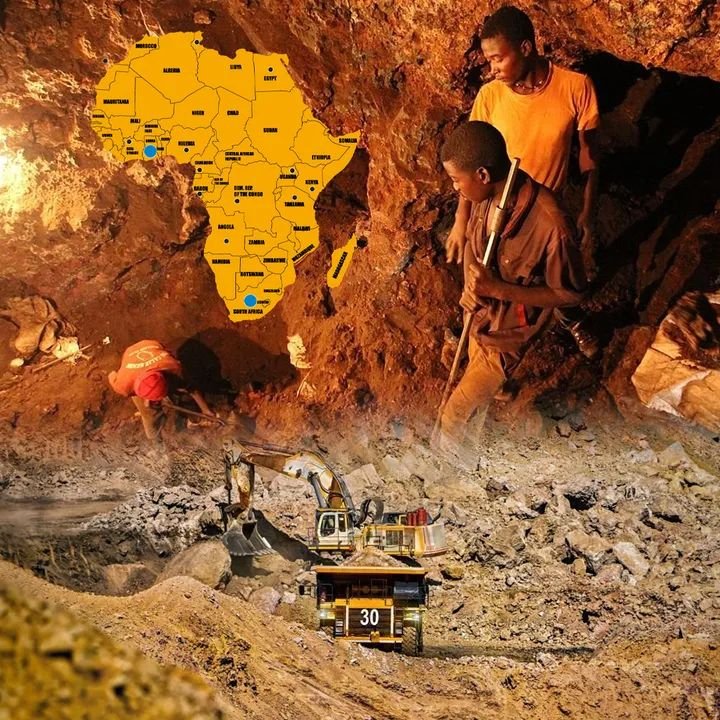
Despite declining global demand for diamonds, Namibia’s mining sector in Africa continues to show great potential, particularly in rare earths and critical minerals. Mining Review Africa 2026 ranks Namibia first among African countries with the highest mining potential.
The review notes that Namibia “has world-class uranium, lithium, rare earth elements and copper resources.”
The assessment also focuses on long-life mining operations such as Husab and Rosing, which support Namibia’s role in global nuclear fuel supply. In this context, Namibia is positioned to become a major supplier of critical minerals, with new lithium and rare earth developments in the Erongo region.
However, Namibia’s ranking provoked mixed reactions among the general public, particularly regarding ownership and the actual benefits of mineral extraction to local communities. Mining researcher Daniel Booth said: “To understand who is really benefiting from Namibia’s mineral discoveries, we need to look beyond the numbers and statistics.”
Mr Boois added: “Although Namibia has produced significant tonnes of minerals over the years, mining contributes between 12% and 14% to the country’s GDP, about half the amount contributed by the informal economy, even though mining accounts for almost 50% of Namibia’s exported goods.”
He stressed that “with the continued discovery of critical minerals such as lithium and rare earths, Namibia needs to learn from its past mistakes and use its mineral resources to build sustainable industries.”
The 2025 Global Critical Minerals Outlook report lists critical minerals such as lithium, cobalt and copper as essential to clean, modern technologies, with demand expected to increase significantly as the global community aims to achieve net-zero carbon emissions by 2050. As Namibia is rich in these minerals, Namibia plays an important role in the world mining sector.
The 2025 G20 Summit considered the role of critical minerals in Africa’s development and how they can be leveraged to boost domestic industrialization. The establishment of the G20 Critical Minerals Framework aims to “respond to the urgent need for international cooperation to ensure sustainable, transparent, stable and resilient critical minerals value chains that support industrialization and sustainable development.”
The 2025 G20 Declaration further emphasized the intention to open up investment in mineral exploration, promote returns on local resource sources, and strengthen governance for sustainable mining practices. In line with national development priorities, Namibia’s Sixth National Development Plan (NDP 6) focuses on mineral beneficiation and value addition to enhance revenues from the mining sector.
According to the tantalum production report compiled by Epaphras Jonas, an economic consultant in the mining sector, Namibia will produce 142 tonnes of tantalum concentrate in 2023, equivalent to 3.2% of global supply. The report further states that Namibia is injecting US$287 million in capital investment into four major projects, which could increase annual production to 380 tonnes by 2028 and capture 8% of the global market.
The sector currently directly employs 1,840 workers and supports an estimated 6,200 indirect jobs across the Erongo and Kunene regions.
