


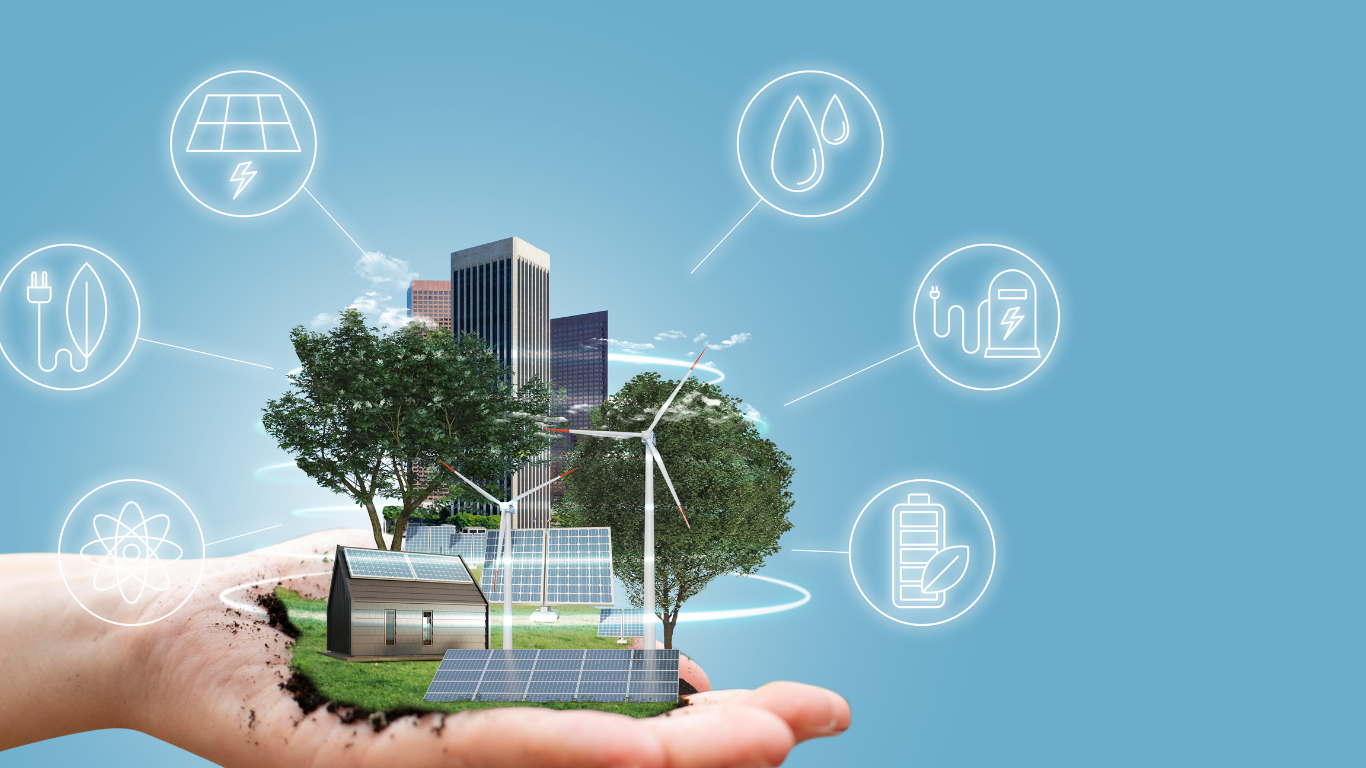
In the realm of sustainability, energy transition and climate adaptation represent two important aspects of our journey towards a greener future. At the heart of the global sustainability challenge is the need for an energy transition, a fundamental shift from fossil fuel-based systems to renewable resources. This transition is not only an environmental imperative, but also of socio-economic importance. It promises to redefine the way energy is produced, distributed and consumed, putting us on the path to a low-carbon future.
Transitioning to renewable energy such as solar, wind and hydropower is critical to mitigating the worst effects of climate change. These clean energy sources provide a sustainable and inexhaustible energy supply and contribute to significant reductions in greenhouse gas emissions. Renewable energy technologies are becoming more cost competitive, challenging the economic viability of traditional fossil fuels.
However, the path to a complete energy transition is littered with challenges. One of the most important things is that it requires significant investment in both technology and infrastructure. Developing countries face financial constraints that prevent them from investing in renewable energy projects. Retraining of workers in the fossil fuel industry is needed to ensure a just transition that leaves no one behind. The intermittent nature of renewable energy sources such as solar and wind poses another challenge. Therefore, advances in energy storage technology and grid management systems are needed to ensure reliable and continuous power supply.
While we transition our energy systems, it is equally important to adapt to the inevitable impacts of climate change that is already underway. Climate adaptation involves adjusting natural or human systems in response to climatic stimuli to mitigate harm or take advantage of beneficial opportunities. This includes a wide range of actions, from building resilient infrastructure that can withstand extreme weather events to changing agricultural practices to adapt to changing climate conditions. It also means protecting and restoring ecosystems that act as natural buffers against climate impacts, such as mangroves that protect coastlines from storm surges.
Related articles: Climate change driving energy efficiency and renewable energy adoption
Climate adaptation should not be seen in isolation but should be integrated into broader development strategies. This includes assessing climate risks as part of urban planning, agricultural policy, and economic development planning. It’s about building resilient societies that are prepared for the challenges of climate change.
Technology plays a vital role in both the energy transition and climate adaptation. Innovations in renewable energy technologies, energy storage and smart grids are essential for a successful energy transition. Similarly, advances in climate modeling, early warning systems, and climate-resilient agricultural technologies are essential to effective adaptation strategies.
The challenges posed by energy transition and climate adaptation are global in nature and require concerted international cooperation. In this regard, the transfer of technology and finance from developed countries to developing countries is extremely important. Global platforms such as the United Nations Framework Convention on Climate Change (UNFCCC) and the Paris Agreement play an important role in fostering this cooperation.
Articles by the same author: Closing Africa’s energy gap: Lessons from Sierra Leone’s mini-transmission sector
The path to energy transition and climate adaptation will undoubtedly be difficult, but it is one we must embark on for a sustainable future. It will require a joint effort by governments, businesses, civil society and individuals. As we navigate this path, we must be guided by principles of equity, justice and inclusion to ensure that the transition to a sustainable future leaves no one behind.
