


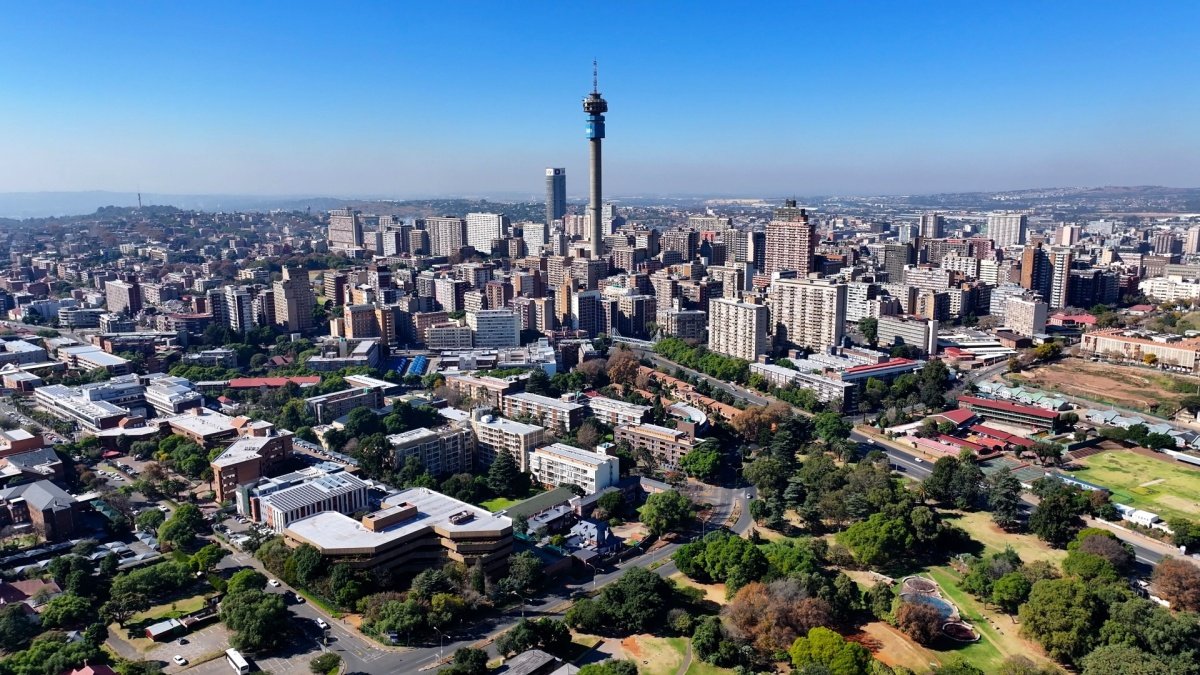
Construction has begun on Johannesburg’s Southern Farms Megacity project, which will see 43,000 homes built for a total cost of R27 billion.
The mixed-use development, located in the southern part of the city, is long overdue and is set to form part of a number of ‘megacities’ being built around Gauteng to address the province’s housing shortage.
Despite the decline in basic services, Gauteng remains South Africa’s economic hub, generating around a third of the country’s economic activity and is home to many major companies.
On Monday, Oct. 13, real estate broker Ash Muller revealed that construction has begun on Southern Farms following site delivery in May 2025.
The Gauteng government said the project, which aims to revitalize local communities by providing housing and economic opportunities in southern Joburg, will take 10 years to realize.
The “megacity” follows the launch of the Southern Farm Biodiversity Development Project in 2023, which aims to limit the impact of construction on the surrounding environment.
So far, the comprehensive project has taken more than 10 years to plan before construction of the homes began in earnest at the Bushcopies site camp.
At the heart of the project is the construction of 43,000 homes on an area of 4,000 hectares to provide housing for Joburg’s growing population.
The housing will be combined with schools, sports facilities, libraries, clinics, taxi ranks, roads and other key infrastructure to serve the residential area.
This mixed-use land project will benefit neighborhoods such as Diepkloof, Freedom Park, Eldorado Park, and Naturena. It covers seven districts and offers a variety of residential and non-residential property types.
Southern Farms is being developed by construction company Sepafapaha Trading and Projects, and its owner Sedima Mosemedi hopes it will revitalize local businesses in the area.
Mr Müller said Johannesburg had a housing shortage of around 1.3 million homes, which would take decades to resolve at the current pace of construction.
As a result, Southern Farms Megacity will be built alongside other megacities such as Cullinan Megacity, Dagafontein Megacity, Gordland Megacity, John Dube Megacity and Stinkwater Megacity.
All of these developments are designed to include significant infrastructure development to serve thousands of housing units.
All of these are intended to be mixed-use developments that combine residential buildings with commercial and industrial components.
The five megacities are located on at least one of Gauteng’s major transport corridors and will be home to schools, universities, hospitals and transport hubs.
They represent a transition from sporadic and uncoordinated development to intentionally planned and developed areas aimed at being as self-sufficient as possible.
A golden city that has lost its shine
The construction of these megacities is also aimed at relieving pressure on Gauteng’s existing infrastructure, particularly that of Joburg.
South Africa’s wealthiest cities are failing to invest in maintaining and upgrading infrastructure to accommodate population growth.
As the country’s economy stagnates, more individuals are moving to cities in search of employment.
Combined with immigration, this is putting tremendous pressure on infrastructure, which is nearing the end of its design life and is not being properly maintained.
As a result, areas within the city are experiencing sporadic water outages and power outages due to local infrastructure failures.
In some cases, parts of the city have been without water for up to nine weeks, with nearly 100,000 power outages reported in nine months.
More than 5,000 of these reports are serious, with entire substations shutting down and power cut to multiple areas at once.
The crisis is largely self-inflicted, with urban infrastructure unable to cope with increased demand for water and electricity.
Joburg’s water crisis has made this clear, with Rand Water and the Water and Sanitation Board revealing that the city has enough water to supply its residents.
However, approximately 45% of this water is lost before it reaches end users due to leaks, illegal connections, or other infrastructure failures.
Johannesburg is home to many of the country’s biggest companies and is responsible for 16% of South Africa’s GDP, raising concerns about the province.
Business for South Africa (B4SA) said it will decide in November whether and how it plans to help the government rebuild its cities.
Johannesburg has changed mayors 10 times since the ANC first lost its majority in 2016, and its suburbs and townships now suffer regular power and water cuts.
It is currently run by an ANC-led coalition. The DA, the second-largest party nationally and in city councils, is seeking to take back Johannesburg with Helen Zille as its mayoral candidate in next year’s local government elections.
Image of Southern Farms Mega City Project


