


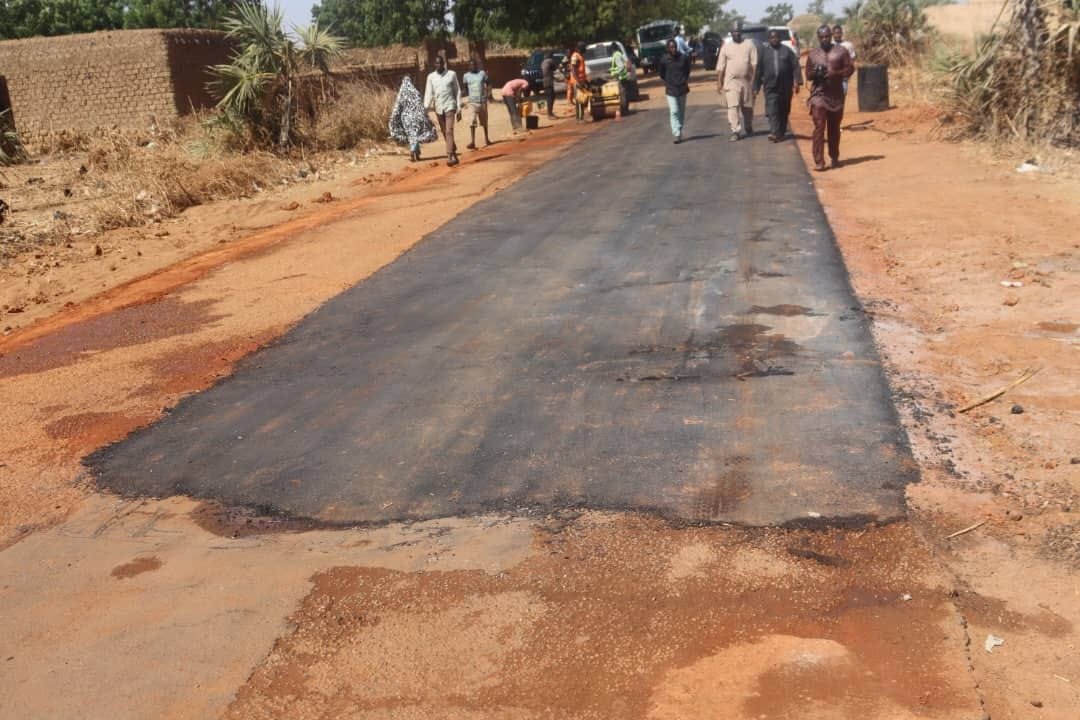
According to a procurement plan released at the end of June, Niger’s Ministry of Transport and Equipment plans to solicit bids by August 5 for the rehabilitation and renovation work on National Route 1 (RN1) in the country’s south.
The initiative is part of the World Bank-funded Project for Integration and Connectivity in Southern Niger (PICSN), which was approved in late May and aims to improve climate-resilient road connectivity and enable value chain logistics development in southern Niger.
The RN1 section to be repaired is the 232.9km Maradi-Zindel road, which will be widened and improved. The construction work is divided into four sections: 40.9km between Maradi and Chadua, 83.9km between Chadua and Tessaua, 60.7km between Tessaua and Takieta, and 47.4km between Takieta and Zinder.
Bids from contractors will open on September 16, and the contract is expected to be signed by January 3, 2026.
In early June, the ministry solicited interest from consultants for four contracts for the provision of control and monitoring services for the rehabilitation of National Highway No. 1 (RN1) in the south of the country. Four companies have been selected to carry out work monitoring and control services, which are expected to be completed within 27 months.
The 1,800 km long RN1 is Niger’s lifeline and relies heavily on its road infrastructure and agricultural sector to drive socio-economic development. The highway serves as an artery for approximately 70% of the population and supports nearly 88% of agricultural activities.
RN1 consists of the following sections: Part of the Trans-Saharan Road (TSR) between the Mali border and Niamey. The Niamey-Maradi section is part of the Trans-Sahel Highway (TSH). Maradi-Zinder section connecting TSH and TSR in RN1. The Zander-Chad border section is also part of the TSR corridor. Ensuring year-round resilient connectivity between the RN1, TSH and TSR corridors will improve access, agro-pastoral product flows and trade potential for selected value chains at the sub-regional level.
Source: Project Evaluation Report, April 2025
RN1 was affected by the 2024 floods and is currently in a deteriorated state, with speeds below 60km/h.
PICSN will also finance the rehabilitation and upgrading to climate-resilient standards of around 25 km of feeder roads connecting the Maradi-Zindall section and around 500 km of rural roads connecting to the hinterland of the RN1 catchment in the Maradi-Zindall region, as well as the construction of 50 km of concrete block ditches in areas at high risk of flooding.
In addition, the project will fund technical research and environmental and social (E&S) measures to rehabilitate and upgrade paved road sections to climate-resilient standards. These roads will be selected during implementation to prioritize climate-resilient connectivity in the RN1 catchment. These could include the Jinda Bypass Road, Maradi Junction on RN1, the 50km Maradi-Dan Issa-Nigeria Border Road, and the 70km Takyeta-Matamae-Nigeria Border Road.
PICSN will also fund technical studies and consultancy services to prepare E&S measures for the construction of the Magaria border crossing and Maradi dry port. The proposed dry port will complement ongoing works on the 284km Kano-Maradi Railway, linking Maradi with Kano in northern Nigeria. This project is fully funded by the Nigerian government. Construction of the US$1.96 billion project is expected to begin in February 2021 and be completed in June 2026.
Mota Engil Nigeria has been appointed to develop and construct a network trunk linking the three federal states of Kano, Jigawa and Katsina in northern Nigeria. The railway includes a 108km branch line running between Kano and Dutse, the capital of Jigawa State.
Combined with the dry port in Maradi, this infrastructure will create a seamless and efficient export corridor between Niger and Nigeria, eliminating last-mile connectivity challenges.
The implementing agency for PICSN is the Ministry of Transport, and the entire project is scheduled for completion in September 2031.
An estimated 16.4 million people (5.2 million in Niger and 11.2 million in Nigeria) living within the 150km Maradi-Jinder section of RN1 are expected to benefit indirectly through improved climate-resilient connectivity, access to services and infrastructure, and increased trade and economic opportunities.
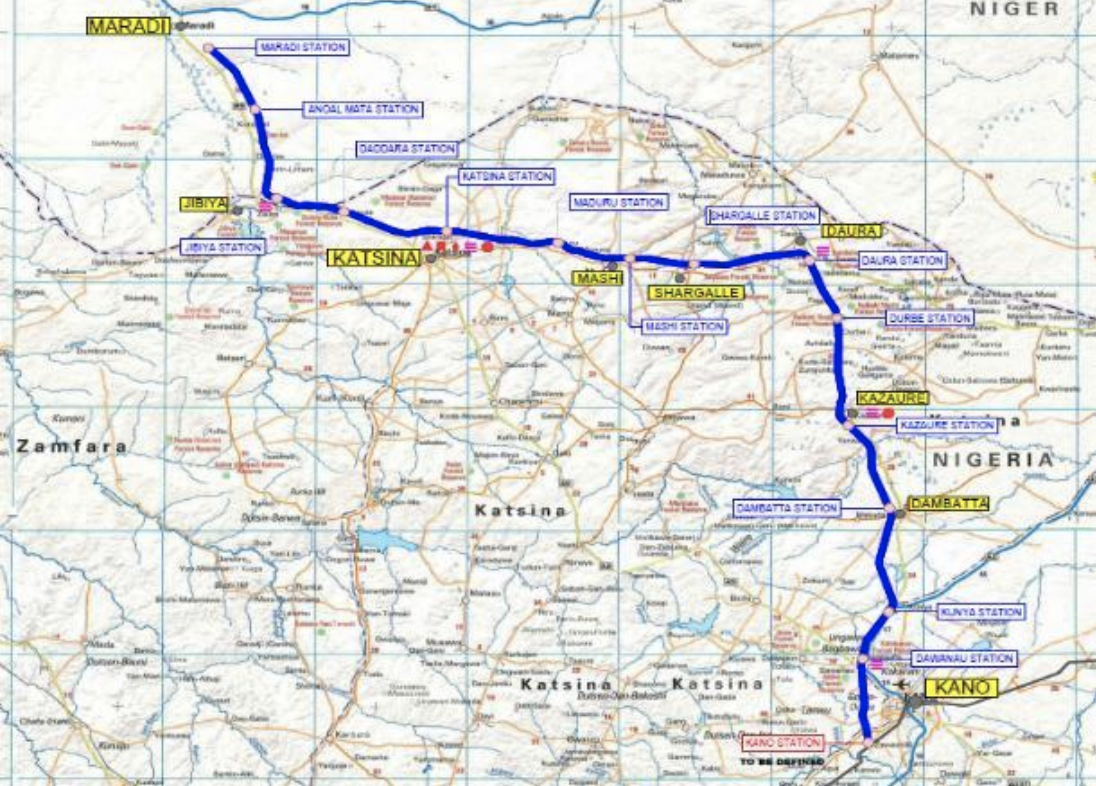
Source: Project ESIA Report, August 2024
Top photo: Niger roads (Source: Facebook@Niger Ministry of Transport and Equipment)
