


One of the challenges in Nigeria’s war on terror is that the line between combatants and civilians is blurred. Extremist groups are leveraging human capital, combining local knowledge with the use of surveillance technology.
Boko Haram and its offshoot Islamic State West Africa Province (ISWAP) are most powerful in the rebel northeast, where espionage and local intelligence-gathering form the backbone of their intelligence networks.
The Lake Chad basin, which straddles the borders of Cameroon, Chad, Niger and Nigeria, has seen an increase in the frequency and intensity of attacks by rival groups over the past year. Celestine Deranga, a researcher at the South African-based think tank Institute for Security Studies, said both groups were strengthening their intelligence gathering and analysis capabilities.
“These attacks by the Boko Haram faction, sometimes targeting the same target within a week, are usually preceded by espionage, which is rapidly evolving with new technology,” he wrote.
While people serve as the “eyes and ears” on the ground, terrorist organizations are increasingly using technology to uncover threats and target military and civilian vulnerabilities.
“Boko Haram uses sophisticated technology, including drones and other specialized electronic equipment for eavesdropping, surveillance, and photography, to collect and process information,” Delanga wrote. “Combatants are using satellites, mobile phones, social media, high-definition digital cameras, and other technologies to gather information for propaganda and attacks.”
Boko Haram and ISWAP rely primarily on networks of family, friends, and former combatants to provide information. Former fighters told the institute that when planning an attack, leaders typically appoint several men to infiltrate the target area several days in advance to gather intelligence.
“Many martial artists lead double lives,” Deranga wrote. “They live between communities and rebel camps and collect intelligence on terrorist groups.
“Interviews with former combatants revealed that several active combatants engage in transactions with their families, sending remittances to support their livelihoods, including support for farming and other agricultural work, small-scale trade, and livestock farming.”
Borno State Governor Babagana Zulum made headlines last year when he claimed that terrorist groups had infiltrated large parts of society.
“(They) have informants and collaborators within the Nigerian military, politicians and communities,” he told Lagos-based News Central Television in May 2025. “What we need to do is step up our intelligence operations and deal with them ruthlessly.”
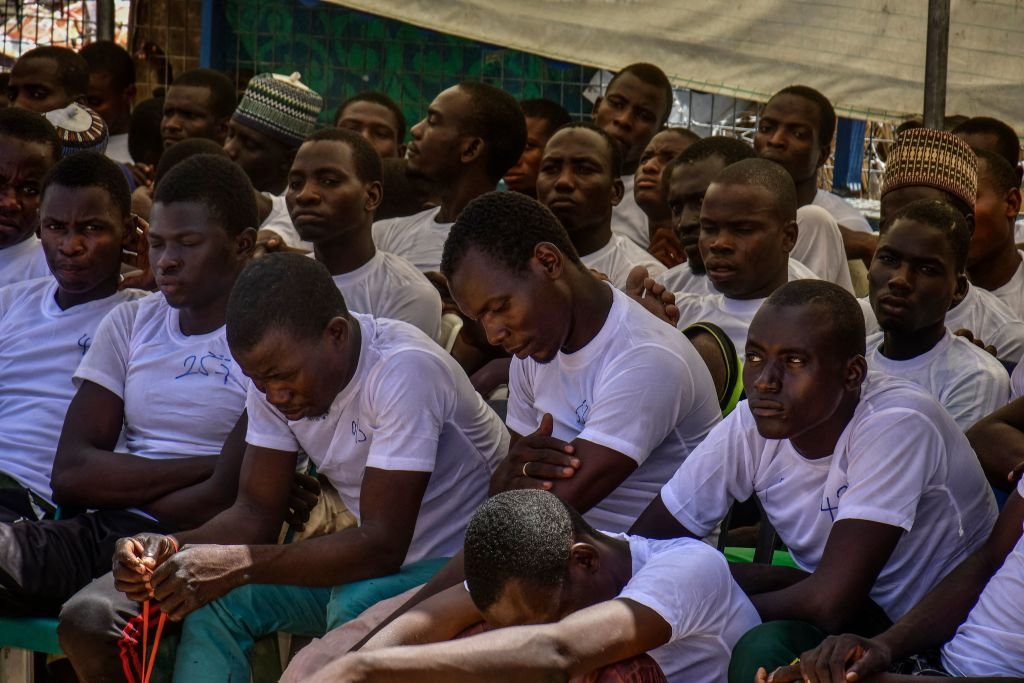
He acknowledged that Nigeria’s disarmament, demobilization and reintegration (DDR) program is rife with double agents and disgruntled ex-combatants who return to Boko Haram and ISWAP with information and contacts.
“We cannot rule out the possibility that a small number of the more than 500,000 people who have repented will return to the bush,” Zulum said. “While I cannot fully say that 100% of those who have surrendered are doing the right thing, I would like to assure you that over 99% are well and are not taking part in ongoing terrorism.”
Deranga said Nigeria could improve its DDR program by strengthening oversight and focusing on countering extremist ideology.
“Many former combatants who have not been deradicalized return to their communities without any supervision and continue to provide information to active combatants,” he wrote.
While Nigeria has invested heavily in military intelligence, Deranga said other members of the Multinational Joint Task Force (MNJTF) in the Lake Chad region need to make similar efforts and strive to improve intelligence sharing.
“Governments in the region should invest more in human, open source, and image intelligence,” he wrote. “This will help strengthen the MNJTF’s intelligence capabilities to counter and dismantle Boko Haram’s intelligence collection systems, improve counter-espionage operations, and neutralize the group and its camps, as well as the ideology and rhetoric that attracts youth to these groups.”
