


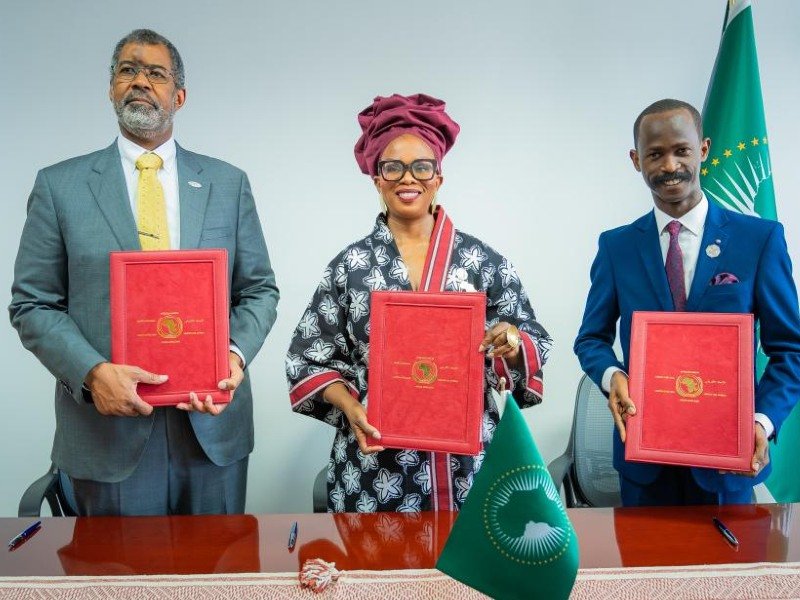
The African Union (AU), the African Atomic Energy Commission and the OECD Atomic Energy Agency have formally signed a landmark Memorandum of Understanding to accelerate the peaceful deployment of nuclear technology across Africa. The agreement positions nuclear power as a strategic lever for industrial growth and energy security by strengthening the regulatory framework, building technical capacity and unlocking financial support. As countries transition from uranium exporters to future nuclear producers, is now the moment for Africa to reach critical mass?
positive chain reaction
The memorandum of understanding will be valid for three years, with an option for extension, and will create a coordinated continental platform for nuclear deployment at a time when investment appetite is increasing. Recent findings by the International Atomic Energy Agency show that Africa’s nuclear power capacity could increase tenfold by 2050 under the high scenario, double by 2030 in the low scenario, and fivefold by 2050 under the low scenario. The AU MoU aims to turn this potential into a viable project.
“This MoU is not just a partnership, but a strategic step to strengthen Africa’s energy sovereignty and promote the peaceful uses of nuclear energy as a catalyst for industrialization, resilience and sustainable development across the continent,” Lerato D. Mataboge, AU Commissioner for Infrastructure and Energy, said in a statement.
Africa’s nuclear paradox: uranium rich but electricity scarce
Africa’s rich resources, which account for 15% of the world’s uranium production, could fuel nuclear ambitions. Namibia is currently one of the world’s largest uranium producers, with mines such as Rössing and Husab supplying about 10% of global demand. Other countries such as Niger and South Africa have also established mines, while Tanzania, Malawi and Mauritania are pursuing multi-million dollar uranium developments.
Despite this potential, the continent generates less than 1% of the world’s nuclear power and has only one operating nuclear power plant, the Koeberg facility in South Africa. As Commissioner Mataboge highlighted, this imbalance presents a structural opportunity to transform uranium exports into domestic value creation. The challenge and opportunity lies in transforming Africa’s mineral resources into baseload electricity, industrial capacity and long-term energy sovereignty.
Africa’s nuclear ambitions are heating up
The memorandum of understanding comes at a time of growing nuclear ambitions in Africa. Ghana aims to have its first nuclear facility operational by the early 2030s, with preparatory work and power purchase agreements already underway. Site selection was completed in 2025. Egypt is developing its first nuclear facility, El Daba, with a target of 4.8 GW from four reactors. The first nuclear power plant is expected to come online in 2028 and be fully operational by 2030. Kenya is developing a 2GW nuclear power plant with expansion potential of up to 6GW, while Senegal is moving ahead with plans to build a nuclear reactor for education, research and training purposes.
South Africa is also looking to expand its nuclear capacity. The 2025 Integrated Resource Plan envisages 5.2 GW of new nuclear power generation by 2039. The country currently has over 100 small modular reactor (SMR) technologies in various stages of feasibility, and 40 financial institutions have committed to investing in nuclear power. The government recently extended the operating permit for the Koeberg nuclear power plant for 20 years, allowing it to continue operating until 2045.
Why timing is important
Historically, Africa’s nuclear ambitions have been held back by institutional capacity rather than a lack of political will or uranium availability. Recent Memorandums of Understanding directly address this challenge by strengthening policy, regulatory and institutional frameworks, supporting skills development and industrial capacity building, and promoting collaborative research and knowledge exchange. This follows a broader trend of African countries looking to global partners to strengthen their institutional capacity.
Mali and Russia plan to sign a civil nuclear agreement in 2025 and establish an intergovernmental commission to oversee cooperation. China and Nigeria signed an agreement in 2024 to develop nuclear facilities through the 2030s. This agreement was followed by high-level discussions on nuclear cooperation covering the entire project lifecycle, from research and training to construction. Namibia is also seeking closer cooperation with Russia on nuclear energy, with the goal of expanding the uranium value chain beyond mining. A recent memorandum of understanding builds on these partnerships by reducing barriers to entry for African countries seeking nuclear development.
At a critical moment in Africa’s nuclear evolution, this memorandum could become the linchpin for coordinated nuclear reactor deployment. The agreement will support Africa’s long-awaited transition from a uranium exporter to a value-added nuclear power producer by strengthening regulatory harmonization.
