


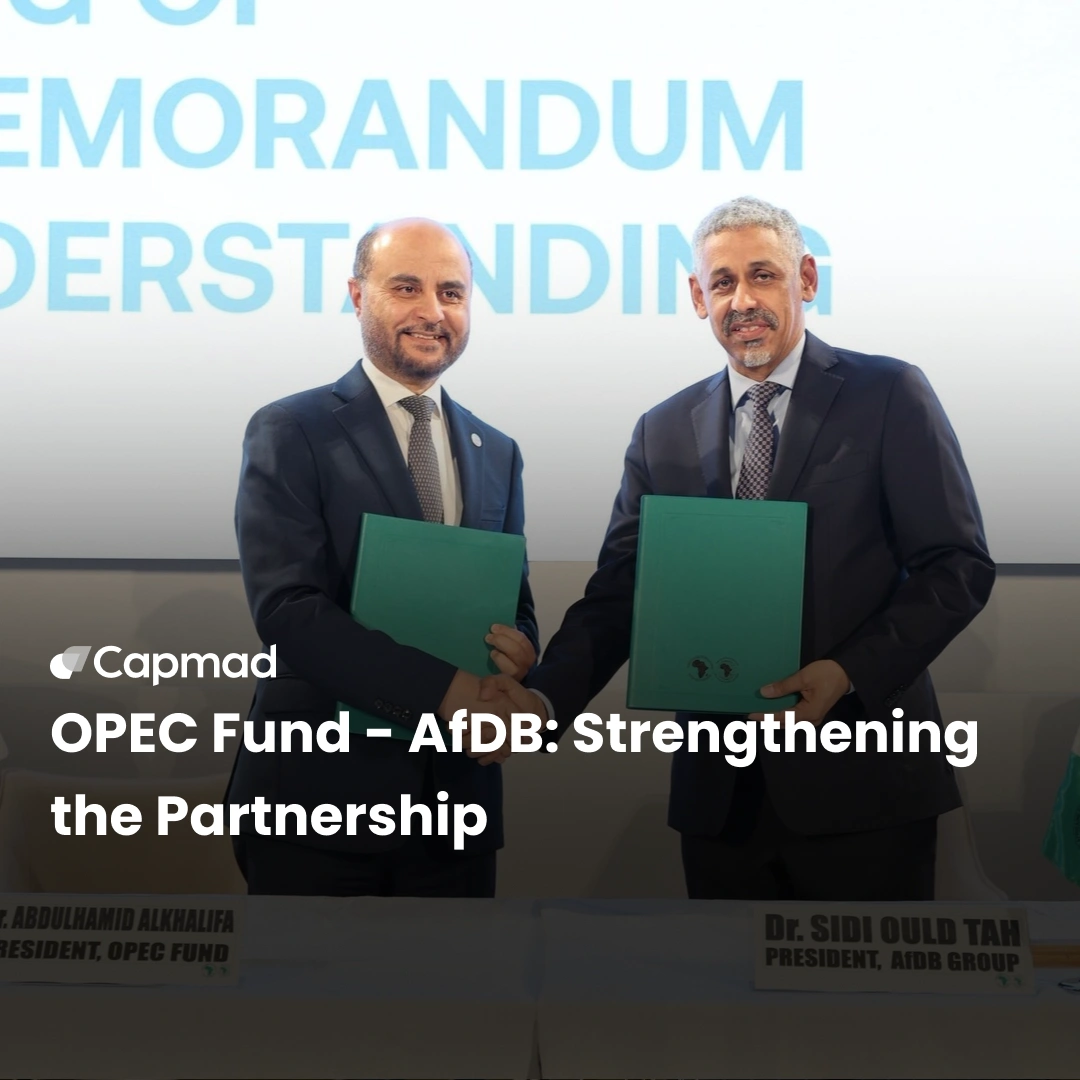
The OPEC Fund and the African Development Bank (AfDB) have just given new impetus to nearly 50 years of cooperation, deciding to strengthen their financial and technical partnership to accelerate Africa’s sustainable development. Key benefits include increased cofinancing, better alignment of priorities, and increased scale of major projects in energy, transport, agriculture, and social infrastructure.
A historic partnership on a new scale
The OPEC Fund and the AfDB have been working together for nearly 50 years, with a total of approximately US$1.5 billion in financing for approximately 120 projects across the continent. This relationship, which has traditionally focused on project-by-project operations, is entering a more strategic and integrated phase.
The two institutions held a “Partnership Day” at AfDB headquarters in Abidjan to align priorities and strengthen operational collaboration. Joint projects already cover energy, transport, agriculture, water, health, education and finance, with increased focus on sustainability and climate.
Co-financing up to USD 2 billion
The OPEC Fund announced that it will co-finance up to $2 billion with the African Development Fund (ADF), the AfDB group’s concessional window, for the period 2026-2030. These funds are primarily targeted at the most vulnerable African countries through highly concessional loans and grants.
This funding will be used to finance projects in energy, food security, climate resilience, and human capital development. The announcement was made as part of the 17th replenishment of the ADF, which mobilized US$8.9 billion in the previous cycle (ADF-16).
Sustainable energy and infrastructure are at the heart of the challenge
Strengthening partnerships has a special focus on sustainable energy, infrastructure and agribusiness. The two institutions plan to accelerate the implementation of projects that can reduce energy poverty, improve regional connectivity and support the transformation of African economies.
The joint delegation visited the Atinkou power plant (390 MW) in Côte d’Ivoire, an example of a co-financed project that contributes to securing power supplies and replacing aging capacity. The OPEC Fund also joined the Alliance for Specialized Agricultural Transformation Zones (SAPZ), alongside AfDB and TDB Group, to accelerate the continent’s agro-industrialization.
Levers for agricultural industrialization and rural employment
By joining the SAPZ Alliance, the OPEC Fund is participating in a mechanism that pools capital, expertise and private sector involvement to build competitive agricultural value chains. The aim is to transform production areas into agro-industrial hubs, creating jobs and local added value.
AfDB has already committed approximately $934 million to more than 20 SAPZs in 11 countries and has mobilized nearly $938 million in additional cofinancing. The arrival of the OPEC Fund and TDB Group is expected to strengthen blended finance, risk mitigation tools, and rural industrialization.
Toward strengthening cooperation among Arab donors
This closer cooperation is also part of a broader move towards coordination between the institutions of the African Development Bank (AfDB) Group and the Arab Coordination Group (ACG). The aim is to better coordinate interventions, pool resources and maximize the leverage effect of financing on long-term African growth.
High-level consultations were organized between the OPEC Fund, the AfDB, and ACG member states to consider ways to sustainably anchor Arab-African cofinancing. For the OPEC Fund, Africa remains at the heart of its mission and its priority is to implement concrete projects in line with the priorities set by each country.
How will this impact African countries?
For African countries, this enhanced partnership provides an opportunity to access larger amounts of concessional financing for high-impact projects. This makes it easier to build major infrastructure, clean energy, or agribusiness projects that are often too risky for the private sector alone.
Improved coordination between the AfDB, OPEC funds, and other donors will shorten project development times, clarify priorities, and increase the predictability of financing. Ultimately, the value of this partnership will be measured by the quality of the projects delivered, including increasing access to electricity, modernizing roads and ports, transforming agribusiness, creating jobs and on-site climate resilience.
