


Whispers of secret diplomacy have emerged from Madagascar’s capital, with the Trump administration secretly sending an envoy to engage Madagascar’s military leader, Colonel Michael Landrianilina, fueling speculation about US strategic ambitions in the Indian Ocean region.
Three White House envoys recently met with Colonel Michael Landrianilina, the military junta leader who seized power in a swift coup in October 2025, according to an exclusive report by African Intelligence. The meeting is classified as a follow-up to sensitive discussions that began during Landrianilina’s secret visit to Dubai in early December. Sources said an informal deal was brokered in the Gulf city-state, paving the way for a US “evaluation mission” to explore deeper ties.
Unraveling the Antananarivo connection
The aid is a surprising turn for President Donald Trump, whose administration has taken a tough stance on many African countries, imposing hefty tariffs and cutting aid. Madagascar, a major exporter of vanilla and textile products to the US, was hit with reciprocal tariffs of up to 47% before adjustment last year, and Antananarivo is lobbying heavily for an extension to the African Growth and Opportunity Act (AGOA).
But beneath the trade tensions lie important minerals that could lead to even richer prizes. Madagascar boasts large reserves of graphite, rare earths, vanadium and uranium, which are essential resources for batteries, electronics and defense technology. President Trump has prioritized diversifying supply chains away from China, signing multibillion-dollar deals across Africa and beyond.
One high-profile project already embroiled in Madagascar’s turmoil is the $2 billion Toliara Critical Minerals Project, led by US company Energy Fuels. The bill, approved under the ousted government of Andriy Rajoelina, promised to produce titanium, zirconium, rare earths and uranium, with ore to be processed in the United States. Energy Fuels has maintained continued involvement during the transition, but the junta’s post-coup stance has raised questions about the future of the deal.
Analysts see the envoy’s visit as an attempt to rescue or renegotiate such projects with the new administration. “This is classic Trump-era pragmatism: using tariffs as a stick and dangling investment as carrots,” said one Washington-based diplomat, speaking on condition of anonymity. Madagascar’s strategic location overlooking important shipping lanes in the Indian Ocean adds a geopolitical layer with potential for naval cooperation and countering Chinese influence in the region.
geopolitical undercurrents
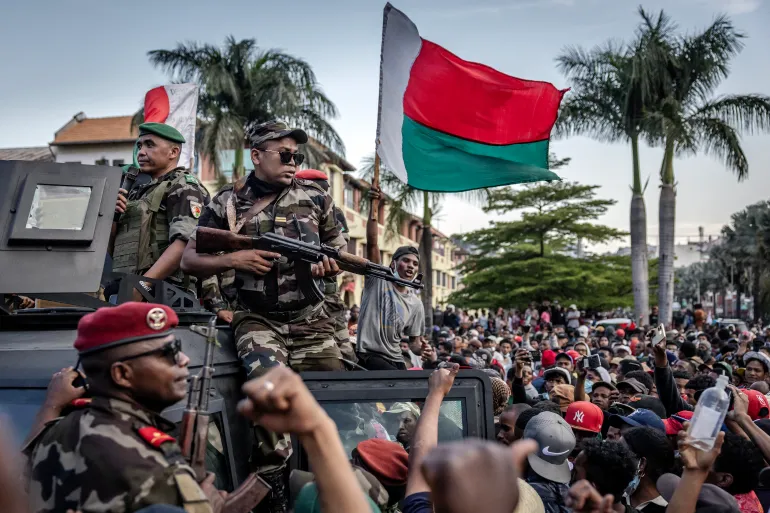
The coup itself unfolded dramatically in mid-October 2025. Youth-led protests against economic hardship, power outages and corruption allegations have descended into chaos. Troops from the elite CAPSAT unit, commanded by Randrianilina, sided with the demonstrators, occupied key facilities, and forced President Rajoelina to flee. The colonel, who until now was little known outside military circles, was sworn in a few days later and promised a transitional military council that would last up to two years.
The African Union condemned the power grab and immediately suspended Madagascar. But international reaction has been muted as world powers consider engagement with the resource-rich country.
Details of the Dubai and Antananarivo talks remain closely guarded. *African Intelligence* reports that discussions touch on security and economic issues, and hint at broader cooperation. Neither the White House nor Madagascar’s leadership has commented publicly.
Madagascar’s shadowy moves highlight the broader scramble for Africa’s minerals as President Trump reshapes U.S. foreign policy with a focus on “America First” agreements. It remains to be seen whether this quiet diplomacy will produce a lasting partnership or merely highlight the risks of betting on an unstable regime. For now, the Indian Ocean island is at the center of an interesting and opaque U.S. maneuver.
