


“I am here to solve problems and bring perspective,” says Amina Abdi Aden, Minister of Cities, Urban Planning and Housing. Since entering the ministerial world, she has gradually grown in stature and was appointed to her current post. She shared her vision for urban planning, a field that is enjoying great vitality in this country.
Business in Africa: Djibouti has some similarities with countries like Singapore and cities like Dubai, thanks to its strategic location, relatively small size and port activities. Like these two examples, how can we attract foreign investors to real estate and contribute to a country’s economic growth?
Amina Abdi Aden: Djibouti has more or less the same characteristics as these city-states. When it comes to urban planning, we take inspiration from Singapore and try to develop the city in the best possible way.
In our next master plan, we want to incorporate the Asian city-state into our vision, while preserving Djibouti’s character. I know that countries are not the same and have different cultures even though they have similar economies and geographical locations, but Singapore is a very good example for Djibouti when it comes to greenery.
Singaporeans leave a lot of scope for incorporating nature into their landscaping. It also solved the mobility issue, which was a big concern for us. Currently, most government offices are concentrated in the old city, and there is a movement of population, especially in the morning and evening. Therefore, we are thinking about redistributing administrative services and economic activities so that they are distributed throughout the territory.
A workshop is scheduled immediately after the Djibouti Forum. The workshop will be held in collaboration with the Southern France region and a number of partners, including Rwanda, Singapore and Morocco, and will reflect on the future of cities.
We ask, “How can we make cities more resilient and vibrant?” One very important topic is: “How can ports be integrated into cities?” Cities need to reap economic benefits from this infrastructure. There should be no physical separation between port facilities and city residents. Urban residents should benefit from these developments not only in terms of employment but also in terms of creative space.
The real estate sector has been lagging behind due to crises such as the pandemic and sub-regional instability. What can you do to stay on track towards Vision 2035?
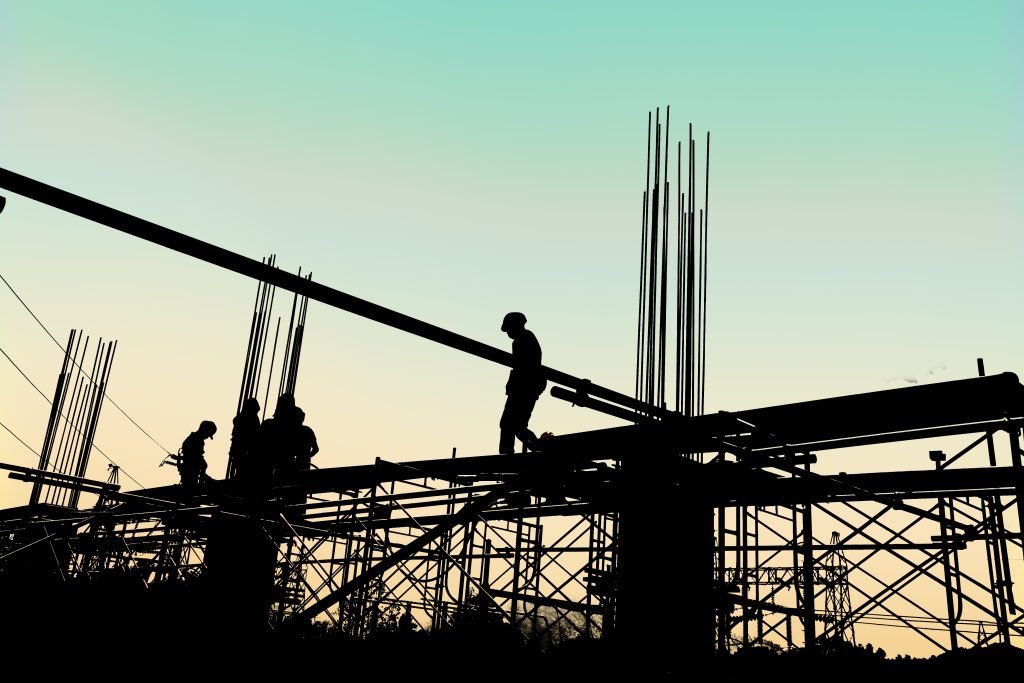
Amina Abdi Aden: We are leveraging Djibouti’s economic vitality and what is happening in this sector. We have some very large private real estate projects underway and the outlook for the next few years is good with many projects in development or soon to be completed. Although construction products are imported and successive crises have affected costs, activity in this sector remains dynamic and the needs exist.
What is Djibouti’s construction and real estate sector like today?
Amina Abdi Aden: There is a saying: “When the building is gone, everything is gone.” Anyone who knows Djibouti will know that the construction sector has experienced significant development in recent years. There is a lot of construction, both public infrastructure and private construction, especially in the housing sector, which has accounted for around 6% of GDP in recent years.
This sector is driven by public institutions, but also by the private sector. A few years ago, we issued an enforcement order encouraging the private sector to build private housing for the middle and upper social classes, and this has borne fruit.
How can we increase access to homeownership for the middle class, and why is this so difficult?
Amina Abdi Aden: Public institutions produce public housing, and to meet the needs of the middle class, private developers have benefited from incentives to build housing suitable for this group.
Due to the young population of Djibouti, there is a strong demand for housing, especially among first-time buyers. Roles had to be shared.
What role do local banks play in this?
Amina Abdi Aden: Previously, banks did not play a very big role in housing finance. Recently, the government has encouraged such loans, including by taking steps to resolve legal issues surrounding mortgages. The government removed this obstacle because courts were slow to enforce decisions. The law was passed and things have changed since then. Recently, programs have been introduced to encourage banks to reach out to lower social classes, and a housing guarantee fund has been established that also covers low-income households.
What are the housing needs of the city and the country as a whole?
Amina Abdi Aden: Our research shows that we need to build 3,000 to 4,000 new housing units every year. However, in recent years there has been a shortage of 20,000 housing units. The current pace of public and private construction is still not enough to meet demand. However, all conditions are in place to ensure that this shortfall can be covered year-on-year.
How will your master plan support Djibouti’s economic and population growth in the coming decades? What about other towns in the country?
Amina Abdi Aden: Djibouti has always had a master plan for urban development and planning. The most recent one is from 2014 and covers a 10-year period. This year, we will begin work on a new and even more ambitious masterplan. Our goal is to change this city.
Due to its geographical location, it is a city that faces many challenges, especially in terms of climate change. Since most of our cities are built at sea level, we have problems with rainwater drainage and what is happening around the world does not make us feel safe. There are also master plans for local towns. Plans exist and regulatory measures exist.
From the point of view of cultural practices, does the construction of new buildings change the way people live?
Amina Abdi Aden: Ten years ago, we started building social housing in the form of apartment blocks. At first people were very reluctant, but economically it is more profitable than building a private residence. This minimizes the cost for the households that benefit from it. To make things easier, we are building a four-storey house with two apartments per landing and have set up a shared ownership association so people can learn how to manage the common areas. It’s an apprenticeship. We have also built such houses in rural areas. It has now been accepted by Djiboutians and the demand remains constant.
Are there plans to renovate, preserve and enhance Djibouti’s historic city center?
Amina Abdi Aden: Djibouti’s historic center has an architectural heritage preservation code. We are proceeding with the introduction of this system to revitalize the central city area. In recent years, economic activity has increased, renovations have progressed, and the value of buildings has increased.
Now, we have to reconcile economic interests with, for example, when people want to tear down an old building and turn it into an apartment complex, and making people understand that the building may be historic. In the heritage conservation plan, there is a classification of buildings of historical importance, and then there are other buildings that people can destroy, but must be rebuilt in a certain spirit.
It’s more than just a conservation plan. It is a dynamic plan that preserves the heritage that testifies to Djibouti’s history, while also transforming and economically revitalizing the city center. The difficulty lies in reconciling economic activity with the need to preserve cultural heritage.
Is it possible to develop a city without changing the environment too much?
Amina Abdi Aden: This is essential because the climate in Djibouti is very hot and it doesn’t rain every day. The government has taken steps and tree planting campaigns have been launched in both urban and rural areas. Djibouti needs more greenery, so a park will soon be opened in the city on the initiative of the President of the Republic. We plant trees in all the housing developments we are building and encourage people to take care of them.
What do you think of Djibouti tomorrow?
Amina Abdi Aden: I envision a city that is more developed, more resilient, offers more facilities in terms of resident services, and above all, a greener city. Because it is the dream of every human being to live in an area where nature prevails. This is especially true as temperatures in Djibouti, already known for its high summer temperatures, are becoming even hotter due to global warming. So I hope it doesn’t rise too much.
