


– Advertisement –
Nigeria’s long-delayed Lagos-Calabar Coastal Road is set to be rescued and transformed into a revenue-generating asset with thousands of AI-powered solar-powered streetlights.
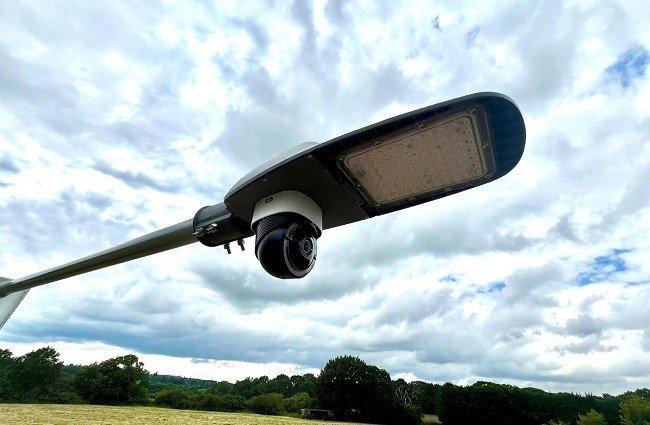
British greentech company Conflow Power Group, in partnership with Nigerian infrastructure company Mora Energy, has announced plans in talks with the Nigerian government to solve the highways financial crisis by providing thousands of iLamps, solar-powered street lights that also double as decentralized AI data centres.
No external power is required and all iLamps are equipped with Nvidia AI processors. This means that iLamp brings in significant revenue because AI providers like OpenAI pay for the processing power.

Through a partnership with British company AI Factories Limited, each iLamp unit becomes a node in a decentralized AI computing network, generating up to $4,500 in annual revenue to be paid by the AI company.
Deploying the proposed 28,000 iLamps across the 700km corridor would generate $1.26 billion in annual revenue that would help fund highway construction.
Stanley Chuka Umeola, founder of Mora Energy, said: “Our government officials quickly understood the importance of what Conflow was proposing. Nigeria has struggled with this project for 50 years, because we were applying 20th century solutions to 21st century problems. iLamp represents truly innovative thinking. This is not just infrastructure, it is revenue-generating technology, and for the first time in Nigeria, AI It brought functionality.”
“Government officials were particularly impressed by how iLamp solves multiple problems at once, not just in terms of funding, but also in security, communications infrastructure, and bringing cutting-edge technology to Nigerian communities.”
Zainu Goba, CEO of iLamp Africa, said: “The financial math is compelling. In addition to providing lighting and security, the iLamp creates a new revenue stream that can contribute over $1 billion annually to project costs. Combined with the zero operating costs of solar power, this increases the project’s attractiveness to private investors and has the potential to positively change the lives of millions of Nigerians.”
The iLamp proposal would begin generating revenue as soon as a portion of the highway is completed, reducing reliance on tolling and public funding. Smart street lights also offer high-efficiency LED lighting, surveillance cameras, vehicle recognition, emergency response systems, public connectivity and environmental monitoring, all powered entirely by solar energy.
This deployment will establish one of Africa’s largest decentralized AI computing networks, allowing AI services to be processed domestically rather than overseas, supporting Nigeria’s growing technology sector and positioning Nigeria as a regional hub for AI infrastructure.
The iLamp Africa team and Mora Energy are continuing discussions with the Nigerian government and project partners to explore the formal integration of iLamp technology on the Lagos-Calabar Coastal Highway.
First proposed in the 1970s, the 700km long expressway is designed to connect nine coastal states and enable trade, tourism and economic growth across southern Nigeria. Despite its strategic importance, the project has been repeatedly delayed due to lack of funding, political changes, and economic instability.
Construction resumed in 2024, but so far only $747 million has been secured, less than 6% of the estimated total cost of $11 billion to $12.5 billion, leaving a funding shortfall of more than $10 billion and raising concerns that the project will stall again.
