


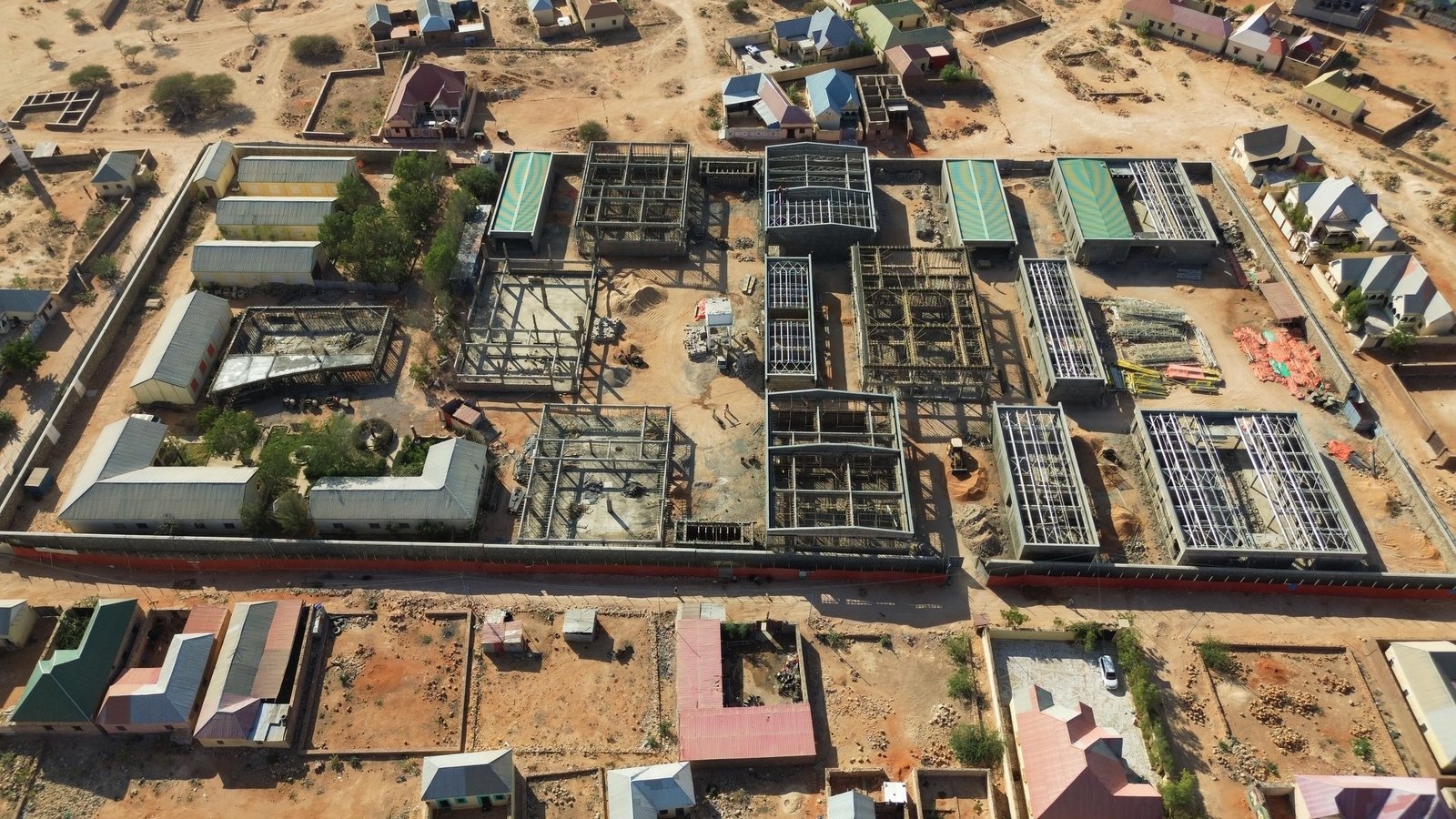
Somalia is set to witness the construction of two technical and vocational education and training (TVET) schools located in Jowar in the south-central Hirshabelle state and Baidoa in the south-west.
In late August, East African-based architecture and engineering firm FBW Group was appointed to design the school. The group is working on the project in collaboration with Danish consultancy Niras.
The aim of the scheme is to help trained young people secure decent employment and generate higher incomes, and to enable local businesses to take advantage of the services of the TVET hub.
The project is part of the second phase of a broader six-year program to create a network of “TVET+ service hubs” in Somalia. The initiative was launched in February 2021 and is being implemented by the Norwegian-Somali Community, consisting of the YME Foundation and Gourmad for Local Sustainable Assistance (GSA). It was developed with funding from the German Development Bank KfW and in cooperation with the Somali Ministry of Planning and the Ministry of Labor and Social Affairs.
The first phase consists of the physical expansion and further conceptual development of the existing Professor Addo Vocational Training Center in Galkayo (established by YME Foundation and GSA and managed by GSA) to expand into a full TVET+ service hub. Local contractor Mogadishu Stars General Trading is working on the project.
Three decades of civil war have severely degraded Somalia’s socio-economic infrastructure, and the government is unable to provide adequate support systems for its people. The net enrollment rate for primary and secondary education is 17% nationally, while the general population literacy rate is estimated at 40% (even lower for women) and youth unemployment at 67%.
There is a strong need to equip young people with relevant technical skills to promote current investment sectors such as real estate, communications and energy, and to address high youth unemployment rates. Therefore, high-quality and sustainable TVET interventions are considered important for Somalia’s development.
The TVET school design project is FBW Group’s first project in Somalia, and the organization has 30 years of experience in designing and implementing complex, high-quality, internationally compliant construction projects in East Africa and beyond.
“FBW is proud to be part of this important mission to empower Somali youth through innovative education and skills development,” said Antje Ekolt, director of the organization.
“We look forward to working with Nilas to build the future of vocational education for local residents, creating innovative learning spaces that provide education and skills that open doors to opportunity.
“Sustainability is a key part of our design agenda and we are considering a range of measures, including recycling gray water from irrigation to increase tree cover and using locally sourced natural materials to reduce fixed carbon.”
Recent projects undertaken by FBW Group in the southern and eastern parts of the African continent include the US$12.8 million Clinical Research Excellence and Training Open Resource (CREATOR) Center in Malawi; It is a postgraduate medical professional and research training facility established in August 2024 by President Lazarus Chakwera.
CREATOR, located in Blantyre, is expected to transform postgraduate medical education and research in sub-Saharan Africa. Its mission is to help ensure medical and scientific expertise remains in Malawi and inspires the next generation of African scientists.
According to FBW Group, the CREATOR building’s architectural design “combines a modern scientific and approachable aesthetic with high technical performance specifications and durability.” The facility’s design includes a rooftop celebration space and an innovation hub for translational support and enterprise development.
The five-story building includes a “round room” for collaborative decision-making and a webinar theater for participating in international learning and education. Its facilities include new laboratories that enable single-cell transcriptomics, advanced imaging, and rapid pathogen sequencing, as well as state-of-the-art teaching space, a graduate resource center for 200 clinical trainees, and library and office space to support advanced epidemiology and clinical trials.
CREATOR is a partnership between the local Kamuzu University of Health Sciences (KUHeS, formerly the Faculty of Medicine) and Queen Elizabeth Central Hospital in Blantyre, the UK’s Liverpool School of Tropical Medicine (LSTM) and the University of Liverpool, and the London-based medical research charity Wellcome.
FBW Group’s services on this project include architecture, structural and civil engineering, and mechanical, electrical and plumbing (MEP) engineering, including construction package preparation, bidding and technical supervision during construction.
FBW Group is also part of the team tasked with delivering the masterplan for the USD 1.5 billion Green City Kigali project in Rwanda’s capital.
The city will cover an area of 600 hectares in the Kinyinya Hills on the outskirts of Kigali and will provide up to 30,000 homes. The master plan centers on a “forest eco-park” and includes a bus rapid transit (BRT) transportation system.
The pilot phase of the project, which is expected to begin over the next few years, will see around 2,000 homes built on a 16-hectare site.
FBW Group was appointed as the local team to provide architectural, structural, civil engineering and MEP services. It will also be involved in preparing the construction phase of the initial project, which could be completed by 2030.
Its role includes oversight of local compliance, local material supply, environmental standards, stakeholder engagement and submission recommendations.
In November 2024, the Kigali City Government officially adopted the Green City Concept Master Plan.
“After an extensive review process and input from local communities, the release of the master plan is a major step forward in what promises to be transformative development not only for Rwanda, but also for Africa and other parts of the world,” said FBW Group’s Ekolt.
“The pilot projects we are currently working on will lay the foundations for the design of high-quality, low-carbon, resource-efficient housing types suitable for a variety of site and density conditions, and point the way towards a future of sustainable urban development.
“One of the aims of Green City (Kigali) is to demonstrate that, through a combination of appropriate technology, progressive thinking and the use of local techniques and materials, this urban environment has everything needed to sustain communities and help people live green.
“As part of our initial work, we have been exploring local low-carbon construction methods and materials and how to use them to maximum effect. We have also considered ideas for urban agriculture and a green economy that will create jobs for existing and new residents of Kiinya Hills, all based on low-tech processes, waste reduction and circular economy principles.”
“In the master plan, up to 55% of the area consists of publicly accessible space, and 19% of the total site is allocated as a landscaped area of natural habitat.”
The plan also includes critical infrastructure, including roads, business centres, schools, hospitals and other vital facilities.
Achieving sustainable and climate-resilient cities requires development that complies with master-planned construction regulations. The EDGE green building standard and international certification system also play an important role. The project aims to increase skills and employment opportunities and will primarily use locally sourced and produced materials.
Looking ahead to 2025, FBW Group Managing Director Paul Moores sees many business opportunities, particularly in the East African countries where the company’s offices are based.
“The United Nations report released in January shows that East Africa continues to experience strong growth, and we are well-positioned to take advantage of that and leverage our strong local knowledge and expertise to help developers and investors bring their projects to fruition,” Moores said.
“We are seeing signs of increased investment in the region from a variety of domestic and international sources, which bodes well for the economic outlook.
“Uganda’s oil industry continues to develop rapidly and we are involved in a number of projects that will help provide the necessary infrastructure for Uganda. We recently completed the construction of an oilfield services base camp in the western part of the country.”
“In Kenya, our engineers provide support to large multinational manufacturing and food and beverage companies, while working to help build low-cost housing solutions.
“And Rwanda continues to be a strong source of work for us, especially through the (Green City) Kigali project, which will continue this year.
“The healthcare sector is another area where we continue to grow and deliver truly transformative and life-changing developments. We are proud of our partnerships with leading global health organizations.”
“And as the year progresses, we see increased interest in data center design and construction, and we see this as a huge opportunity for East Africa.”
Top photo: Expansion of Professor Adou Vocational Training Center in Somalia (Source: Facebook @ YME Foundation)
