


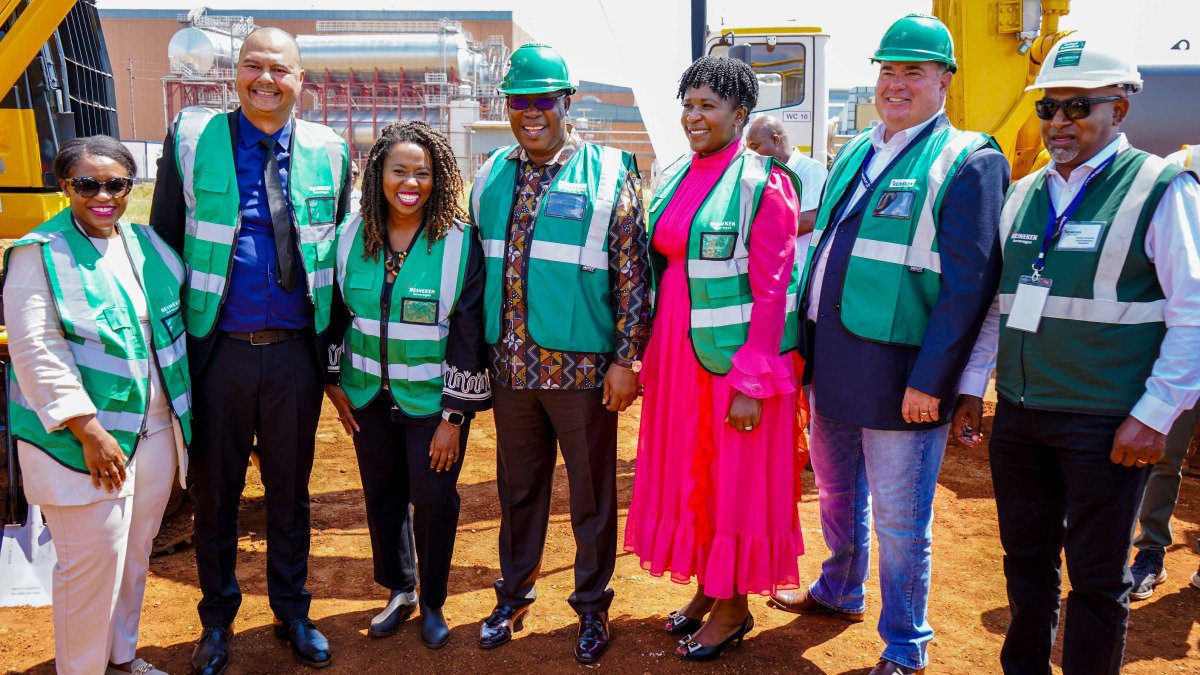
Soufflé Malt begins construction of new malting facility in South Africa
Paris, France – February 2026 – Soufflé Malt today broke ground on a €100 million (R2 billion) malting facility in Midvaal, Gauteng, marking a major investment in South Africa’s brewing and agricultural value chain. The construction follows the signing of a commercial partnership in March 2025 between Soufflé Malt and Heineken Beverages to supply malt to brewing operations in South Africa.
The new malting facility, located next to Heineken Beverage’s Sedibeng brewery near Johannesburg, will have an annual malt production capacity of approximately 100,000 tonnes and, once fully operational, will source 100% of its barley supply from local producers. The brewery is responsible for the production of Heineken®, Amstel Lager, Sol and Windhoek.
Impact on local economy
Construction of the facility by Abbeydale Projects will continue until 2026, with commissioning scheduled for mid-2027. The facility is expected to create 55 permanent jobs, support hundreds of farmers and generate 200-300 indirect jobs across agriculture, logistics and related services.
sustainability
The new facility will be the most technologically advanced malt factory in South Africa and, through the use of trigeneration, emissions will be 50% lower than the industry average. Located next to the brewery, the malt can be transported by conveyor, providing low-emission operations and reducing costs. The project reflects Soufre Malt’s MALTiply 2030 strategy, which leverages advanced technology and low-carbon design to pioneer sustainable malt solutions.
Jorge Solis, CEO of Soufflé Malt, said: “This project is a strong vote of confidence in South Africa’s agricultural sector and will strengthen South Africa’s brewing value chain.” “By investing in local industrial capacity and working closely with farmers, we are building a resilient, sustainable, locally integrated malt supply chain that supports the region’s long-term agricultural and industrial development.”

Farmer development and inclusive participation
This investment is supported by agricultural programs that support both commercial and emerging farmers. Through training, mentorship and commercial support, Soufflé Malt helps South African farmers adopt best practice farming methods to produce high quality, premium barley at scale.
Since 2018, Soufflé Malt, in partnership with Heineken Beverage, has been working with commercial and emerging farmers in South Africa to build a stable supply of local barley. This long-term preparation will allow us to source 100% of our barley locally once our malting facility is fully operational, ensuring security, quality and consistency of supply.
Through this collaborative partnership with Heineken Beverage and the Industrial Development Corporation (IDC), emerging farmers will also be able to access financing for farm equipment. This support includes a combination of grants and interest-free loans, lowering barriers to entry and enabling sustainable participation in South Africa’s barley supply chain.
This investment, in line with Heineken’s global strategy ‘Brew a Better World 2030’, reflects the company’s long-term commitment to grow its operations in South Africa while strengthening local supply chains, supporting inclusive agricultural development and reducing environmental impact. Central to this approach is sustainable sourcing. Prioritize local raw materials, reduce unnecessary imports and emissions, and invest in partnerships that build long-term resilience across value chains and the economy.

Jordi Boltto, Managing Director of Heineken Beverages, said: “This malthouse is our Brew a Better product in South Africa. By sourcing barley locally and producing malt alongside our brewery, we are reducing imports, reducing transport emissions and creating a more resilient, low-carbon supply chain. Importantly, this investment will support South African farmers, strengthen local agriculture, contribute to long-term economic growth and solidify our success.” Rooted in the communities and countries in which we operate. ”
Guillaume Couture, Soufflé Malt’s Managing Director Europe, Middle East and Africa (EMEA), spoke at the groundbreaking ceremony and added: “Our investment in Midvaal was born out of a long-term partnership with our customers, farmers and local stakeholders. This facility is a concrete demonstration of our confidence in South Africa’s agricultural and brewing sectors and our commitment to its continued development.”
Speaking on behalf of IDC, Leanne Coetzee, Industrial Planning and Development Executive, said: “This investment marks a major step forward in strengthening South Africa’s agricultural and industrial value chains. Through support for emerging farmers and partnerships with Soufflé Malt and Heineken Beverages, “By doing so, we are ensuring that local barley production becomes a sustainable, inclusive and competitive sector. IDC’s contribution will enable emerging black farmers to meaningfully participate in high-value supply chains, while creating jobs and deepening supply chains.” Rural development in communities across the Northwest is precisely the long-term, catalytic impact of our mission. ”
Expressed in numbers:
Location Midvaal, Gauteng, South Africa Proximity Adjacent to Heineken Beverage’s Sedibeng Brewery Total investment €100 million (approximately R2 billion) Expected start-up Mid-2027 Annual production capacity Approximately 100,000 tonnes of malt Proportion of barley required to be procured through this program Ambition to source 100% of barley locally from start-up Volume of barley purchased Annual SA by Heineken Beverage Approximately 125,000 tonnes Agriculture/Farm Support Contribution to local agricultural GDP: Approximately R750 million
Number of farms supported: 200 – 250 farms
Barley cultivated hectares: 30,000-35,000 hectares
Investment and job creation supported Gauteng, Western Cape, North West Cape and Northern Cape Job creation (approximately) – 400 jobs during construction of Midvaal
– 55 permanent operations jobs in Midvaal
– Supporting 200-300 jobs in agriculture, logistics and related sectors across South Africa
Heineken drinks reduce imported malt 100% reduction in imports, i.e. switching from 100% imports to 100% local Sustainability performance Trigeneration technology providing electricity, heat and cooling reduces energy usage and emissions are up to 50% lower than the industry average. High-efficiency immersion and closed-loop water systems significantly reduce fresh water demand.
