


Two pioneering events in South Africa’s history have occurred in recent weeks in South Africa’s electricity sector.
In early August, state power utility Eskom launched its first renewable energy generation project, and later that month, eThekwini municipality in KwaZulu-Natal became the first municipality to receive approval to generate its own clean energy.
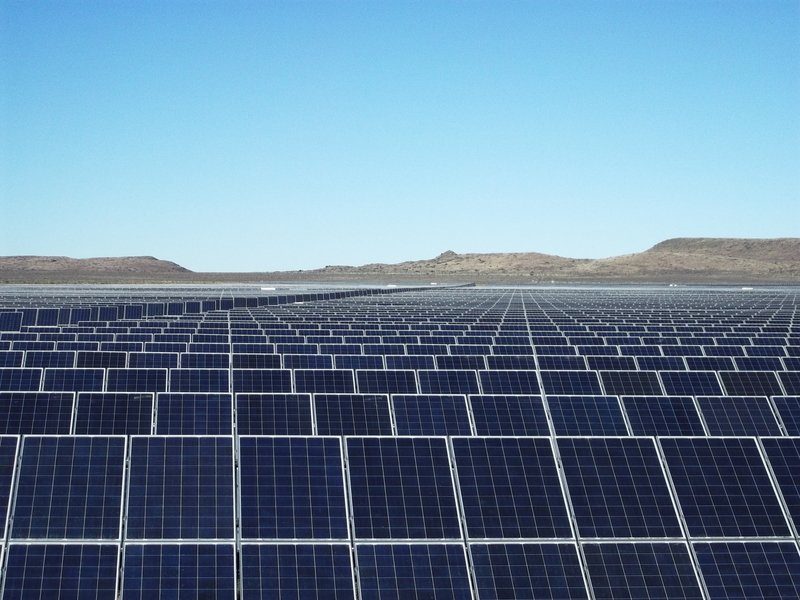
Eskom has issued a Request for Proposals (RfP) from large-scale customers to procure 291MW of solar photovoltaic (PV) capacity through long-term power purchase agreements (PPAs) from its own renewable energy sites. The deadline for bidding is October 24th.
Successful bidders will participate in PPAs ranging from five to 25 years with a minimum capacity of 10 MW, providing energy in stages from multiple Eskom schemes. These projects are being developed adjacent to the Eskom power station
The RFP provides a customized solution that meets operational requirements while contributing to South Africa’s decarbonization goals.
According to Eskom, the renewable energy supplied under the PPA will be provided on a self-dispatch basis, meaning customers will receive the energy produced by the PV facility. There is no central power distribution control or real-time scheduling by the utility company. In other words, consumers must operate with the understanding that availability depends on irradiation profiles and weather conditions. The buyer is responsible for balancing the remaining demand requirements through other sources or Eskom supply channels.
Eskom said the program was established following an Expression of Interest (EoI) process and extensive engagement with commercial and industrial customers, which demonstrated strong demand for direct contracts through long-term PPAs.
The company’s dedicated renewable energy business is accelerating deployment, with the goal of having 2GW of ready-to-build projects by 2026, with plans to expand to 32GW, including green hydrogen, by 2040. By 2040, the company aims to move its power generation mix away from a coal-based portfolio to a mixed portfolio with an increasing share of clean energy sources.
“This is the next step in our focused implementation of our strategy to integrate additional renewable energy into the grid, in line with global power industry trends for environmentally sustainable solutions that support broader decarbonization objectives,” Eskom Group CEO Dan Malokane said.
“Exactly one year after launching our turnaround strategy, we are not only focused on ending load shedding, but also on transforming Eskom into a sustainable and competitive company, while ensuring security of supply through a customer-centric approach.”
The Eskom RfP can be found here.
Meanwhile, the renewable energy program approved by eThekwini Municipality will enable the procurement of 400MW of new capacity, consisting of 100MW of solar power and 300MW of gas-fired power. The focus is on dispatchable, reliable, low-carbon energy technologies that strengthen cities’ energy resilience.
The procurement process will be rolled out in stages, with the solar RfP to be issued in December and construction expected by September 2027. The gas-to-power RfP will be issued in 2026, with further details to be announced in due course.
The program is expected to save municipalities R5 billion (US$287.5 million) over the life of the PPA, translating into annual savings of R250 million. It is also expected to unlock R8.5 billion in private investment, create approximately 2,200 jobs during the construction and operational phases, and reduce eThekwini’s dependence on the national grid by 18% when fully operational.
“This initiative is not just about energy; it is about economic growth, stimulating industry and looking to the future of our city,” said eThekwini Mayor Cyril Chaba.
The approval of eThekwini’s clean energy initiative follows the issuance of an Article 34 Ministerial Decision by Minister of Power and Energy Kgosiansho Ramogopa, which gives local governments the power to procure their own electricity.
At a briefing on the results of eThekwini municipality’s application, Ramokgopa said the authority was so far the first and only municipality in the country to adopt an electricity regulation law and could serve as a template for other municipalities. The minister said if other municipalities did not act now they would be ousted by private companies.
“What is happening in the South African electricity market is that there are private generators and they are picking a piece of the pie,” Ramokopa said. “So they enter into bilateral contracts with some big consumers, some trusted consumers, some hard-working consumers.
“If local authorities don’t act… over the next five years, they will find that their best consumers will be taken away and served by the private sector. Local authorities will be catering to those who can’t afford it, and that’s a recipe for local authorities to collapse from a revenue perspective, and they won’t be able to provide services.”
“Therefore, the sooner we embrace this scheme, the better. There is nothing more important for local governments involved in the power sector.”
Photo: Solar panels (© Douw Jager | Dreamstime.com)
