


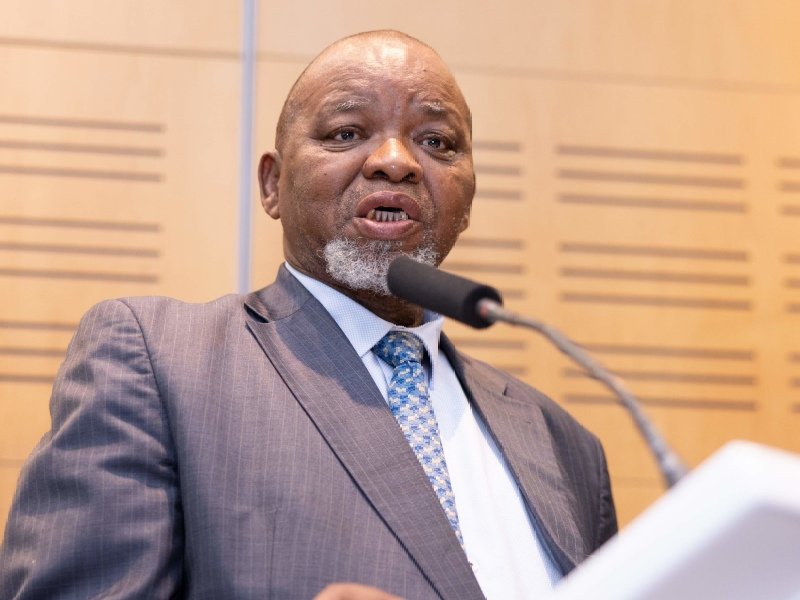
Funding available to junior mining companies through South Africa’s Junior Mines Exploration Fund (JMEF) has increased to R2 billion from an initial R400 million when it launched in 2024, highlighting the growing interest from the public and private sectors in funding early-stage exploration projects. South Africa’s Mineral Resources and Energy Minister Gwede Mantashe told a conference in Cape Town that the increased capital allocation reflects growing stakeholder confidence in South Africa’s exploration potential and broader mining strategy.
“Without exploration, there are no mines. South Africa has traditionally been built on large mining companies, but now we are expanding into artisanal mining and are willing to learn from the continent. If we don’t empower these miners, they will turn to illegal mining,” Mantashe said.
Increase in capital allocation
This increase is in line with the country’s national objectives to strengthen its position as the world’s leading producer of platinum group metals and chromium, revitalize the gold industry and develop new opportunities across the mining value chain, including coal and rare earths. The increased funding is also expected to accelerate support for junior mining projects in South Africa. Mantashe pointed out that since 2025, the country has awarded eight junior mining projects, four of which have already entered the production stage.
These include rare earth projects and two gold operations in Limpopo province. South Africa has also granted 358 prospecting rights and issued 32 mining licenses over the past year as part of a broader strategy to stimulate industry growth while strengthening the participation of young miners.
“We are still calling on companies to contribute to the exploration fund,” Mantaş reiterated.
Supporting artisanal and small-scale miners
Alongside JMEF, South Africa is increasing support for artisanal and small-scale miners (ASMs), who are a vital part of the mining ecosystem. The government’s 2022 ASM Policy formalizes these activities, distinguishing them from illegal “zama-zamas” and provides grants for equipment, environmental remediation, and skills development. The program aims to transform small-scale mining into a sustainable and legally recognized sector, fostering local jobs and regional economic growth by facilitating partnerships with large miners and offering tax incentives.
The dual approach ensures that both exploration-focused junior and operational ASM ventures are supported simultaneously. Artisanal miners can receive training through institutions such as Mintek ASM Mining School, while small-scale miners can utilize semi-mechanized techniques without relying on dangerous chemicals. With 21 permits issued to date and tribute agreements allowing collective access to mine tailings, South Africa is promoting responsible mining practices and increasing participation across communities that have historically been excluded from the sector.
