


A consortium led by trader Mr Bittle, in conjunction with energy companies ACWA Power and Engen, is planning a $3 billion gas-fired power plant and LNG import facility at the port of Durban, marking a turning point for South Africa’s power sector. The project aims to deliver 1,000 to 1,800 MW of combined cycle gas production and LNG supply for industrial, mining and marine users, with state power utility Eskom reporting a strong operational recovery.
Therefore, as South Africa enters 2026, it will move from power crisis management to infrastructure development. Eskom’s power recovery plan saw the system achieve a record 266 consecutive days without interruption, significantly reducing unplanned outages from more than 13,440 MW to approximately 9,177 MW year-on-year. Energy utilization is over 65%, indicating improved vehicle reliability.
LNG, gas-to-power demand is rapidly increasing
Gas to power will be the variable that determines South Africa’s 2026 energy implementation stage. The core project beyond Bittle’s gas-fired power station is the Richards Bay LNG import terminal built around a floating storage and regasification unit.
The proposed facility is designed to handle 135,000 to 174,000 m3 of LNG storage capacity, with an initial regasification throughput of 400 million standard cubic feet per day. LNG imports are expected to be sourced from global suppliers, including the United States, through a combination of long-term and spot contracts to increase security of supply. A final investment decision is expected in 2026, with the project potentially supporting 3,000 MW of gas-fired power generation.
As South Africa positions itself as a future LNG buyer, major U.S. suppliers are taking notice. Speaking at a roundtable discussion dedicated to investing in South Africa during Africa Energy Week 2025, Shahrukh Mirza, ExxonMobil’s vice president of LNG development, said the company sees the country as a “top LNG destination.” Their analysis project that South Africa will require 6 to 7 GW of new combined cycle gas-fired power generation capacity to replace retired coal-fired power plants, balance growing renewable energy generation, and strengthen the role of LNG as a grid stabilization solution.
Power: Expanding transmission capacity to integrate renewable energy
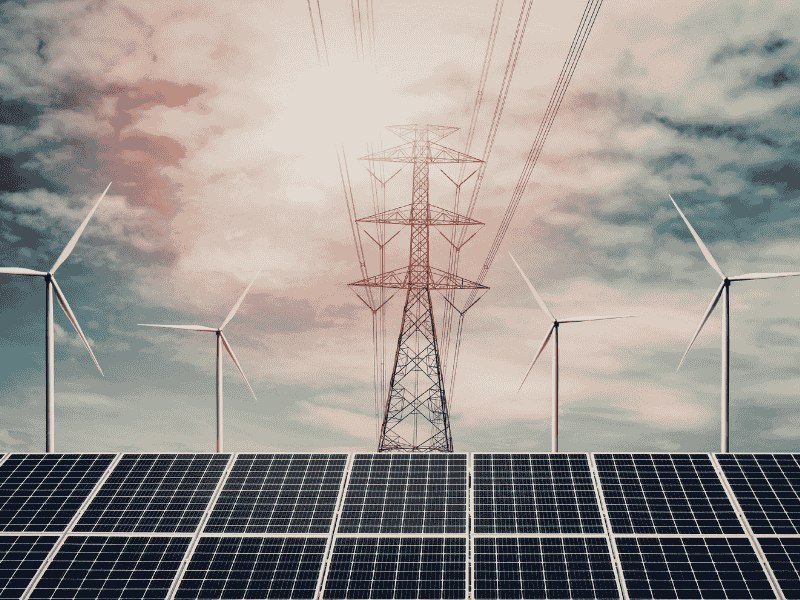
Coal still accounts for 80% of installed capacity, but growth is coming from renewables. Independent power producers have mobilized R200 billion of investment through competitive procurement and private contracts, delivering over 6,000 MW of renewable energy. Grid stability is currently supported by battery energy storage, including the Oasis BESS projects Mookdi, Aggeneis and Nieuwehoop (257 MW/1,028 MWh). These utility-scale batteries will store renewable energy and supply it to the power grid during peak demand times, and are expected to be operational by the end of 2026.
Grid infrastructure must expand in parallel with renewable energy. To address saturated renewable corridors, the government launched the Independent Transmission Projects Program to allow private companies to finance, build and operate new transmission lines. Phase 1 of the program is expected to see the construction of 1,164 km of high-capacity 400 kV transmission lines to free up grid capacity. Integrating renewable energy and load growth will require 14,000 km of new transmission lines by 2032.
Mining-related energy infrastructure
Ensuring reliable power solutions in South Africa is a priority in 2026, particularly for the mining sector, which consumes approximately 14-30% of the country’s electricity. Across the sector, mining companies are targeting 7.5 GW of renewable projects in 2026, reflecting the transition to hybrid energy solutions.
“We have resources in mountains, rivers, sun and wind. We also have resources in terms of minerals themselves. The challenge is how to scale up renewable energy,” said Livoningo Mnisi, Eskom’s Renewable Energy Group Executive at AEW 2025.
To meet demand, mining companies are securing dedicated power through renewable PPAs, hybrid generation, and on-site solar power solutions. Richards Bay Minerals, part of Rio Tinto, has contracted 230 MW from the Overberg wind farm and leverages additional solar and wind power to achieve a total of around 500 MW of clean power. Impala Platinum has also secured a five-year PPA with renewable energy platform Discovery Green to supply wind and solar energy to the refinery starting in 2026, covering 90% of the electricity needs at the Springs Refinery facility. Talisa has signed a 15-year renewable energy PPA with power trader Etana, which will see approximately 44% of the mine’s electricity coming from wind and solar sources, with new generation expected to come online by 2026 to support platinum and chrome operations.
