


Google DeepMind, a UK-based artificial intelligence company, is widely regarded as one of the pioneers of modern AI.
The company, led by Demis Hassabis, gained worldwide attention by developing a computer program that allowed people to teach themselves to play chess, said to be the world’s most complex board game, and later Go. These breakthroughs helped establish new standards in machine learning and strengthened the potential of self-learning systems.
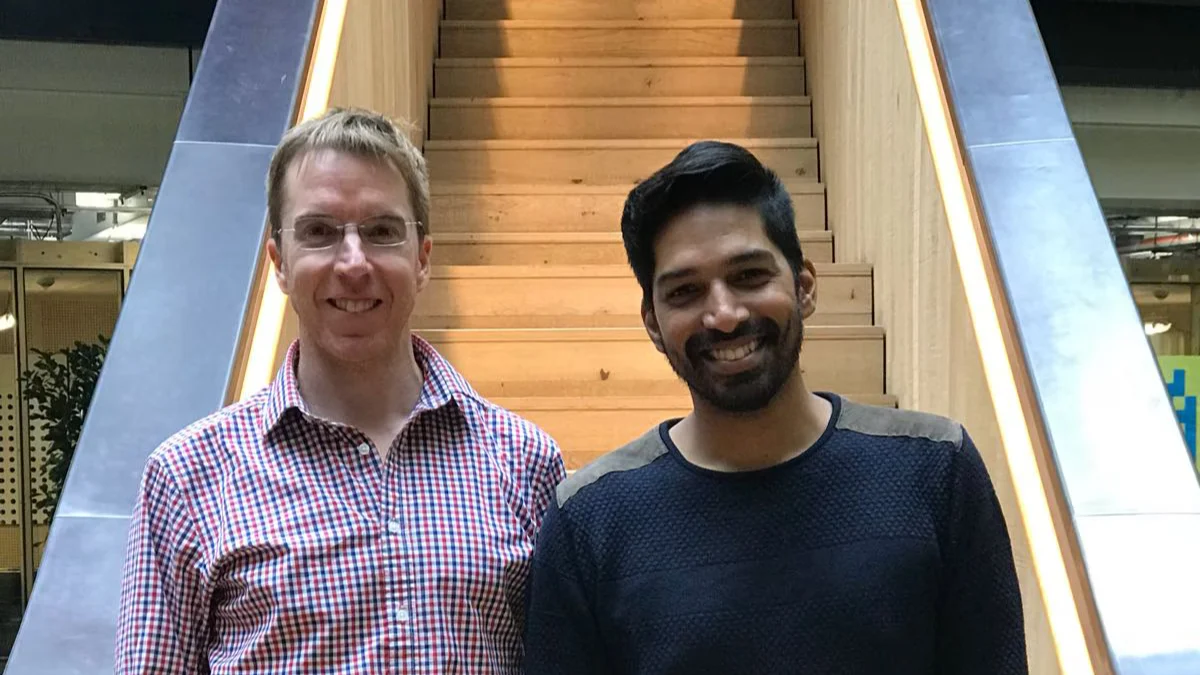
Early on, DeepMind attracted some of the leading minds in artificial intelligence. Many were motivated to explore problems that were widely considered unsolvable at the time. Among them were two South Africans, Shakir Mohamed and Ulrich Paquette.
Mohammed studied electrical engineering and information engineering at the University of the Witwatersrand, where he won several academic honors including the Prime Minister’s Medal and the Bernard Price Award. He completed his degree with honors in 2005 and briefly worked at Nedbank in credit analysis and risk analysis for personal mortgages.
He then received a Commonwealth Scholarship to pursue a PhD in statistical machine learning at the University of Cambridge. Mohamed said that during this time, very few people understood or were aware of the field of machine learning. His doctoral studies took four years to complete and he then moved to Canada to work as a research assistant at the University of British Columbia in a program focused on neural computation and adaptive perception.
Mohamed returned to the UK in 2013 and joined DeepMind Technologies. Google acquired the startup the following year for $600 million. Following the acquisition, Mr. Mohamed was appointed Research Director and continues to work on developing general purpose learning algorithms. His research interests include machine learning, Bayesian statistics, deep learning, and social engineering AI. According to Google Scholar, his work has been cited more than 37,000 times, with the majority of those citations recorded since 2020.
Mr Paquet also began his academic journey in South Africa, where he studied at the University of Pretoria, where he developed an early interest in artificial intelligence. After completing my Master’s degree in Computer Science, I received a Commonwealth Scholarship to study at Cambridge, where I continued my PhD research in the same field as Mohamed. His thesis focused on probabilistic approaches to supervised and unsupervised machine learning.
After completing his studies, Mr. Paquet worked for a company specializing in facial recognition and image similarity technology before joining Microsoft as a senior researcher. He contributed to the Xbox One launch team and developed a backend recommender system that adjusts product suggestions based on user behavior and preferences.
Mr. Paquet then joined Vocal IQ, a UK-based startup acquired by Apple in 2015, and was appointed Apple’s Research Manager. Less than a year later, he returned to the UK and joined Google DeepMind.
At DeepMind, Paquette worked on AlphaZero, an AI system designed to train itself to master chess, shogi, and Go. The system received praise for its unconventional and creative play style, including its willingness to sacrifice pieces in ways that challenged traditional strategy.
After becoming close friends during their studies and later collaborating at DeepMind, Mohammed and Paquette co-founded Deep Learning Indaba to power artificial intelligence research across Africa. The initiative was inspired by their experiences attending international AI conferences, where Africans were often the only participants.
Deep Learning Indaba is held every year. The first event was hosted by the University of the Witwatersrand, and the 2025 edition was held in Rwanda.
