


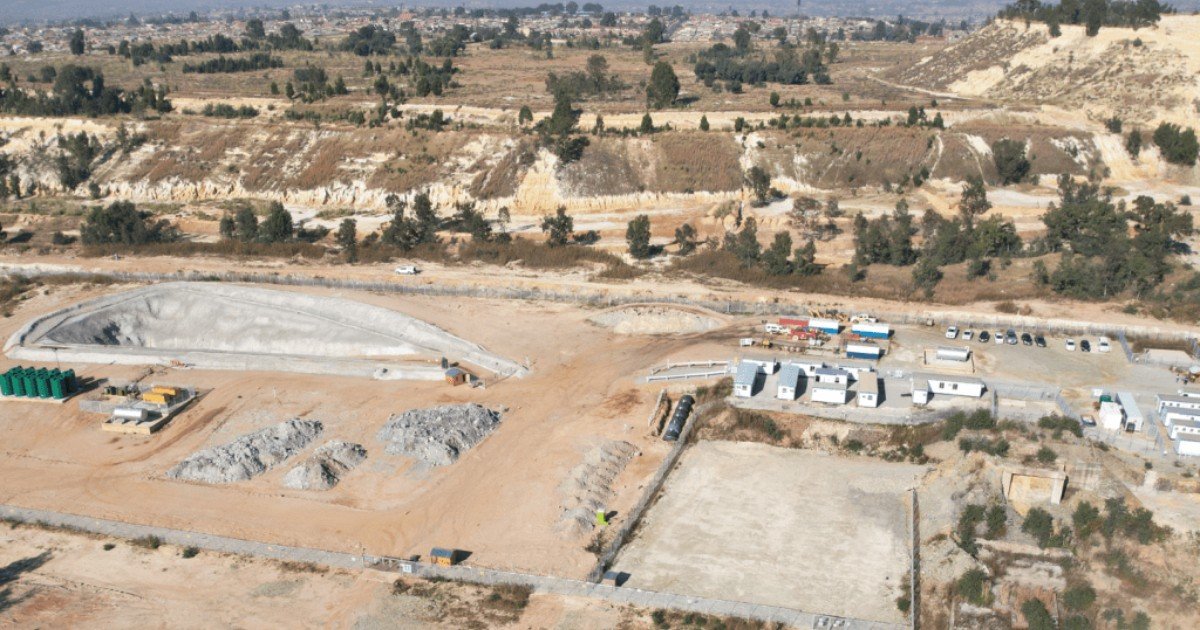
The study was conducted by SRK Consulting in the second half of 2025 on behalf of mining specialist investor Nebari to assess the technical and operational risks surrounding West Wits Mining’s ongoing projects.
Located within South Africa’s historic Witwatersrand Basin, the Kala Sharrows operation is notable as the country’s first new gold mine development in approximately 15 years.
According to Joseph Mainama, director, partner and principal mining engineer at SRK Consulting, the aim was to provide funders with an evidence-based view of whether there were significant risks threatening the viability of the project.
“The client wanted the comfort that there were no risks that posed a material threat to the sustained progress of the project,” Mainama said.
He added that the review also tested whether the project schedule, milestones and operating plan were realistic enough to support the funding and repayment profile.
Another model of South African gold
Qala Shallows stands out from many of South Africa’s aging gold operations. Unlike the deep, labor-intensive mines that dominate the region, this project is designed as a shallow, mechanized underground operation.
Access from the existing Qala boxcut will be reduced and mining will focus on multiple reef horizons, including K9A and K9B reefs.
The chosen method mechanizes traditional breast mining using trackless equipment and is expected to reduce infrastructure strength and operational complexity.
Mainama pointed out that the relatively shallow depth changes the technical risk profile significantly. Ventilation requirements and pump loads are lower than a typical South African gold mine and no intake air cooling is required.
However, this geometry introduces surface interaction and subsidence considerations that form part of the technical review.
The project’s final feasibility study is expected to produce approximately 944,000 ounces over the mine’s 17-year life, with steady-state production projected to be approximately 70,000 ounces per year for the first 12 years.
The mine is expected to contribute more than $1.15 billion to the national economy over its life and create more than 1,000 direct jobs.
Charge processing strategies reduce capital risk

Another feature is the decision to use toll processing at existing processing facilities rather than building a dedicated plant and tailings storage facility.
Kenneth Mahuma, design engineer at SRK Consulting, said this approach significantly reduces initial capital requirements while changing the risk profile of the project.
“From an engineering and project implementation perspective, third-party fee processing changes the risk profile quite significantly,” Mahuma explained.
He noted that while this strategy eliminates significant construction and commissioning risks, there is a need to build strong long-term certainty around logistics, material handling and processing capacity.
Extensive risk sweep and compliance checks
SRK’s review covered geology, resource and reserve compliance, mine design, geotechnical factors, environmental and ESG risks, hydrology, metallurgy, capital and operating costs, and organizational capabilities.
The team also ran sensitivity scenarios to test the project’s resilience under less favorable conditions.
“Such scenarios can give clients a quantitative understanding of how sensitive their projects are to key value drivers,” Mainama said.
A key element is ensuring compliance with the JORC Code, which is essential given the Australian listing of West Wits Mining. Mr. Mainama warned that discrepancies in reporting “could cause serious difficulties in raising funds.”
Importantly, due diligence was conducted as an interactive process that included data room reviews, on-site inspections, and technical workshops with both the mining company and financiers.
Mr. Mainama said this enabled technical discoveries to be immediately understood in terms of funding risk and execution priorities.
