


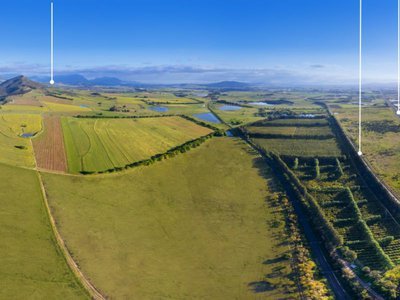
South Africa’s planned smart city is steadily becoming a reality, with key infrastructure, industry and community spaces coming together.
A planned smart city development in Stellenbosch is beginning to take shape, with early construction milestones marking the start of a long-term project aimed at reshaping the way people live, work and move in the region. The development, known as Bridges of Stellenbosch, is positioned as a large-scale integrated city, combining residential areas, commercial activities and recreational spaces within a single master-planned environment.
Plans for the Stellenbosch bridge were first made public at the end of 2024. The project is supported by the City of Stellenbosch and the Western Cape tourism, trade and investment promotion agency, Wesgro. From its inception, it has been positioned as a first-of-its-kind development in the area, with a focus on modern infrastructure, proximity to major transport routes, and a layout designed around the natural environment.
According to MyBroadband, the smart city is already showing visible progress on the ground, with the first major industrial tenant fully operational and extensive infrastructure construction underway. This early activity marks a significant step forward for a project expected to unfold over several decades.
Also read: These emergency numbers can save lives in eThekwini
Where is The Bridge at Stellenbosch located?
The development is being built on 340 hectares of land in Muldersvlei, located between Cape Town, Paarl and the Stellenbosch Winelands. It is located close to major transport routes such as the N1 and R101 motorways, while also being connected to the surrounding agricultural and wine-producing regions.
The project’s founders claim that this position offers significant advantages, especially for light industrial tenants who rely on efficient logistics, reliable infrastructure and easy access to local markets. Visibility from major routes and proximity to economic centers are also seen as important factors supporting long-term growth.
How is development structured?
Stellenbosch Bridge is divided into three main areas: residential, industrial and mixed-use. Each district is designed to fulfill a specific function while maintaining close connections with other districts, supporting the idea of a self-contained smart city.
Industrial districts are the most developed. Smith Power Equipment, a long-established agricultural company, broke ground on the new warehouse and office complex in July 2024 and became the first tenant. Construction was completed within a year and the facility officially opened in May 2025.
What infrastructure works are currently underway?
Beyond individual buildings, bulk infrastructure development is also beginning. Roads and essential services are being prepared to support the expanding project. One of the most notable recent milestones is the start of construction on a two-lane rail underpass from Old Pearl Road.
Construction companies ASLA and Smart Civils began work on the underpass in late November 2025. Once completed, the underpass will serve as the main gateway to Stellenbosch’s bridge, allowing access from the other side of the railway line where the N1 and R101 motorways are located. Completion is scheduled for December 2026.
Public transport links are also part of the plan. Buses will be installed to transport people between the nearby train station and various stops within the mixed-use district, helping to connect the development to the existing transport network.
What is the smart city housing plan?
The residential district will include up to 2,800 homes. These range from low to high density and are designed to accommodate students, families, and retirees. Although the detailed layout has not yet been finalized, the aim is to provide a diverse mix of housing types in close proximity to workplaces, schools and recreational areas.
Homes within the residential area are not yet for sale. Stellenbosch Bridge Properties will continue to work with the developer to refine the plans and determine how the residential component will be developed in the long term.
Also read: Postpaid electricity app aims to help households when prepaid electricity runs out
What does a mixed-use district include?
Mixed-use districts are intended to house a variety of facilities and businesses. Plans include space for retail, a hospital, schools, hotels, wedding venues and conference facilities. The founders also aim to provide comprehensive educational facilities within walking distance of residential areas, covering basic, primary and high school levels.
Recreational facilities form an important part of the vision. These include a central square with coffee shops and restaurants, nature trails, vineyards offering wine tastings and tours, and a dedicated sports hub.
An innovation and university district is also planned within the mixed-use area. The space will house Stellenbosch University’s LaunchLab, an incubator focused on supporting start-ups and entrepreneurial activity.
How do we approach design, sustainability and health?
Architecturally, the Stellenbosch Bridge is designed to reflect the Cape’s heritage, drawing inspiration from the surrounding winelands, mountain ranges and natural landscape. Health and wellness has been identified as a priority, with extensive green spaces planned throughout the development.
Residents will have access to outdoor areas designed for walking, running and cycling, including designated tracks around Klapmuts Hill overlooking the site. These features aim to support an active lifestyle while maintaining a strong connection with nature.
The development also plans to incorporate renewable energy. A 10MW fixed-tilt solar power plant will provide part of the city’s electricity, reducing long-term carbon emissions.
How long will the project take to complete?
Full development of the Stellenbosch bridge is expected to take 15 to 20 years. The founders believe this extended timeline will allow the project to adapt to changing market conditions and evolving needs, allowing it to remain relevant as smart cities grow.

How to listen to East Coast Radio
1. Listen to East Coast radio on the radio’s FM (frequency modulation) spectrum between 94 and 95.
2. Click here to listen to ECR live or download the ECR app (iOS/Android).
3. Listen to East Coast Radio on DStv Audio Bouquet, Channel 836.
4. Switch to the Openview decoder’s audio bouquet and browse to channel 606.
5. Listen with Amazon Alexa.
Follow us on social media:
