


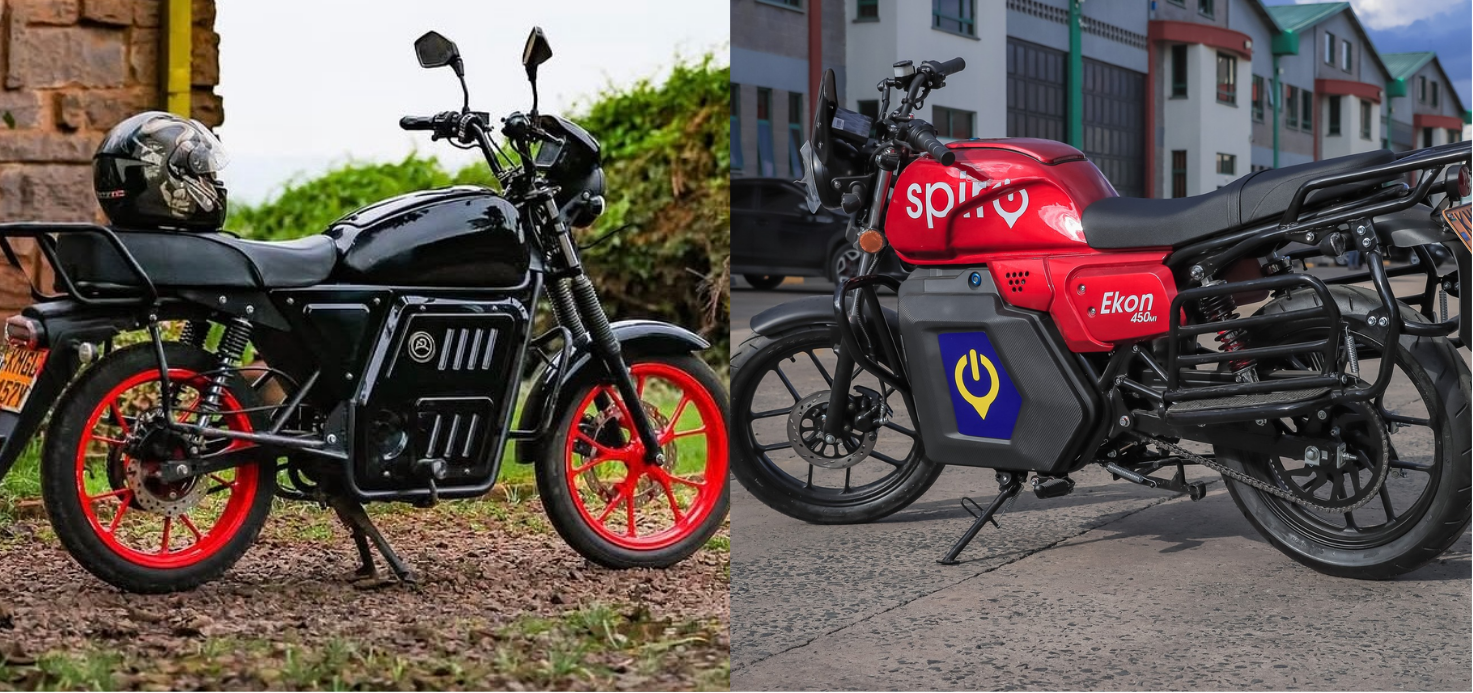
Kenya’s electric motorcycle sector is seeing an influx of new institutional investors, with global investors backing two fast-growing companies as the transition away from petrol transport accelerates.
•Climate finance company Nichio has extended a US$7 million senior debt facility to Spiro Mobility, while the International Finance Corporation (IFC) will acquire a US$5 million stake in Nairobi-based ARC Ride.
•The investment confirms the growing belief that electric bikes, long seen as experimental in African markets, are becoming a commercially viable asset that can generate stable profits while reducing operating costs in the informal transport economy.
•During the launch of the National Electric Mobility Policy, the government reported that the number of registered EVs in Kenya has increased to 24,754 by the end of December 2025.
Founded in 2022, Spiro has rapidly expanded to become one of Africa’s largest electric mobility operators, deploying over 80,000 electric motorcycles supported by over 2,500 battery swapping stations across seven African markets. The company maintains assembly facilities in Kenya, Uganda, Nigeria and Rwanda, reflecting a strategy focused on local production and infrastructure expansion.
Nichio’s debt facility, structured as a working capital loan, will fund the expansion of Spiro’s electric vehicle and battery exchange network, allowing the company to expand its operations without diluting its capital. The use of structured credit rather than venture capital signals a shift in investor perception, with electric mobility companies increasingly being seen as infrastructure operators capable of supporting institutional-grade financing.
At the same time, IFC’s planned equity investment in ARC Ride highlights Nairobi’s emergence as a center for electric transport investment. ARC Ride’s business model is centered around automated battery swapping stations, allowing riders to replace a depleted battery with a fully charged unit within a minute, eliminating downtime and reducing the initial cost of the vehicle.
Electric bikes are gaining attention primarily because of their economic efficiency. Riders can save up to 40% on daily fuel and maintenance costs, addressing one of the most persistent financial constraints in Africa’s informal transport sector, where millions of people depend on motorcycles for their income.
Investors are also targeting battery replacement infrastructure, which has emerged as a critical backbone for electric mobility deployments. Unlike traditional charging, swapping systems allow vehicles to continue operating without long charging delays, making electrification practical for commercial riders whose income depends on continued usage.
Kenya has become one of the most competitive e-bike markets in Africa, with regional expansion by operators such as Roam and Ampersand. Motorcycles are one of the largest sources of urban transport emissions in African cities, while also forming the backbone of commuting and delivery networks.
