


Stakeholders have renewed their calls for a comprehensive review of the Land Use Act (LUA) to reflect current realities, particularly in the areas of security, registration, acquisition and compensation of title.
The call was made at the opening ceremony of the 3rd International Conference and Trade Fair on Land and Development and the 7th Lateef Jakande Lecture organized by the University of Lagos (UNILAG) Center for Housing and Sustainable Development (CHSD), ARUA Center of Excellence in Urbanization and Liveable Cities, and Real Estate Developers Association of Nigeria (REDAN). The theme of the event was “Sustainable Land Development and Urban Infrastructure in Africa”.
Setting the tone for the discussion, Mr. Chudi Ubosi, Principal Partner, Ubosi Ele & Company, said LUA was slowing down the development of the entire sector. He called for increased stakeholder engagement and improved cooperation between governments, communities and the private sector.
“Governments at all levels need to act urgently to implement recommendations that will accelerate national development,” he said.
Mr. Ubosi also emphasized the need to ease access to land ownership through the elimination of bureaucratic bottlenecks, strong public awareness, transparency in processes, cost reduction, and digitization, including the use of blockchain and GIS technologies.
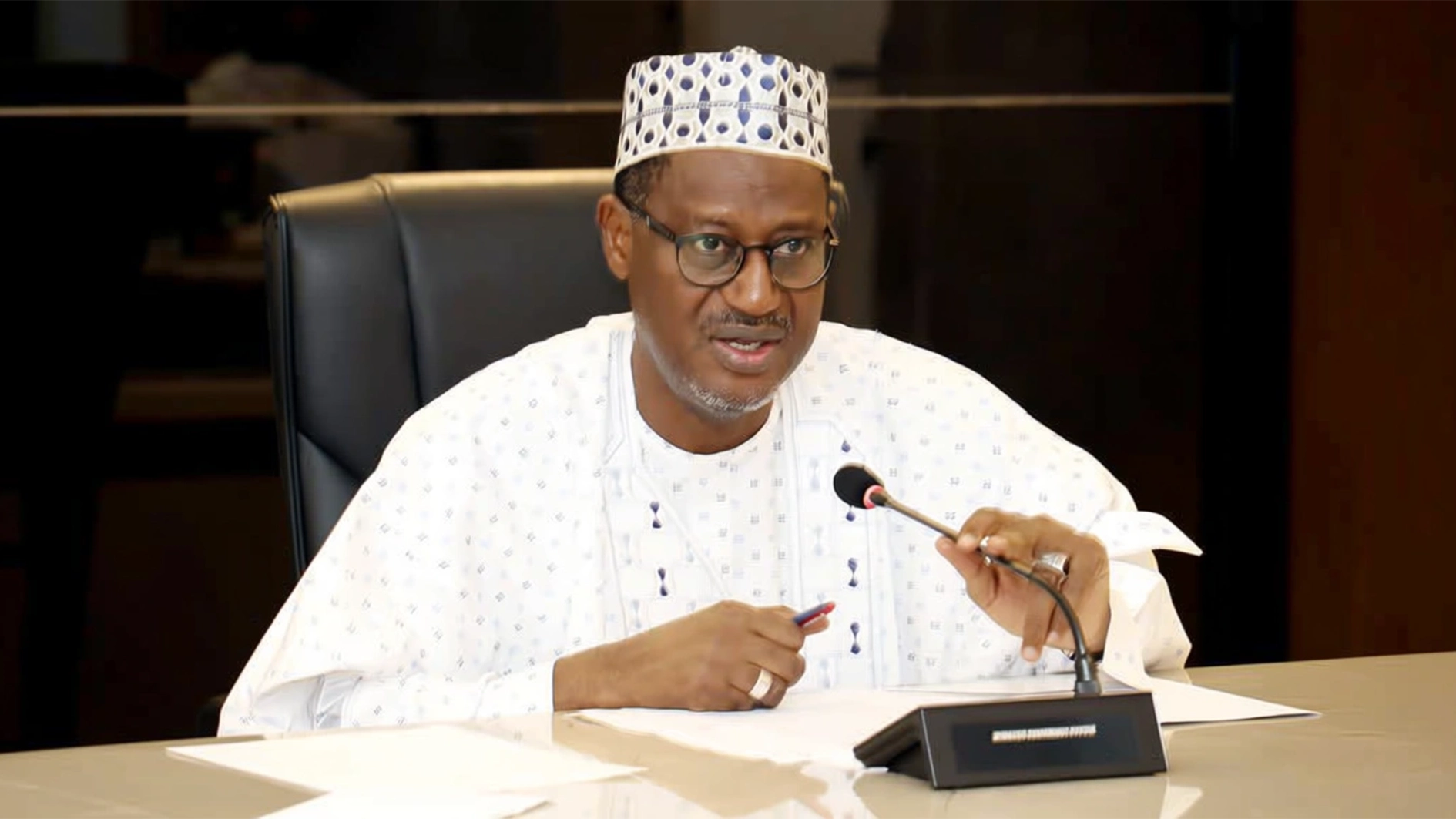
Minister of Housing and Urban Development, Ahmed Dangiwa, has declared that Nigeria’s path to becoming a $1 trillion economy depends on unlocking land prices through structural reforms, digital ownership and concerted investment in urban infrastructure.
In his keynote address, Dangiwa warned that Africa’s rapid urbanization, 70% of which is occurring in informal settlements, could turn into a crisis if governments fail to strengthen land governance and ensure equitable access.
“Africa must not become urbanized and impoverished. Our cities must become engines of inclusive prosperity, resilience and productivity,” he said.
He said weak land administration undermines mortgage systems, infrastructure planning, compensation processes, property rights and land’s ability to serve as investment capital.
He announced that the new National Land Registry launched last week in Kano is designed to harmonize title establishment processes, digitize land records, standardize service delivery and release over $300 billion in dead capital across the state.
The minister, who was represented by Shehu Osidi, Managing Director of the Federal Mortgage Bank of Nigeria (FMBN), directed states to allocate between 1 and 3 per cent of their annual budgets for land management, with at least half devoted to title establishment, digitization, cadastral surveys and dispute resolution.
He said: “When countries invest correctly, citizens have secure rights, investors can trust the register, mortgages are available and governments can generate sustainable income.”
Mr Dangiwa described Land4Growth as the most important land reform initiative in recent history and said its success is essential to achieving Nigeria’s multi-trillion dollar economic ambitions.
Linking land reform and urban renewal, he said the federal government had completed over 150 slum upgrading and rehabilitation projects across six geopolitical zones under the National Urban Renewal and Slum Upgrading Programme.
UNILAG Vice-Chancellor, Prof. Folasade Ogunsola, noted that hosting both a major international conference and the annual Jakande Lecture provided strategic space for rigorous engagement. He warned that Africa, which is expected to absorb nearly 950 million new urban residents by 2050, needs to act quickly to prevent infrastructure collapse, land conflicts and worsening inequality.
“The days of fragmented planning are over. We need a paradigm shift where research, policy and industry action are fully synchronized,” she said.
He added that UNILAG continues to develop evidence-based solutions for coastal resilience, transport systems, land use efficiency and smart urban planning.
In his message to the conference, the Second Vice-President of the Association of Professional Bodies of Nigeria (APBN), Toyin Ayinde, reaffirmed the association’s commitment to promoting sustainable land development and urban infrastructure.
Ayinde, a former Lagos Commissioner for Physical Planning and Urban Development, said the theme of the conference reflected the urgent need to integrate infrastructure development and land governance in Africa’s fast-growing cities.
Earlier, REDAN HRM Chairman Oba Akintoye Adeoye praised the achievements of the late Lateef Jakande, describing him as “a visionary whose social housing blueprint remains a reference point for modern governance”.
He said this year’s Jakande lecture, themed “Achieving Sustainable Housing Infrastructure Finance in Nigeria,” will be central to addressing rising construction costs, poor financing mechanisms and widening housing deficits.
He called for stronger public-private partnerships, innovative financing and transparent regulation to promote sustainable housing provision. “Housing is not just a social necessity; it is a driver of economic growth, employment and national development,” he said.
The Lagos State Commissioner for Housing, Morufe Akindele-Fatai, also paid tribute to Jakande. “Mr. Jakande understood the urgency of shelter. He knew that governance must be felt at home, where families gather, children grow and dignity begins,” he said.
He noted that under Jakande’s leadership, more than 30,000 homes with simple, functional and scalable designs were delivered for civil servants and low-income earners.
“He prioritized affordability and transparency. Housing became a social good, not just a government program,” he added.
Akindele Fatai said current challenges, economic downturn, rapid population growth and expansion of informal settlements are straining housing delivery efforts, especially in Lagos, a destination of choice for millions of people seeking opportunity.
“The true tribute we owe him is not to replicate the past, but to build on his vision by applying his principles to a future where families will no longer have to choose between affordability and dignity,” he said.
