


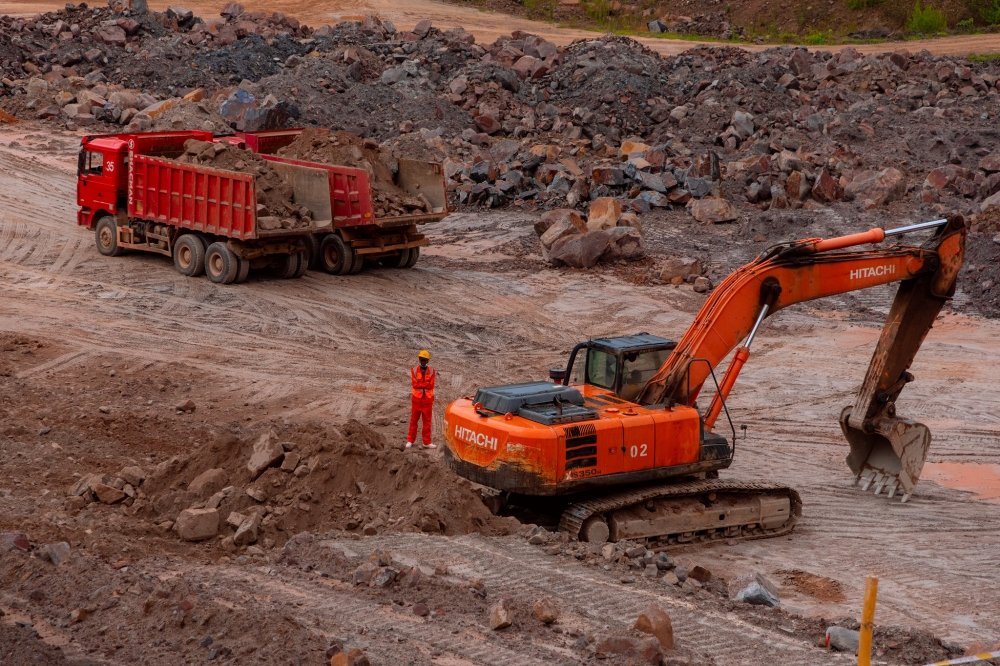
Only half of Rwanda’s public infrastructure projects have environmental and social safety measures in place, a new study has found. As recommended, all infrastructure construction projects must consistently adhere to safety measures such as pollution prevention, erosion control, biodiversity conservation, and climate-resilient design.
The study, carried out by Transparency International Rwanda, surveyed 1,193 people in 13 districts between September and October to assess how government agencies and contractors are handling transparency, project information and grievance mechanisms, targeting project-affected households, local workers and community representatives.
Also read: Six major infrastructure projects to be financed with CHF600 billion budget
They found that environmental training for project teams was limited and mostly only provided at the beginning of the project. Community consultation and compensation were inconsistent, leaving residents inadequately informed and protected.
The findings were announced in Kigali on Friday, November 28th. The findings showed, among other things, that recovery measures, such as remediation of mining sites, were carried out irregularly and that supervision and monitoring of contractors regarding environmental and safety compliance was uneven.
In the roads sector, compliance was generally weak.
The site had dust contamination, unprotected slopes, poor erosion control, and an unsafe working environment. Communities faced risks from unstable slopes and open drainage channels, and documentation was often incomplete. Some good practices were observed, such as improved drainage and dust control, but they were not consistent.
In the water sector, the study found that most protection measures have been implemented with reasonable community involvement.
However, erosion control, worker safety, and monitoring were inconsistent and documentation gaps remained. Although some projects showed positive practices, implementation was inconsistent.
In the health sector, most projects met basic safeguards due to well-constructed structures and safe site selection. Worker safety, waste management, and documentation were only partially implemented. While donor-funded projects generally followed gender and worker behavior safeguards, other projects were less consistent.
Non-compliance was most evident in the education sector.
Many schools lacked environmental assessments, adequate sanitation, accessibility for learners with disabilities, and safety measures. Although the building was structurally sound, its environmental, social, and safety measures were weak.
In the power sector, compliance was moderate. Proactive practices included safe line routing and documentation, but gaps existed in worker safety, environmental remediation, public safety, and social safety measures.
“Communities exposed to environmental risks”
The group’s program manager, Albert Kavatiri Luwego, said the results revealed that safety measures required by national law were often “circumvented or only partially applied”, particularly in the road sectors where compliance was lowest.
During field audits in selected areas, researchers documented poorly managed soil dumping near wetlands, limited environmental training for project teams, irregular mining site remediation, and inconsistent consultation with local residents.
“These gaps expose communities to environmental risks and undermine long-term sustainability,” Luwego said.
Satisfaction with access to project information was moderate, but the survey found that attendance at community information sessions was low and affected residents were the least satisfied with how their concerns were addressed.
Rwego emphasized the importance of early community involvement. “This shows why consultation should never be ignored. Infrastructure is not just about engineering, it’s about people,” he said.
The remaining 13 metrics will be evaluated in a final study after ongoing activities have progressed.
Ministry of Justice Permanent Secretary Theophile Mbonela said the Ministry’s role is not limited to ensuring accountability after harm has occurred.
“Our responsibility is not only to follow up on punishments after the effects are already visible. We also have a duty to help prevent these problems before they occur.”
He noted that people often file complaints only after they have already been harmed by a particular activity, and in some cases even in situations where their lives may be at risk.
