


The empire built by Mutumwa Mawere
By A Business Reporter — The death of Mutumwa Mawele in South Africa on Thursday once again reveals the story of the most formidable black-run business empire Zimbabwe has produced in the post-independence era. At its peak, the empire spanned mining, finance, manufacturing, agriculture, and media, and employed tens of thousands of people.
Mawele, who turned 66 on January 11, died at Mediclinic Sandton Hospital in Johannesburg, where he had been receiving specialized treatment for several months. According to his family, he suffered a stroke in 2024 due to complications related to an acute neurological illness.
His brother Vincent Mawele confirmed the death and said the family was still waiting for full medical details regarding his last illness.
Born and educated in Zimbabwe, Swaziland, Britain and the United States, Mawele’s academic foundation reflected the scale of his later ambitions. He holds degrees in economics, business administration and finance, as well as several professional qualifications that have supported the exponential growth of global finance.
He started his career in 1984 as an actuarial student before joining the Zimbabwe Industrial Development Corporation as a research economist. Mr. Mawele joined the World Bank in 1988 after a brief but influential stint at the Central African Commercial Bank, and later became senior investment officer at its private arm, the International Finance Corporation.
In 1995 he resigned from the World Bank and moved to South Africa, setting the stage for his transition from international financier to one of Zimbabwe’s most powerful entrepreneurs. During the country’s privatization drive in the 1990s, Mawele emerged as a pioneer in black economic empowerment, acquiring strategic assets that became the backbone of a vast industrial network.
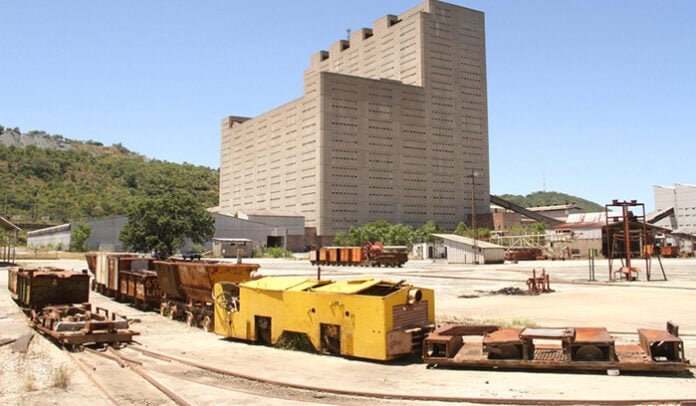
At the heart of that network was his wholly-owned holding company, Africa Resources Limited (ARL), backed by investment vehicles such as Ukbambana Kvatana Investments and Endurite Properties. The underlying asset was the Shabani Mashaba Mine (SMM), which combined the Shabani Mine in Zvishabane and the Gassu Mine in Mashaba. The mine is the country’s only producer of chrysotile asbestos and at one time was the world’s leading supplier.
Cash flow from asbestos mining fueled aggressive expansion. Mawele has built a vertically integrated industrial base with major holdings in Turnall, a leading manufacturer of fiber cement products, SteelNet through its tube and pipe industry, and General Beltings, a major supplier of industrial conveyor systems to the mining sector.
His influence extended decisively to financial services as well. Mawere founded First Banking Corporation (now FBC Holdings), one of Zimbabwe’s leading commercial banks. Through UKI, he became the largest shareholder in Zimre Holdings, merged Niko’s Insurance with Diamond Insurance to form Niko’s Diamond, separated Fidelity Life Insurance, and established UKI Securities as a stock broker.
Agriculture formed another pillar of the empire. Through significant interests in FSI Agricom Holdings and CFI Holdings, his businesses spanned poultry production, agricultural input retail, and specialty flour milling operations, while supplying farmers across the country.
The ARL ecosystem is completed by logistics, media, and professional services companies designed to serve both internal operations and the broader economy. These included Petter Transport and Logistics, which handles international cargo between Durban and Zimbabwe, Shipping Consolidated Holdings, Media Africa Group, publisher of Business Tribune and Weekend Tribune, as well as public relations, travel, human resources and manufacturing companies.
At its peak, Mawere’s enterprise size employed more than 20,000 people. This staggering statistic highlighted the scale of the empire, which reached almost every corner of Zimbabwe’s economy.
Although his later years were marked by protracted legal and political battles that dismantled much of what he had built, Mutumwa Mawere’s legacy remains a defining chapter in Zimbabwe’s economic history. It was the rise of a globally trained financier who returned to his homeland and built one of the most ambitious indigenous business empires this country has ever known, almost from the ground up.
