


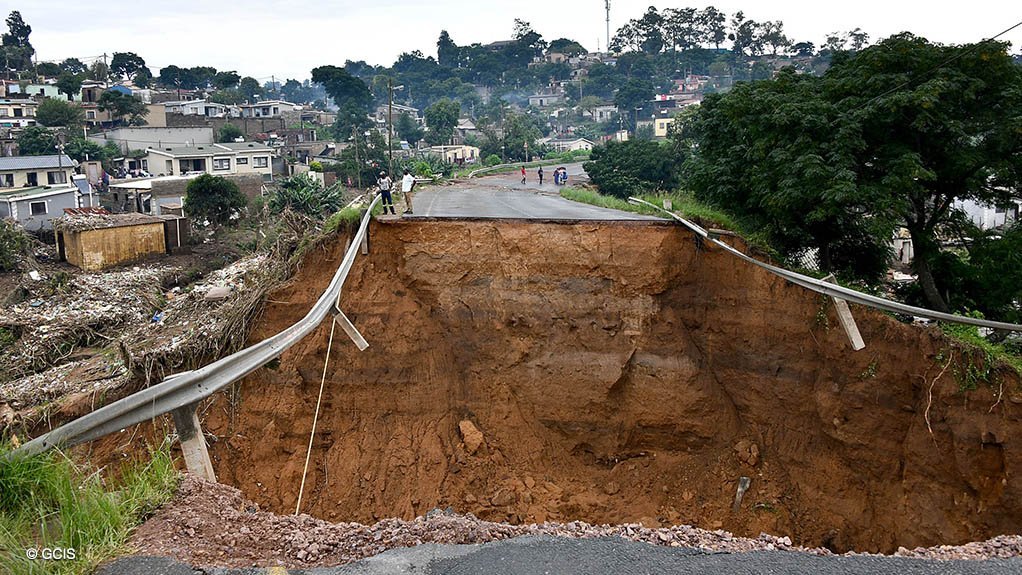
News about extreme weather events appears on a monthly basis, highlighting the importance of building in some infrastructure and societal resilience in an evolving climate.
Damage to the built and natural environment disrupts socio-economic activities, but the public naturally tends to focus on the more visible and dramatic or traumatic events, often ignoring the more understated effects of climate change.
For example, most people know about the wildfires that affected Europe last month, but far fewer people know that France was having trouble cooling some of its nuclear reactors because a record heatwave had made rivers too warm.
As Reuters reported on July 15, four of the nuclear power plants operated by the French electricity company had to impose production restrictions due to higher-than-expected water temperatures in and along the Rhône and Garonne rivers.
Reuters also reported that power generation could be further affected, with “some coal-fired power plants also requiring cooling water from rivers.”
Furthermore, while droughts often bring to mind images of queues for water trucks and crop failures, the impact on wastewater infrastructure is rarely considered.
“Less water flowing into sewers means sewers are more likely to become clogged and therefore prone to flooding,” said co-author Professor Jenny Day of the University of the Western Cape’s Water Research Institute when publishing the book Towards the Blue-Green City: Building Urban Water Resilience in June.
Additionally, as people flush their toilets less frequently to conserve water, less sewage reaches the sewage treatment plants, creating a “vicious cycle of sewage treatment plants failing, (further) reducing available water, and reducing wastewater that could potentially be recycled.”
Both examples show that the effects of climate change can be much more subtle than physical destruction, and as the international organization Global Center for Adaptation (GCA) points out, the interconnected nature of infrastructure systems means that significant disruption to one aspect can “cause significant human costs.”
GCA CEO Patrick Verkoien said: “All businesses and individuals are vulnerable to climate risks because they rely on infrastructure to some degree. Ensuring that these infrastructure systems can operate reliably under future climate scenarios is critical for us and our economies.”
He added that the cost of infrastructure damage will increase exponentially by 2050. Citing Ghana as an example, he pointed out that climate risks could cost the transport sector the equivalent of $3.9 billion by 2050. In addition to suffocating Ghana’s economy, this would risk cutting off access to health care for 80% of the population.
The damage caused by abnormal weather is increasing. Floods in KwaZulu-Natal earlier this year killed more than 400 people, disrupted business operations in parts of the province, and caused significant infrastructure damage, which Parliament’s Select Joint Committee on Flood Disaster Relief and Recovery estimates will cost at least R17 billion to repair.
It is therefore clear that infrastructure resilience is key to long-term sustainability. Because, as Mark Victor, climate and sustainability leader at Deloitte Africa points out, resilient systems improve a society’s ability to withstand shocks.
Building infrastructure resilience requires local governments to understand the full range of current and future impacts of climate change and the potential impacts of climate risks on the built and natural environment. They also need to model the impact of risks and use such models to develop comprehensive, strategic plans to promote resilience, he explains.
Willemien van Niekerk, senior researcher at the Council for Scientific and Industrial Research (CSIR), said that although CSIR and other organizations are collecting and interpreting data to help governments develop climate-resilient habitats, local settlements remain “highly vulnerable” to the impacts of climate change.
The reason for this is the poor location of some infrastructure and villages. “The building is built within the flood line and on a sloping hillside, making it susceptible to flooding and landslides,” she comments.
Victor added that this is partially the case because developments are often not designed to withstand extreme weather-related events and climate change that may occur in the future.
“Legal frameworks incorporate environmental regulations and environmental impact assessments. However, when building new infrastructure or buildings, the challenge is not only to understand the environmental impacts once and for all in order to obtain approvals, but also to consider climate change scenarios and how the environmental impacts will change as a result.”
This dynamic approach to incorporating climate data into urban planning and infrastructure design is critical because, as Van Niekerk points out, “the likelihood of disasters occurring is increasing, and the level of risk and vulnerability exposed to such disasters is increasing as well.”
Therefore, aspects that make people vulnerable, such as age and poverty, also make them more vulnerable to the effects of climate change. As a result, “the risk of disasters occurring in our cities and towns increases over time.”
Van Niekerk added that while temperatures are rising across the country, northern South Africa, particularly the Northern Cape, Limpopo, North West and Mpumalanga, are all expected to become even hotter and decidedly drier.
Meanwhile, coastal cities must contend with the effects of rising sea levels and variable rainfall, the latter of which is already a reality in every state.
“While we cannot do anything about the likelihood of a weather-based disaster occurring, we can reduce our vulnerability and reduce our exposure,” she added.
Funding questions
Van Niekerk and Victor point out that while infrastructure development is expensive, there are cost-effective measures to reduce risk and increase resilience.
“There are three ways to reduce climate risks: withdrawal, adaptation and protection,” Van Niekerk said.
The first is to relocate settlements from, or prevent new settlements and structures from being built in, areas that are disproportionately exposed to climate risks.
The second involves maintaining and/or refurbishing key infrastructure, such as stormwater drainage and water distribution systems, to ensure that they function as expected in the event of a disaster and allow society to “respond” to floods and droughts without large-scale losses.
“‘Protecting’ involves building hard infrastructure, such as sea walls in coastal cities, to protect financial and social investments in settlements where ‘retreating’ is not an option,” Van Niekerk explains.
She and Victor also advocate the use of nature-based solutions, such as managing invasive plants, restoring wetlands, recharging aquifers, and providing buffer zones.
“We are able to manage existing infrastructure and identify where it needs to be strengthened, because a large portion of the damage that occurs before, during and after extreme weather events is due to poor service delivery and infrastructure management,” commented Victor.
Van Niekerk, Victor and the GCA all highlight the need to make better investments by applying climate data to prioritize interventions in areas most at risk, with the GCA noting that an integrated approach could reduce the additional costs of building resilience by 90% compared to following a less targeted approach.
However, GCA also sees the development of hard infrastructure as a potential means of social improvement.
The 2020 GCA Policy Paper, published in response to COVID-19, states: “Investing in resilient infrastructure is essential to sustaining Africa’s growth and accelerating efforts to end extreme poverty.”
“In low- and middle-income countries alone, investments in forward-looking, resilience-first infrastructure could generate $4.2 trillion in net benefits, representing a return of $4 for every dollar spent. By contrast, business-as-usual infrastructure investments that are not optimized for resilience return only $1.5 for every dollar spent,” the policy paper states.
The report notes that resilient infrastructure investment is job-intensive and has a high return on investment, making it “an important tool for overcoming the current economic crisis while protecting livelihoods.”
“Attracting institutional investors to Africa’s infrastructure projects and expanding their funding sources will require the development of new financial instruments,” he said, citing options such as investing directly in African infrastructure through infrastructure funds or tapping into African pension funds.
Victor adds that a properly structured public-private partnership (PPP) incentive structure can reduce project risk while ensuring that the project delivers long-term, sustainable outcomes.
GCA, in partnership with the World Bank, African Development Bank, Asian Development Bank, European Investment Bank, European Bank for Reconstruction and Development, and other partners, launched the Knowledge Module on PPPs for Climate Resilient Infrastructure guide last year as a step to help countries attract the private sector to help finance climate resilient infrastructure.
Additionally, $1.6 billion was mobilized in the first two quarters of this year and used to advance adaptation interventions in Ghana, Senegal, and other African countries.
Van Niekerk added that the CSIR works frequently with the Department of Forestry, Fisheries and the Environment and will consider updating the Green Book, which provides climate change projections for every eight square kilometer area of South Africa. In this way, CSIR actively supports the development of climate adaptation plans that can be used by all sectors of government for long-term planning.
Similarly, Victor said Deloitte is working with clients, governments and local authorities to model scenarios and model the potential impacts of 1.5°C, 2°C and even 8°C temperature increases.
However, he suggests that more interaction and engagement is needed between state organizations, agencies, and the private sector in developing viable business cases for PPP projects that have the greatest impact on building resilience.
The current level of engagement between these actors and development finance institutions is also inadequate, he added.
“Climate change is already causing further damage, stress and distress to the world’s cities, where more than half the world’s population lives and 80% of the world’s gross domestic product. But by making infrastructure more resilient and reliable, regions can create new jobs and encourage investment to unlock their economic potential and continue to thrive in a warming world,” Verkoien concluded.
