


economics
March 5, 2026 • 4:54 PM ET
Print this page
The dominance of the US dollar in the global financial system is well established, and Africa is no exception. Across the continent, currencies are deeply integrated into trade, financial and bond markets. But while the dollar has brought some efficiency and trade simplification, it also represents structural dependence and economic fragility.
Approximately 60% of the continent’s external public debt is denominated in dollars, so any movements in the dollar have a direct impact on Africa’s balance sheets. Almost all important imports are priced and settled in dollars, and even intra-African trade is transacted in dollars and often routed through correspondent banking networks, costing Africa more than $5 billion in fees annually. North and West Africa will be even more dependent on the euro, as the CFA franc area is pegged to the euro.
In recent years, African governments have taken more aggressive steps to reduce this dependence, and volatile US tariff policy over the past year has further accelerated efforts to diversify trade settlement mechanisms. Africa is seeking to address these vulnerabilities, at least in part, through regional payment systems. However, progress has been uneven, and alternatives to the dollar have quietly emerged in the meantime. China’s renminbi is permeating throughout Africa’s trade and financial networks.
Africa promotes local currency payments
In 2022, Afreximbank and the African Continental Free Trade Area Secretariat launched the Pan-African Payment System (PAPSS), designed to enable cross-border payments in local currencies without routing transactions through the dollar.
This is a novel initiative that bets on digital innovation as an alternative to monetary union and capital market union. PAPSS removes correspondent banks and intermediary currencies from the chain by debiting and crediting local currency accounts at participating central banks. The system claims to be able to reduce trading fees by up to 70%.
Membership has grown to 17 central banks, over 150 commercial banks and 14 payment switches. Interoperability agreements with other regional systems, such as BUNA, the Arab Monetary Fund’s cross-border multicurrency payments system, also aim to exclude intermediate currencies from cross-regional trade.
However, this system is still in its infancy. Publicly available data on transaction volumes and payment amounts are limited, making it difficult to assess the scale of adoption. Onboarding across diverse regulatory regimes takes time and structural constraints still exist. Chronic currency fluctuations and sovereign credit downgrades may prevent companies from moving away from hard currencies, even if local currency payments become technologically easier.
Although PAPSS is strategically essential, its economic impact remains small at present.
The RMB is on the rise across the continent
While PAPSS represents a long-term intra-African solution to dollar dependence, a more immediate and externally driven shift is also underway. Africa has become an important stage for China’s renminbi internationalization experiment. As China’s economic involvement in the continent deepens and US involvement weakens over the past year, the use of the renminbi in African economies has accelerated.
In 2025, Africa emerged as China’s fastest growing export market, with China’s exports to Africa increasing by 27% year-on-year. At the same time, China announced that it would introduce a zero-tariff policy for 53 African countries. Of course, increased trade alone does not guarantee the adoption of a currency. But the Chinese government is combining commercial incentives with financial plumbing designed to normalize renminbi payments in trade, investment and finance across the continent.
Several African countries, including South Africa, Egypt, Nigeria, Mauritius and Morocco, have signed currency swap agreements with China, giving them liquidity to pay directly in renminbi. Zambia is in talks with China over a possible currency swap agreement. Some countries also accept Renminbi for domestic transactions. In Zambia, Africa’s second-largest copper producer, mining companies can now pay royalties and taxes in renminbi. Meanwhile, in Nigeria and Kenya, informal networks allow local traders to pay intermediary logistics companies in local currencies and convert the funds into renminbi for Chinese suppliers.
The use of China’s Cross-Border Interbank Payment System (CIPS) is also increasing in Africa. In 2024, CIPS processed 47,000 cross-border RMB transactions between China and African countries, an increase of 20.4% over the previous year, and the value of these transactions reached RMB 238.34 billion, an increase of 160.9% over the previous year. Growth is expected to continue as Afreximbank and South African Standard Bank join CIPS in 2025. Standard Bank, the continent’s largest commercial bank, is one of the first major financial institutions in the world to join China’s payments infrastructure. Afreximbank has also indicated its intention to finance more projects in RMB through its CIPS membership, marking a strategic shift away from dollar-based financing.
China has also pledged to open its domestic bond market to African issuers through renminbi-denominated Panda bonds. Egypt and Afreximbank both issued Panda bonds, raising RMB 3.5 billion ($478.7 million) and RMB 2.2 billion ($299.9 million), respectively. Other countries and multilateral financial institutions, including the African Finance Corporation and Kenya, have also expressed interest in issuing bonds this year. In parallel, Kenya and Ethiopia have been negotiating an agreement to convert existing dollar-denominated debt into renminbi.
The road ahead is multipolar, but it comes with its own risks
These developments are gradually normalizing the renminbi as a reserve, settlement and lending currency across sectors of the African economy, but will not automatically displace the US dollar. Although dependence on the dollar is receding in some regions, complete de-dollarization remains a long way off. The dollar’s entrenched global role, combined with Africa’s structural dependence, continues to peg much of the continent’s external economic activity to the US currency.
Remittances clearly demonstrate this reality. Accounting for an estimated 5.1% of Africa’s GDP in 2024 and constituting one of the largest sources of external financing, remittances remain overwhelmingly dollar-denominated. Additionally, dollar-backed stablecoins are gaining traction across Africa as a low-cost alternative for cross-border remittances, reducing fees traditionally associated with currency conversion in remittance flows. This strengthened the dollar’s relevance even as the infrastructure surrounding it evolved.
Therefore, what is emerging is not migration but diversification. There is a clear desire for a more polycentric financial environment that reduces the costs and vulnerabilities of relying on a single currency. Although the dollar is likely to continue to play an important role, the use of the renminbi is expanding. But as Africa moves down this path, caution is needed. Reducing dependence on the dollar and relying instead on the renminbi carries its own strategic risks, particularly given the renminbi’s partial convertibility, China’s capital controls, and the potential for political fallout during a financial crisis.
In the long term, Africa’s strongest path forward lies not in replacing one external anchor with another, but in deepening regional economic integration. Systems like PAPSS offer a way to reduce dependence on both the dollar and renminbi while simultaneously enhancing intra-African trade. This is an important goal for the African continent, which continues to suffer from some of the lowest levels of regional trade in the world. However, achieving this outcome requires more than technology. This will require political determination, sound macroeconomic management, and a sustained commitment to institutional reform.
Lise de Cruyff is a program assistant at the Atlantic Council’s Economic and National Strategic Initiatives within the Center for the Global Economy.

The Economic and State Strategic Initiative (ESI), based within the Center for the Global Economy, publishes cutting-edge research and analysis on the use of sanctions and economic power to achieve foreign policy goals and protect national security interests.

Read more
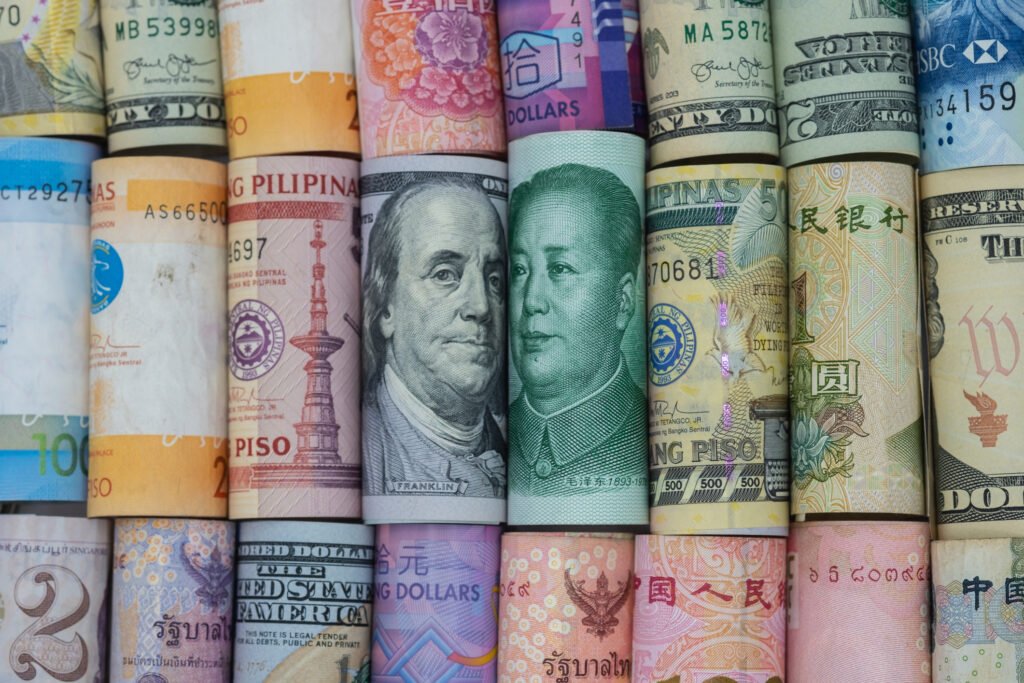
Image: US dollar and Chinese yuan banknotes with banknotes from multiple countries. It is a symbol of the tariff trade war crisis or unfair business between the world’s two largest economies.
