


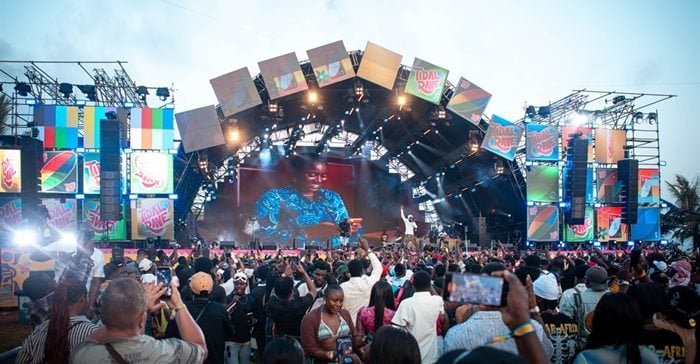
What started as a beach festival in Ghana has evolved into one of West Africa’s most influential youth culture platforms. Currently, the edition is successfully distributed in Accra, Ghana and Monrovia, Liberia, with expansion planned in Nigeria and South Africa. Tidal Rave provides a blueprint for how culture-driven platforms can drive brand value, economic participation, and cross-border relevance in Africa.
At a time when brands are struggling to meaningfully connect with African youth across fragmented markets, Echo House’s Tidal Rave has emerged as more than just an event. It is rapidly becoming a reproducible cultural system that blends entertainment, data, commerce, and community into a platform where young people choose to belong.
The 2025 edition of Tidal Rave Festival is Africa’s largest beach festival and has established its dominant position as one of the continent’s most immersive youth experiences. The festival attracted more than 25,000 ravers across Ghana and Liberia, transforming the West African coastline into a vibrant cultural stage and strengthening the festival’s appeal, operational resilience and relevance in a competitive youth environment.

The festival featured performances by artists who transcend borders and resonate deeply with African youth, including Isla Star, Black Sherif, Shatta Wale, Molly, Gyaky, Stan, Teddy Ride, Com Cruise, and MC Caro. But the real story lies beyond the stage and how Tidal Rave is redefining what a modern African festival can be.
“Over the years, Tidal Rave has intentionally transitioned from a one-day spectacle to an ongoing cultural movement curated for a growing community known as Four Laborers Only,” Echo House CEO Beryl Agyekum Ayaba said in a statement.
This evolution positions the festival not just as a provider of entertainment, but as a sustainable youth platform that maintains year-round relevance and fosters true cultural ownership.

Cultural and commercial synergy: A partnership model that works.
The success of Tidal Rave 2025 was fueled by strategically aligned partnerships that prioritized experience over visibility. A notable milestone was the partnership with Black Star Experience, which strengthened Tidal Rave’s role in promoting tourism, national identity and cultural exchange.
Brands such as Absa Bank, Johnnie Walker, Red Bull, MobileMoney Limited and Orange were integrated through curated experiences rather than traditional advertising. “This has ensured that the brand’s presence enhances the festival rather than disrupting it. This is an important shift in experiential marketing,” Beryl said.
Track culture through data and digital footprints
In the race for youth attention, Tidal Rave translated cultural momentum into measurable impact. The 2025 campaign generated 145 million impressions, 45 million reach, and 4.5 million interactions across digital platforms.
Beyond scale, emotions told a true story. Post-event analysis revealed a 12:1 ratio of positive to negative emotions. This reflects not just excitement, but trust earned through disciplined execution, thoughtful programming and respect for the audience experience.

From day to night: Designing immersive experiences
The festival experience is intentionally designed for non-stop engagement from day to night. Interactive zones such as Pink Beach, March Stations, Mural Installations and Cultural Village are designed to maximize participation and create a visually rich environment for organic content creation.
Beryl explained that the talent flow was executed with precision, ensuring smooth transitions, diverse performance energies, and continued engagement across multiple zones, which reinforced Tidal Rave’s excellent operational reputation.
Commerce as Culture: Enabling a Youth Economy
Tidal Rave’s commercial integration was rooted in economic participation. Absa Spark Market gave young entrepreneurs direct access to thousands of consumers, and Absa’s Spark Zone fostered digital literacy and the adoption of cashless payments.
Johnnie Walker Afro Exchange created a premium space for cross-cultural dialogue and creative expression, elevating the festival into a broader conversation about African creativity.
In Liberia, Orange supported young business owners through a dedicated market zone, reinforcing the festival’s role as an economic catalyst.

From West Africa to the Continent
The double executions in Ghana and Liberia over the years were premeditated. This tested Tidal Rave’s ability to operate across different regulatory, cultural and economic contexts while maintaining a unified brand experience. This is a key requirement for African cultural platforms that aim to expand beyond their domestic markets.
Building on this foundation, Tidal Rave will expand this year to Lagos, Nigeria and Durban, South Africa, two of the continent’s most influential youth, music and creative markets.
“With the addition of these new destinations in Accra and Monrovia, Tidal Rave will transform into a truly pan-African cultural platform,” Beryl continued.
As Africans increasingly seek experiences that reflect their identity, energy and ambitions, Tidal Rave positions itself as a way for young people to travel, connect and create culture across borders.
As brands operating in Africa look inward for platforms that truly reflect youth culture while achieving scale and accountability, Tidal Rave provides a compelling case study of how intentionally designed culture becomes infrastructure.
