


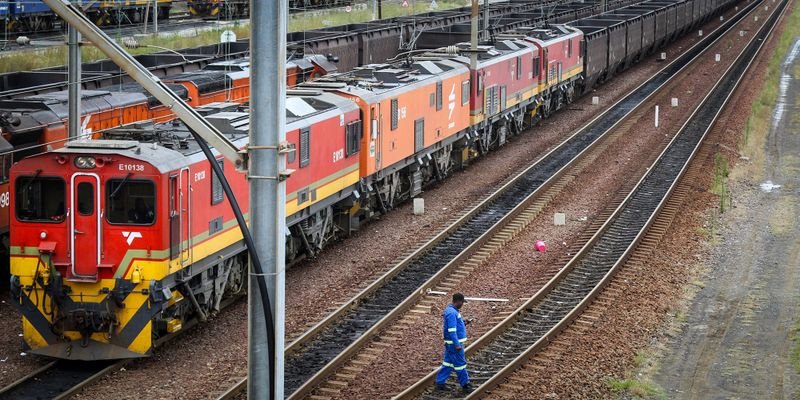
Transnet has begun the process of partnering with a private company, which will operate trains independently over the next three to five years, using the state transport group’s vast rail network across South Africa.
If all goes to plan, Transnet will open its rail network to the private sector as early as April 2024, a process that will see billions of rands invested by companies to upgrade the country’s transport infrastructure.
Transnet has published a draft network statement detailing how the state-owned enterprise (SOE) plans to embrace the private sector as delivery partners on its 21,200km national rail network. The statement is expected to be published in the Gazette in the coming days for public consultation and comment, before being finalized at the beginning of Transnet’s next financial year, which starts on April 1. Transnet plans to have trains operated by private companies in the second half of this year, the company’s new group chief executive has said. Michelle Phillips.
Transnet’s partnership with private companies was first mooted more than a decade ago but was revived in recent years by President Cyril Ramaphosa as part of a series of reforms aimed at economic growth. The difference now is that Transnet is in dire need of reform, and the state-owned company needs the private sector, given its massive R130-billion debt and lack of scope to retrofit and upgrade the rail network on its own.
Read more at Daily Maverick: Transnet announces 100 private sector leasing opportunities in ports
The logistics industry believes Transnet has neglected the maintenance of its rail network over the past decade, with an estimated maintenance balance of R200 billion. By partnering with Transnet, the private company will have to shoulder this cost, while also putting in place security measures to curb vandalism and cable theft on its rail network, which the state-owned company’s draft network statement revealed had reached crisis levels last year.
South Africa’s economy is further depressed due to a dysfunctional rail system. Dr Zane Simpson from Stellenbosch University estimated that Transnet’s inability to transport enough goods (mainly coal and iron ore) to ports by rail will cost the economy R411 billion in 2022 and around R353 billion in 2023. This equates to approximately R1 billion of lost economic output per day.
How does rail opening work?
Transnet’s draft network statement advances South Africa’s rail liberalization process, which has been managed by Transnet for many years. SOEs set the terms and conditions for how customers and industry use and pay for the infrastructure to transport goods to market.
To liberalize rail, Transnet plans to: Sell railway slots on the network to third parties or private companiesThis will allow us to introduce electric locomotives, independently transport goods to market by rail, and move traffic from off-road to rail. The process will be managed by the newly created Infrastructure Management Authority, which will set out general rules, deadlines, procedures and contractual arrangements for private sector actors accessing Transnet’s rail infrastructure.
Read more at Daily Maverick: Transnet’s critical business and financial position continue to deteriorate
Some industry observers see the publication of Transnet’s draft network statement as a positive move. James Hawley, CEO of Traction, Africa’s largest private rail operator, said it was a “watershed moment and the government should be congratulated for taking another step in the right direction to reform South Africa’s railways”.
“While we celebrate this progressive move, we are reviewing the draft statement to ensure that the conditions are in line with the implementation of rail reforms set out in the Cabinet-approved National Railways Policy 2022, the Cabinet-approved Freight Logistics Roadmap 2023 and the Private Sector Participation Framework,” Mr Hawley said.
Traxtion emerged as the successful bidder in November 2022 during Transnet’s initial process to auction rail slots on the Cape Corridor. However, Transnet I canceled my contract with Traxtion.said negotiations with the company to work out a mechanism for participating in the rail line had proven difficult.
The private sector largely ignored Transnet’s initial process to auction rail slots for several reasons.
First, Transnet required private companies to commit to capital investment over a two-year period, including deploying electric locomotives on rail lines. Such an endeavor requires a capital investment period of at least five to 10 years, considering that the locomotives cost about $4 million to acquire and take about 24 months to bring to South Africa.
Second, Transnet has established a two-year lease or contract period for the use of rail slots. Private sector stakeholders wanted more than two years, considering the large investment and purchasing equipment that would last for at least 30 years.
Transnet is currently fixing this problem by offering rail slots for three to five years. daily maverick We understand that Traxtion is keen to participate in Transnet’s new auction process.
Worry about high fees
A point of contention between private sector stakeholders is the fees to be paid to Transnet and the infrastructure manager once the railway is allowed to operate. Some players believe the fees set out in Transnet’s draft network statement are too high.
In the long term, some private industry insiders believe the government should consider cutting the number of railways in operation in half from 21,200km to 10,000km to 12,000km. Mr Holley said the cuts would allow Transnet to focus on repairing a much smaller rail network, allowing it to “do more with less”.
The Freight Logistics Roadmap supports Mr Hawley’s view by mentioning the right-sizing and closure of “low-density” iron ore and coal rail lines. DM
This story was first published in Weekly Magazine Daily Maverick 168 The newspaper is available nationwide for R29.
