


Kagri Bay can drill to a depth of 12,000 meters, targeting the Curad-1 well 7,500 meters offshore Somalia.
Turkey’s 10-year defense agreement promises naval protection for exploration throughout Somalia’s 1 million square kilometer exclusive economic zone.
Somalia has an estimated 30 billion barrels of oil reserves, but only two wells have been drilled offshore so far.
Turkey is leveraging military partnerships to exploit remote hydrocarbon basins in East Africa and deploying advanced drilling technology in a region where security infrastructure and energy exploration are strategically inseparable.
The move could position Somalia within the same geological corridor that has led to world-class gas discoveries in Tanzania and Mozambique, extending East Africa’s gas export chain northward.
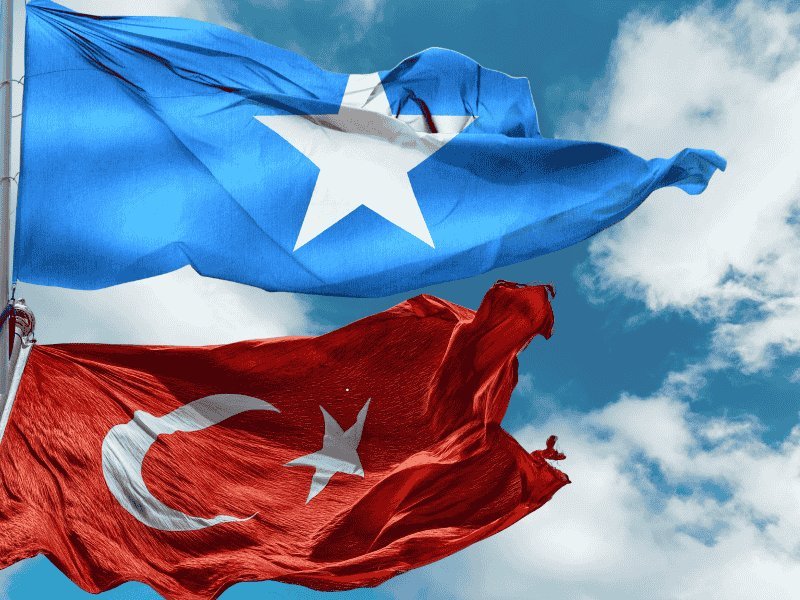
Turkey’s seventh-generation deep-sea drilling vessel “Kagri Bay” set sail for Somalia on February 15, representing Ankara’s first overseas deep-sea oil and gas exploration campaign and demonstrating new momentum in East Africa’s remote basin. The Korean-built drillship will embark on a 45-day journey to Mogadishu, where it will carry out full-scale drilling operations across three offshore concessions under a bilateral energy agreement signed in 2024.
The deployment follows a seismic survey completed by the Turkish research vessel Oruc Reis, which mapped more than 4,000 square kilometers of Somali waters from October 2024 to mid-2025. Drilling at the Kurad-1 well, located 370 kilometers off the coast of Mogadishu at a depth of 7,500 meters, is expected to begin in April after infrastructure and security preparations are completed, Turkey’s Energy and Natural Resources Minister Alparslan Bayraktar said.
Security partnerships underpin energy ambitions
This drilling activity will take place within the framework of the Defense and Economic Cooperation Framework Agreement signed between Turkey and Somalia in February 2024. The 10-year agreement, ratified by Somalia’s parliament by a vote of 213-3, commits Turkey to building, training and equipping Somalia’s navy, while providing comprehensive maritime security across Somalia’s 3,898 kilometers of coastline and 1 million square kilometers of exclusive economic zone. zone.
Three Turkish naval vessels will accompany the Gulf of Kagri around the Cape of Good Hope, providing necessary safety equipment for deep-sea exploration in an area historically affected by piracy and maritime instability. For Turkey, the deal provides exclusive exploration and production rights in three offshore blocks, positioning the Mediterranean nation as a key player in the geopolitics of the Red Sea and the Horn of Africa.
Turkey’s growing African energy footprint
The deployment to Somalia is the latest expansion of Türkiye’s growing energy presence across Africa. Turkish state-owned TPAO, as part of a consortium with Spain’s Repsol and Hungary’s Mitsui OSK Lines, secured exploration blocks in Libya’s February 2026 licensing round, Tripoli’s first competitive bidding round since 2007. The partnership includes onshore concessions in the Murzuq Basin and offshore concessions in the Mediterranean Sea, and is based on offshore exploration in June 2025. Memorandum of Understanding between Libya and TPAO.
Turkey is also expanding its gas infrastructure presence in North Africa, with plans to deploy floating storage and regasification units in Egypt to support Cairo’s LNG import capacity. The diversified approach, spanning upstream exploration, midstream infrastructure and energy security partnerships, positions Turkey as a strategic energy partner across multiple African markets, while advancing the government’s goal of reducing dependence on Russian and Middle Eastern energy imports.
The seventh-generation ultra-deep-sea vessel will be Turkey’s first overseas drilling operation, backed by a 10-year defense agreement that secures offshore exploration areas.
Advanced drilling capabilities and potential for regional integration
Kagri Bay represents state-of-the-art drilling technology purpose-built for Somalia’s undeveloped deepwater basin. The vessel is approximately 228 meters long and 42 meters wide and can drill up to 12,000 meters below the ocean floor.
Somalia’s offshore basin shares geological heritage with Tanzania and Mozambique, and giant gas discoveries originating from Jurassic oceanic shale have positioned East Africa as an emerging LNG export hub. If Turkey’s drilling activities confirm commercial gas discoveries off the coast of Somalia, it could integrate the country into the same regional gas corridor, linking Somalia’s resources with the developing liquefied natural gas export infrastructure further south and opening up access to Asian and European markets.
Somalia is one of Africa’s least-tapped hydrocarbon markets, with only two wells drilled offshore to date, despite it being estimated to have up to 30 billion barrels of oil reserves. Outside Turkey, Liberty Petroleum has secured production sharing contracts for blocks 131, 190 and 206 in early 2024, while Coastline Exploration has signed seven production sharing contracts in late 2023.
As maritime activity accelerates in East Africa, Somalia’s entry into active drilling alongside regional development positions the country as a key frontier opportunity for upstream investors eyeing high-impact discoveries in unexplored deep-sea basins.
