


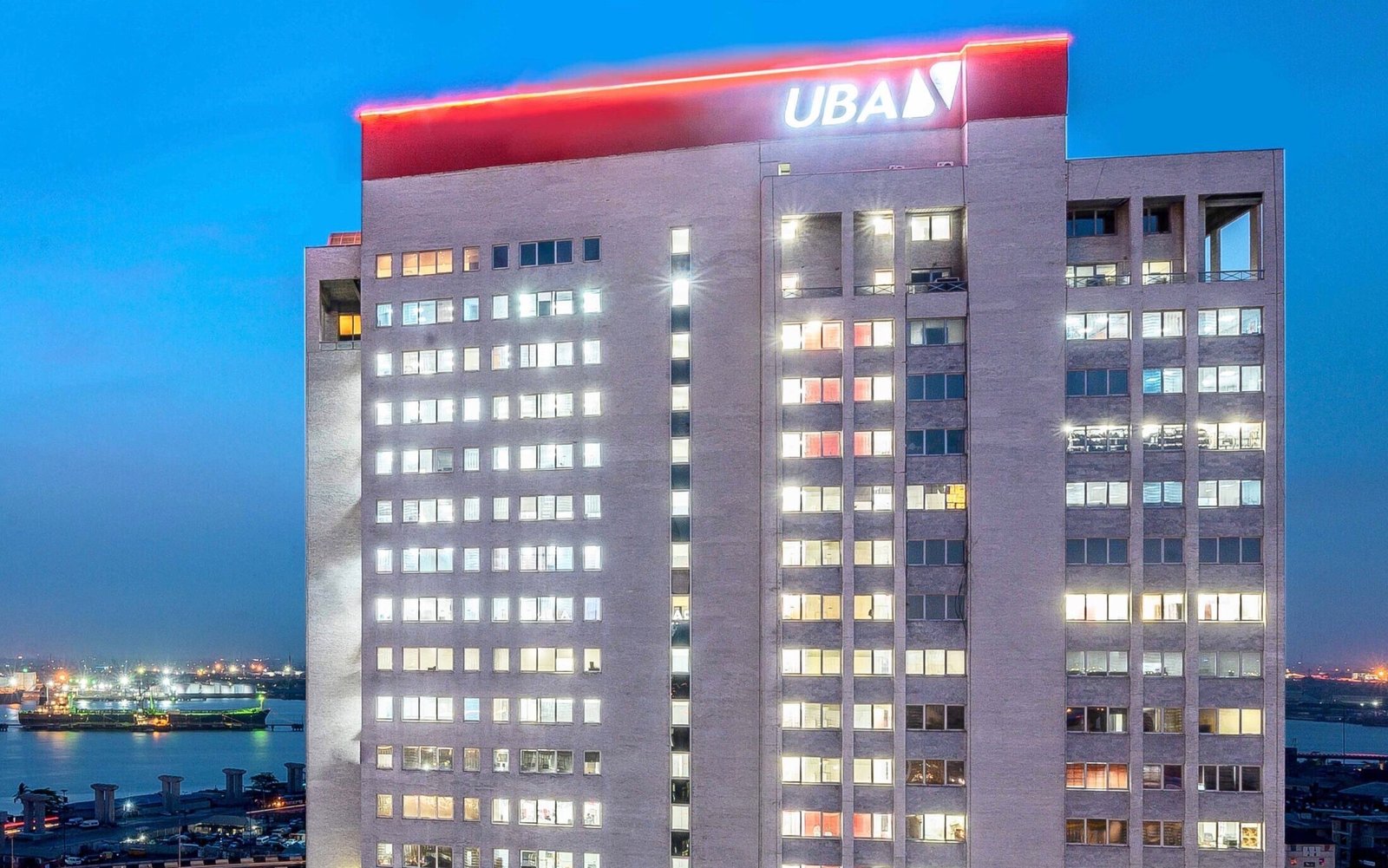
United Bank of Africa (UBA) has committed to strengthening its financing partnerships to help Chad realize its $30 billion Chad Connection 2030 plan to expand electricity, water and infrastructure across the country.
Oliver Arauba, Group Managing Director of UBA, announced this determination in his keynote speech at the UAE-Chad Trade and Investment Forum in Abu Dhabi on Monday. The theme of the forum was “Financing Africa’s Competitiveness – Building Bridges and Accelerating Progress.”
“We are here to discuss a topic that is both urgent and opportunity: financing Africa’s competitiveness,” Mr. Arauba said. “For too long, the story of Africa has been one of possibility. But I stand before you today and declare that the age of possibility is over. We have now entered the age of action.”
GMD described Chad Connection 2030 as a “declaration of intent” to move Chad from the fringes to the center of global competition.
The program outlines 268 projects in infrastructure, industrialization and human development, including the goal of increasing access to electricity by 60 percent and providing clean water to an additional 11 million people by 2030.
He said the success of the plan would depend on financing, noting that strong partnerships could transform Chad’s goals into “profitable projects that attract domestic and international capital.”

infrastructure gap
According to the African Development Bank (AfDB), Africa faces an annual infrastructure funding gap of between $68 billion and $108 billion, with total needs estimated at between $130 billion and $170 billion each year. The bank lists power, transport and water as the most underfunded sectors.
Arauba said UBA is working to close this gap through regional partnerships and new financial structures that mobilize Africa’s estimated $4 trillion of domestic capital.
“The challenge is never a lack of capital, but a lack of bankable structures and reliable partnerships,” he said, citing data from the African Finance Corporation that shows less than 15% of Africa’s domestic financial assets flow into productive infrastructure.
He highlighted some of UBA’s investments across the continent. In Tanzania, banks financed the Julius Nyerere hydropower project with $400 million. In Nigeria, it invested $700 million in the power sector and participated in a $10 billion syndicate for the Dangote refinery. and $315 million for road infrastructure in Ghana.
In Chad, UBA has already committed $102 million through national securities and national projects, including funding a $49 million domestic gas project, a $6.7 million wind farm in Amjaras, and modernization of road maintenance and communications.
He said the bank’s expansion into remote towns such as Beira (Mozambique), Nzerekore (Guinea) and Gulu (Uganda) demonstrated a strategy to become more competitive in financing “from the ground up.”
partnership
Mr. Arauba said Africa’s transformation depends on structured partnerships between international investors, African banks and development finance institutions.
Related article: COP30: As heat rises, sustainable cooling can reduce emissions and save trillions of dollars – Report
He noted that the UAE’s increasing role in African projects could accelerate industrial and digital growth, and urged greater cooperation with Gulf investors.
Citing UBA’s Banking for Africa’s Future white paper, released at a meeting of the World Bank and IMF, which reveals that African anchor investments can attract global capital at a ratio of more than 10:1, he said this model could enable Chad to finance its 2030 Agenda.
Mr. Arauba called for unity of purpose between governments and investors. Quoting Zayed Al Nahyan, the founding father of the UAE, he said change depends on collective efforts.
“As we open this panel, let us remember that funding Africa’s competitiveness is not an act of charity; it is the smartest investment we can make in a future of shared prosperity,” he said.
