


Despite Africa’s cities being engines of growth, many are operating far below their potential. The assessment, conducted under a capacity-building initiative led by the Economic Commission for Africa (ECA) and carried out jointly with UN-Habitat and UNCDF, showed that the six cities targeted were functioning at less than 40 percent of their economic capacity. Strengthening municipal finances is essential to improving water, sanitation and waste management services, as well as moving faster towards the Sustainable Development Goals, particularly SDG 11 on sustainable cities and communities.
Bridging gaps in municipal services
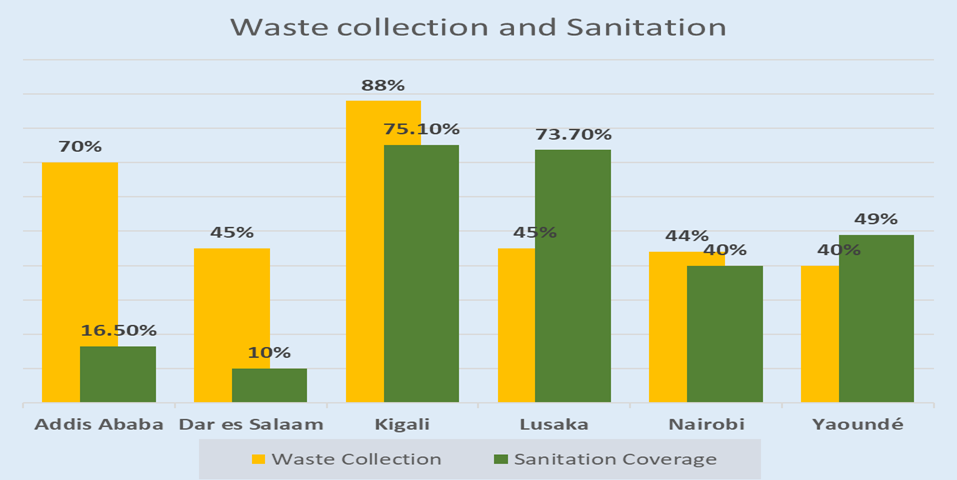
The scope of services varies widely depending on the city surveyed. See the diagram below.
These gaps demonstrate that strong local public finances are more than just fiscal reform. This is a development necessity to enable cities to effectively deliver essential services.
African financial realities
The global financial system is struggling to meet Africa’s urban development needs. Rising public debt, climate risks and stagnant official development aid mean cities have limited resources. This capacity-building initiative demonstrates that maximizing the region’s economic potential can generate significant domestic revenue. These funds can support infrastructure, climate-resilient projects and SDG implementation.
Local finance as a catalyst for progress
Local governments implement up to 65% of SDG targets around the world. In Africa, this proportion is likely to be even higher due to rapid urban growth. International frameworks, from the Addis Ababa Action Agenda to the Seville Commitments, focus on mobilizing domestic resources, strengthening the capacity of local governments, and leveraging innovative finance such as blended finance and Local Government Development Funds. Effective local finance is central to attracting investment and building resilient urban economies.
Main goals for expanding local finance
Unleash your economic potential: A modern digital financial system covering revenue collection and accounting increases transparency and builds trust with citizens and investors.
Strengthening service delivery and equity: Fiscal autonomy allows cities to increase local revenue, reduce dependence on central transfers, and improve creditworthiness.
Building economic resilience: Cities can attract private investment and deliver sustainable, climate-resilient infrastructure through public-private partnerships.
Innovation in action
Cities covered by the capacity-building initiative are currently piloting a range of smart solutions.
Waste management: Addis Ababa’s Reppie Waste to Energy Plant converts waste into electricity through a public-private partnership.
Water Billing: Mobile and automated billing systems link water and waste charges to improve revenue collection.
Community engagement: Kigali and Lusaka are collaborating with private operators and local businesses to expand service coverage and strengthen revenue streams.
Challenges to overcome
Local government finances in Africa face structural and institutional hurdles. Weak fiscal decentralization, outdated real estate registries, low fees, poor enforcement, and limited digital systems limit cities’ ability to generate revenue. Low credit ratings and shallow capital markets also limit long-term investment. Endemic challenges in cities, such as inadequate meters, fragmented systems, and informal practices, further reduce efficiency.
Policy recommendations
Global level: Prioritize reform of the global financial structure as it is essential to Africa’s development and improving the fiscal health of local governments. These reforms will strengthen institutional frameworks, support more effective debt management at both national and local levels, and help countries mobilize development finance more efficiently and sustainably. This gives municipalities the resources they need to provide essential services and advance inclusive community development. ECA is actively working in this area. For reference, please see the 2024 publication The IMF and the Future of the Global Financial Architecture: A Report of the Africa High-level Working Group on the Global Financial Architecture.
National level: Strengthen fiscal decentralization, provide predictable and flexible financing, create local development funds to finance critical infrastructure, and update the legal framework on borrowing and partnerships. Provide technical support.
Local government level: Modernize revenue collection through digital systems, invest in skilled staff, ensure transparent accounting practices, and develop bankable projects. Equally important is maintaining sound fiscal policy and management at the local level. Weak fiscal discipline in local governments and regions can cause local fiscal crises, which in turn can deepen national fiscal crises and exacerbate sovereign debt vulnerabilities. Experiences such as Argentina’s in the 2000s and current concerns about the scale of local government debt in China exemplify these risks.
Innovative financing: Mobilize local capital using blended finance, municipal bonds, and guarantees. Governments can help with risk mitigation and technical assistance. These tools are most effective within broader financing strategies and in countries with strong fiscal conditions. Strengthening fiscal management, debt sustainability and institutional capacity are essential to enable innovative finance. Recent debt-for-nature exchanges in Cape Verde and the Democratic Republic of Congo (DRC) also show promise for easing debt pressures.
To read more about ECA’s work in innovative finance, the African Economic Report (ERA) 2020 provides an in-depth analysis of innovative financing mechanisms, as well as other ECA companion publications that consider their role in promoting African development.
Successful development efforts have demonstrated the effectiveness of these approaches. Linking waste charges to water charges in Addis Ababa, outsourcing waste collection in Kigali and partnering with local businesses in Lusaka increased service coverage, operational efficiency and revenue generation.
African cities are at the heart of sustainable development. Strengthening municipal finances through better fiscal frameworks, digital systems and transparent governance will unlock the potential of municipalities. Working together, with the support of partners like ECA, national and local governments can mobilize resources, improve services, and create resilient and inclusive urban growth. With the right systems in place, African cities can become engines of sustainable development and achieve the SDGs.
*Ms Atkejersch Persson is Head of Urbanization and Development in ECA’s Gender, Poverty and Social Policy Department.
