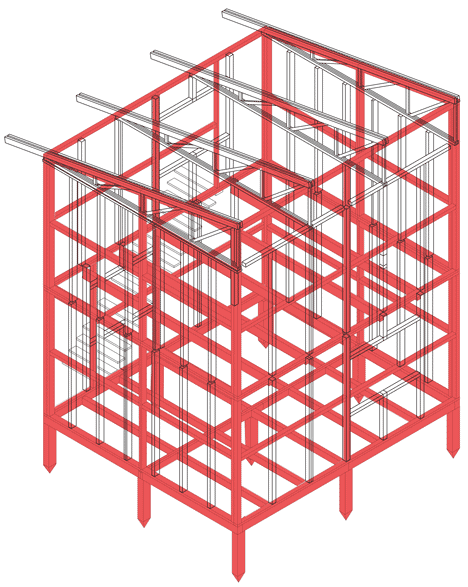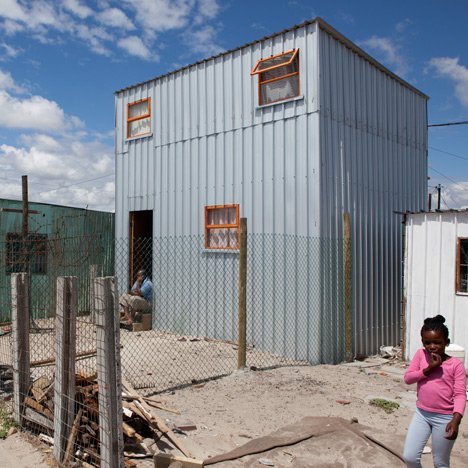
Design Strategy Collective Urban Think Tank designed and built a prototype house as part of an effort to improve housing conditions for slum dwellers in some of the 2,700 informal settlements across South Africa (+ film).
The urban think tank behind the Golden Lion award-winning study of the Torre David vertical slums in Caracas has now teamed up with ETH Zurich to explore ways in which architects can help improve the environment and safety of these slums, home to around 15 percent of the country’s population.
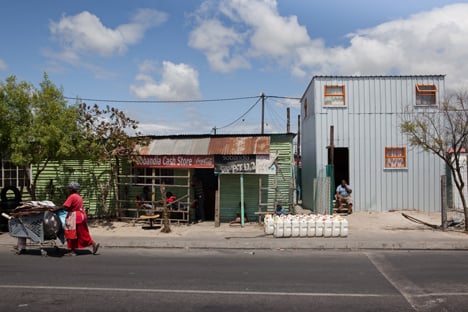
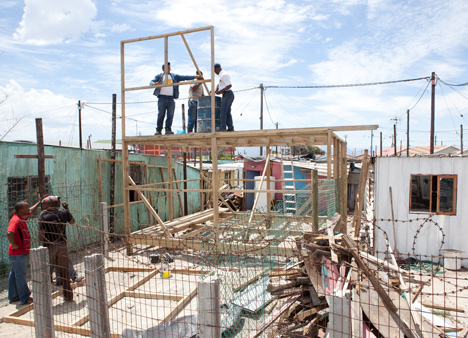
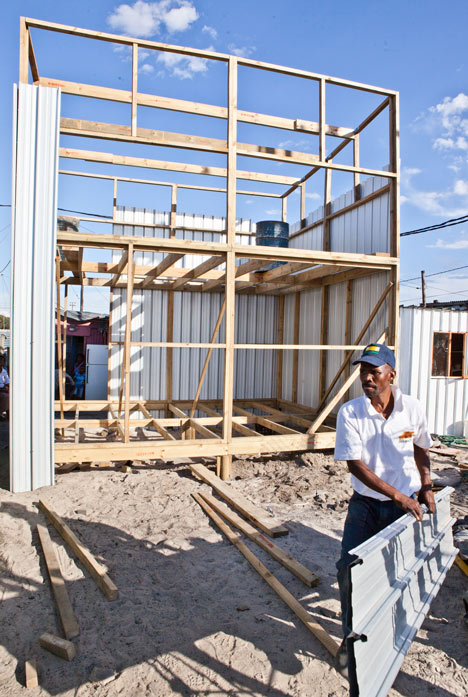
Working under the title ‘Empower Shack’, the team held a design and construction workshop in Khayelitsha, a town in Cape Town, one of South Africa’s largest towns, and developed a low-cost two-storey shack design for local resident Phumezo Chibanto and his family.
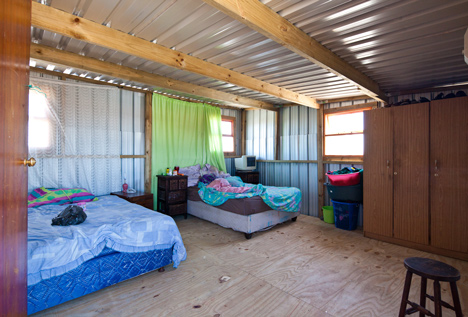
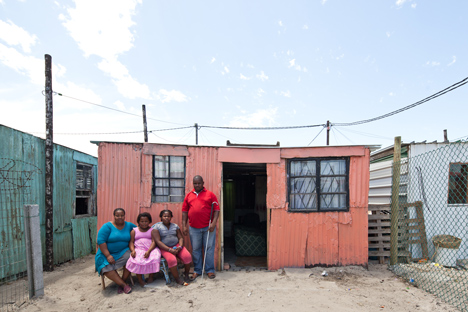
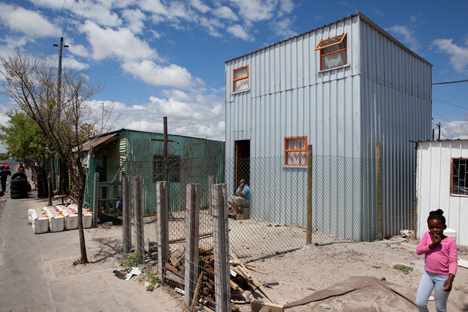
They then worked together to replace Chivant’s existing one-story house with a new two-story building, giving the family a new home that is waterproof and has its own electricity.
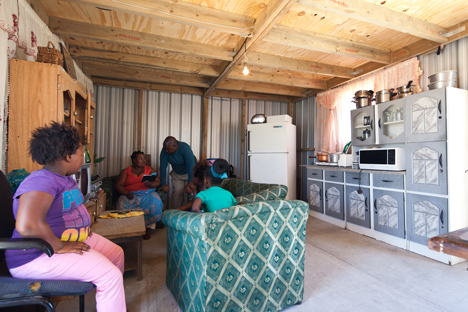
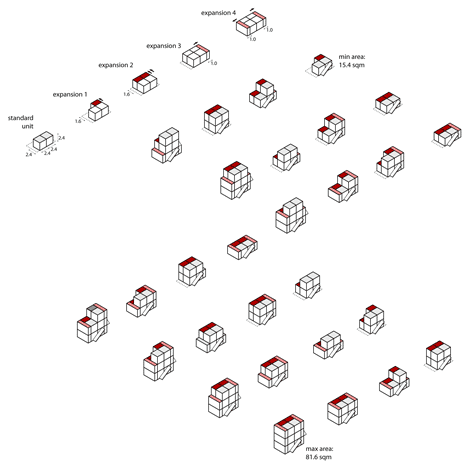
Designers are currently considering different configurations of the prototype that can be adapted to the needs of different occupants and can be extended up to three storeys if needed.
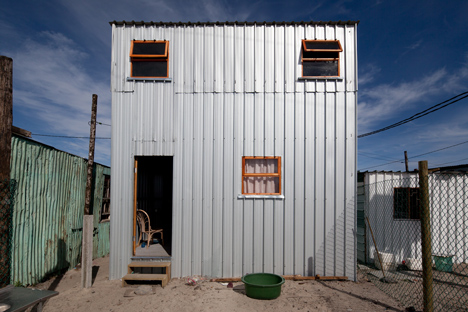
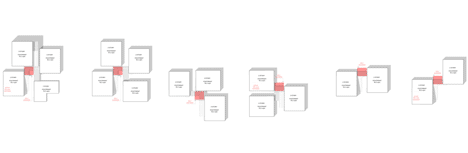
This will be part of a broader strategy to streamline layout across the community, known as blockouts. This includes creating access routes for emergency vehicles and providing basic services such as sanitation and water.
“Our work on the Empower Shack project is not the result of the usual architectural pursuit of a new housing typology,” said Alfredo Brillembourg, co-founder of the Urban Think Tank. “While we are committed to innovation in the design and technology of low-cost housing, we are more interested in the general ‘system’ surrounding housing in South Africa’s informal settlements.”
He continued: “This includes the urban fabric of housing, as well as the infrastructure that enables decent housing, such as electricity and sanitation. The Empower Shack project aims to address these larger challenges, and in doing so we hope to transform not only the architectural landscape of places like Khayelitsha, but also the social, political and economic structures that shape the lives of its residents.”
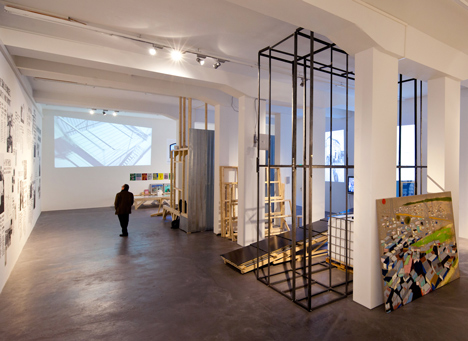
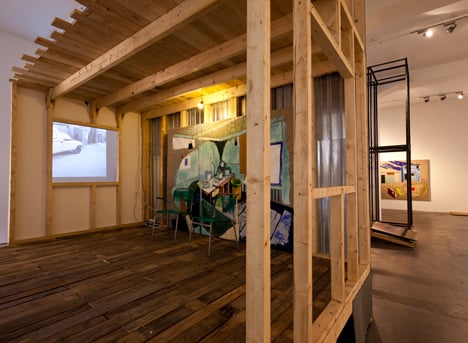
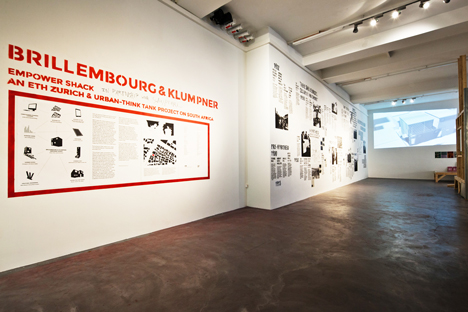
Brillenbourg and his partner Hubert Klumpner are currently presenting the results of their two years of research in an exhibition at Zurich’s Ewa Presenthuber Gallery.
Here is Urban-Think Tank’s description of the project:
Empower Shack
Can art and architecture give voice to the unheard? Empower Shack is a new exhibition supported by Swisspar (Schweiz) AG that showcases the projects of ETH Zurich and the Urban Think Tank on South Africa. In collaboration with Brillembourg & Klumpner Chairs of Architecture and Urban Design, South African NGO Ikayalami (My Home), TransSolar, Brillembourg Ochoa Foundation, Meyer Berger, BLOCK ETH ITA research group, and video company, the Empower Shack team was established as a response to traditional approaches to addressing urban informalization. Urban informality is unsustainable and meeting the immediate needs of the majority of the South is painstakingly slow. The urban poor of Africa.

Rooted in a research, design and build workshop aimed at developing an innovative, replicable, affordable and sustainable hut prototype in Khayelitsha, Cape Town (South Africa’s third largest town), the exhibition uses film, photography, drawings, paintings and large-scale architectural installations to explore the complexity of living conditions in informal settlements and the social role of architects in addressing the economic, environmental and security challenges faced by their residents.
With a population of more than 50 million people and the continent’s largest economy, South Africa is seen as a source of relative stability and prosperity in the region. However, economic disparities remain large. Approximately 1.5 million households (approximately 7.5 million people) live in 2,700 informal settlements scattered across the country, facing a total housing shortage of 2.5 million units.
While the government’s track record in providing housing is commendable, given the scale of demand, informal settlements will remain for some time to come. In response, authorities have gradually begun to shift their focus to gradual upgrading, and in 2010 they committed to improving the quality of life for 400,000 families living in well-located informal settlements by 2014 through improved access to basic services and land tenure.
Alfredo Brillembourg and Hubert Klumpner, together with their research and design team and collaborative partners, are working on an ongoing project to develop and implement design innovations to rapidly and progressively upgrade informal settlements.
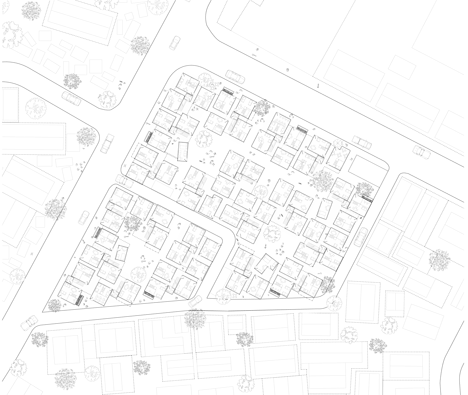
The examples featured in Empower Shack’s exhibit aim to provide immediate strategies for mitigating national crises while being embedded in community-driven processes for resource allocation.
With Empower Shack, Brillembourg and Krampner reinforce their expansive vision for practical and sustainable interventions in informal settlements around the world. They argue that the future of urban development lies in collaboration between architects, artists, private companies, and the world’s slum dwellers.
Brembourg, Klumpner and their team frequently exhibit internationally at venues such as Kassel (2004), MoMA (2010), and the 13th Venice Architecture Biennale, where they won the Golden Lion in 2012. Through artistic and didactic presentations, they challenge fellow architects to discover the potential for innovation and experimentation in the world’s informal settlements, with the goal of making design work for more people. A fair and sustainable future.