


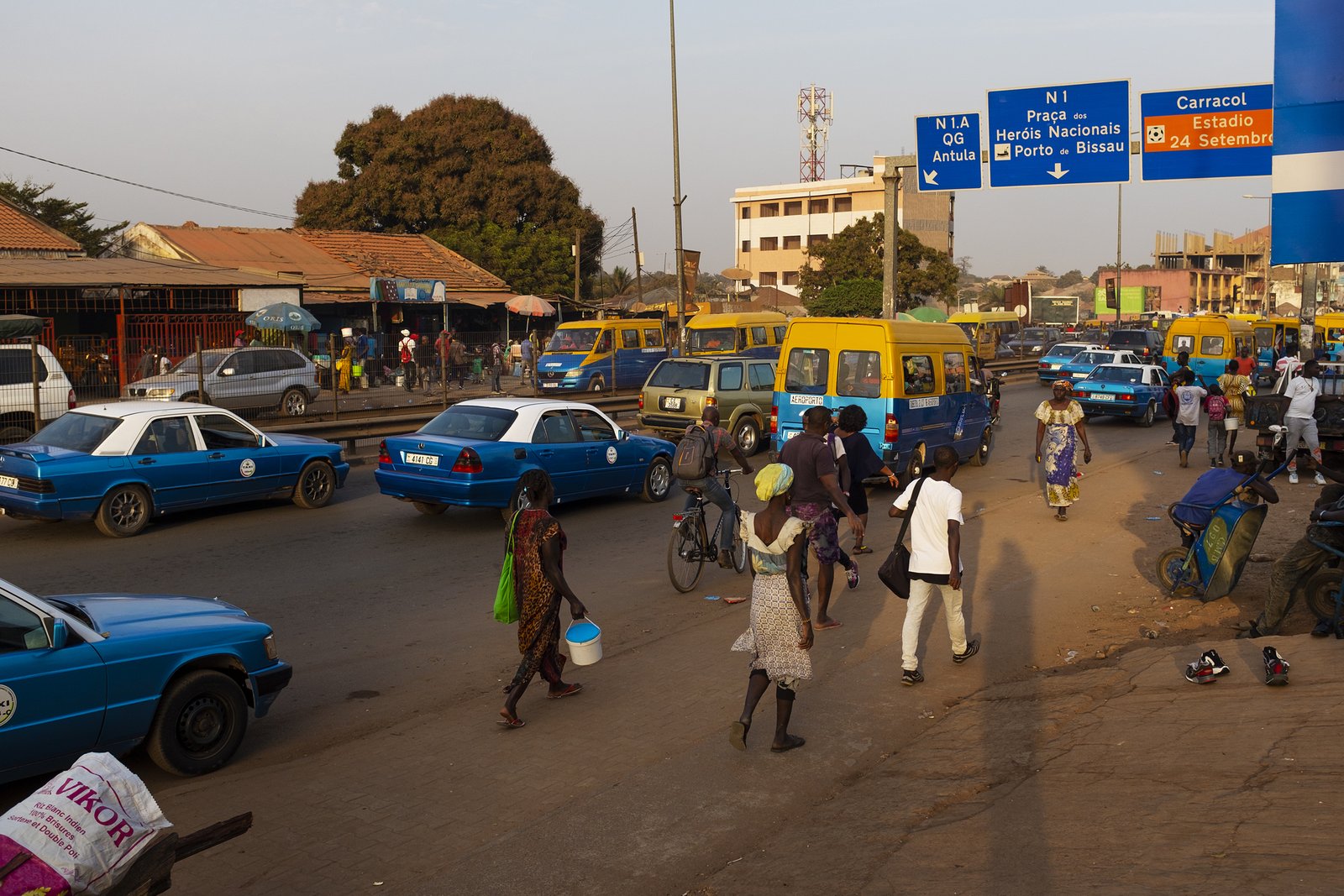
African cities are not welcoming places for pedestrians. However, walking is free, and given the lack of decent public transport, walking is often people’s only mode of transportation. More than 70% of Africa’s approximately 609 million urban population travel by foot every day to various destinations.
As researchers who study urban development, we are always looking for insights that planners and city authorities can use to make cities in Africa and the global south more socially just, sustainable and resilient.
A recent paper reviewed some of Ghana’s urban planning and transport policies and examined the extent to which policy makers and city authorities have planned and implemented interventions that respond to pedestrian needs. We then compared our findings to the walking experiences of residents of two low-income settlements in Accra.
More than three-quarters (75.3%) of the nation’s population walk up to 10 times each day to places such as school, markets and church. Our research shows a similar trend, with more than two-thirds traveling by foot every day.
Although Ghana has several transport and regional development planning policies, our findings suggest that there are serious gaps between policy and reality. These provide insights into why African cities face continued difficulties in linking development efforts to the pressing needs of the urban poor.
Our results show that policy and municipal planning pay little attention to how to make walking a pleasant experience. It was also found that policies and plans were not consistent with residents’ actual walking experiences.
We encourage urban planners to work with residents to come up with solutions to make urban neighborhoods more walkable. An example of this is in Freetown, Sierra Leone. There, development planners, academics, and residents collaborated to create a walking database to inform planned changes to the city.
Walkability in urban transportation policy
Some African cities have included walking strategies in their transport policies.
For example, in Lagos, Nigeria, the Lagos Metropolitan Transportation Authority developed a policy to increase pedestrian traffic by creating a network of safe and comfortable sidewalks, greenways, and other facilities. A similar policy was developed in Addis Ababa, Ethiopia. The aim was to encourage people to walk and improve connections to public transport.
Nairobi, Kenya, is also implementing similar policies to improve the walking environment. We classified all the roads and streets in the city and rated their walkability. In addition, some areas have policies that prioritize pedestrians over private cars and trucks, such as restricting the use of automobiles.
All these policies are laudable. However, putting them into practice is hampered by challenges such as funding, public awareness, and technical capacity.
Against this backdrop, the Accra study analyzed how the provisions of the National Transport Policy and Local Development Plans align with the lived experiences of residents and co-produce knowledge to prevent such challenges.
pedestrians in accra
We selected two study sites, Accra New Town and Dome, located in Ayawaso North and Ga East municipalities, representing urban and suburban areas.
We used in-depth semi-structured interviews to capture the perspectives of representatives who worked in local government and residents of the surveyed communities. Our questions were aimed at understanding the accessibility and safety of the sidewalk and what the experience is like.
Accessibility: Current policy is designed to provide pedestrians with dedicated, safe, reliable and appropriate facilities. However, our research found that pedestrian-friendly infrastructure to ensure access to facilities and services does not exist. Planners alluded to a lack of funding and competing development challenges. Residents said walking was dangerous as they had to compete for space with vendors and drivers.
An interview with one of the participants from Accra New Town revealed that “the current roads in the neighborhood are in poor condition, with many roads lacking sidewalks and pedestrian bridges for people to cross.”
Safety: This research reveals a disconnect between policy goals for walking and local reality. Municipal development plans did not set out viable strategies for dealing with road user conflicts. I heard that there are frequent collisions involving commuters, vendors, and drivers. Reflecting on the safety situation at the dome, one participant said, “When you walk around with your smartphone, if you’re not smart, your phone can be taken away at any time.That’s why it’s so scary…It’s a place where children walk, too, so I wish the local government would put more effort into that area.”
Pedestrians are most at risk. According to data, they account for 39.5% of all road-related fatalities in Ghana.
Pleasure: This has been the least considered in both national-level policies and local government development plans. There was no sign of facilities or infrastructure that would provide amenities or aesthetics to enhance pedestrians’ walking experience. Street trees, benches, trash cans, etc.
In both study areas, there was uncollected garbage on the roads and a foul odor. A resident of Accra New Town said, “We are conducting regular cleaning exercises led by our councilors to keep roads and large gutters clean so that water can flow freely and to reduce smelly and dusty roads.”
Make it easier to walk around town
The deep gulf between policy content and the everyday experience of our research calls for new ways of thinking and acting within the framework of urban transport and development planning.
We suggest that urban planners and policy makers should consider working with citizens to design ways to make walkability easier.
By giving communities the opportunity to engage and share what they know, we can transform African city dwellers from captive pedestrians to pedestrians who enjoy their cities.
Seth Asare OkyereVisiting Assistant Professor, University of Arizona; Daniel OviedoAssistant Professor UCL; Louis Cusi FrimpongLecturer, University of Environment and Sustainable Development; Matthew AbunyevaResearcher, Australian Resilience Implementation Center for Sustainable Communities, charles darwin university; and stephen leonard mensahPostdoctoral Researcher, University of Memphis. María José Nieto-Conbaliza, a postdoctoral fellow in the Bartlett Development Planning Unit at University College London, also contributed to this article.
This article is republished from The Conversation under a Creative Commons license. Read the original article.
Photo: Guinea-Bissau cityscape (Source: © Tiago Lopes Fernandez | Dreamstime)
