


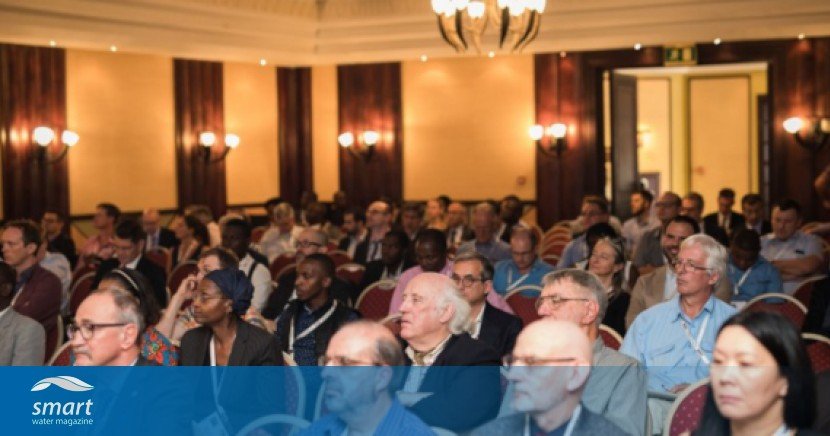
Speaking at the plenary session of the Hydro Africa 2019 conference, Dr Chipanganjara noted the strong linkages between the water, energy and food sectors, noting that underdevelopment of the three sectors is hindering industrialization, economic growth and employment.
“The need for industrialization, economic growth and job creation to accommodate the continent’s growing population cannot be overstated. Water security is critical to all of these processes,” said Dr. Chipanganjara. “Factors such as heterogeneous availability of water resources, lack of policies and laws, lack of skilled personnel to manage projects, lack of water resource management, and inability to develop profitable projects pose threats to water security.”
Dr. Kuiri Chipanganjara, Chairman of GWPSA, cut the ribbon and officially opened the exhibition.
He added that climate change, extreme climate change, especially droughts and floods, also pose many challenges to water security, given that the African continent is still lagging in adapting to and mitigating climate change. He further reiterated the important role of climate-resilient infrastructure, especially multipurpose hydropower schemes, in achieving sustainable development, and emphasized the important role that viable transboundary water schemes play in the process.
The importance of hydropower projects was echoed by Ms. Alison Bartle, Director of Aquamedia International Limited, who in her opening remarks praised the impressive progress the African continent has made in hydropower and multipurpose storage schemes. He highlighted that Africa has at least 30 very large dams under construction in 11 countries.

Alison Bartle, Director of Aquamedia International Limited, giving the opening remarks.
“The continent’s current hydropower capacity is more than 33,000 MW in 45 countries. Once hydropower projects under construction in 33 countries are completed, Africa’s hydropower capacity is expected to increase by at least 75%. Ms Bartle detailed Africa’s hydropower plans and multi-purpose projects, noting progress in the SADC region, but lamented that large parts of Africa’s population do not have access to electricity.” It states that water supplies could decline by an average of 40% by 2030.
The Africa 2029 conference entitled “Water Storage and Hydropower Development for Africa” was held in Windhoek, Namibia from 2 to 4 April 2019. The conference provided a platform for participants to exchange knowledge and experiences, including challenges, solutions and best practices on hydropower and multipurpose projects.
Climate change, extreme climate change, and especially droughts and floods, also pose many challenges to water security.
More than 500 participants from 52 countries also had the opportunity to discuss issues such as project preparation, water resources management, dam safety, environmental and social issues, sustainability of hydropower schemes and multipurpose projects, capacity building, and hydropower generation in synergy with other renewable energies.
The Hydro Africa 2019 conference is the third international conference focused on water storage and renewable energy development in Africa, co-organized by the International Commission on Large Dams (ICOL) and Aqua~Media International – Publisher of Hydropower and Dam Journal. The previous two regional conferences in Africa were held in Addis Ababa, Ethiopia in 2013 (under the auspices of the African Union) and in Marrakech, Morocco in 2017 (under the patronage of the King).
GWP, as a key player in Integrated Water Resources Management (IWRM) and climate change adaptation and mitigation, was invited to chair a session on climate issues and mitigation strategies. Through the World Water, Climate and Development Program (WACDEP), GWP is responding to the challenges of climate change by helping countries integrate water security and climate resilience into development planning processes, build climate resilience, and adapt to new climate regimes through increased investment in water security.
