


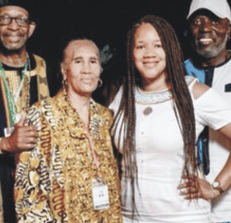
August 2022, groundbreaking
Summit entitled “Advancing Justice”:
“Reparations and Racial Healing”
Co-hosted with the African Union
African Transition Commission (AUC)
Justice Legacy Fund (ATJLF),
African American Institute (AAI), and
World Reparations Circle
Healing (GCRH). Accra Summit I attracted a wide range of people.
Organizations across global Africa,
culminated in the publication of
Accra reparations declaration
and racial healing. A declaration that aims to advance a global agenda for reparations and healing – creating a framework for organizing, engagement and advocacy strategies
We are moving forward. Next week, a follow-up, action-focused summit will bring together influential people from across Africa and the global African diaspora, including representatives from the African Union, to leverage their expertise to help solve those challenges. “What happened to Africa?” Pajon Dudson examines the premise of the conference’s theme.
The Accra Declaration from the first summit in August 2022 emphasized the importance of healing in reparations work, noting that transatlantic trafficking of Africans, enslavement, colonialism, apartheid, and genocide were “direct attacks on the bodies, minds, and spirits of Africans, resulting in severe injuries that have remained unmeasurable and untreated.”
This is why the conference is being reconvened to explore and find ways to address the challenges presented.
The Accra Summit II, themed “Central Healing of Africans and the Global African Diaspora in the 2025 African Union Annual Theme on Reparations”, will be held from 26 to 28 March.
At the Accra Summit, I confirmed that the roots of generations of objectification, commodification and dehumanization of Africans and people of African descent are the root of the socio-economic underdevelopment of the African continent and the entire African diaspora.
that physical, mental, spiritual and cultural trauma continues to be enforced through physical and spiritual fear and violence due to centuries of brutal prejudice against African people;
The International Law Commission has established five conditions for full reparation: cessation, compensation, compensation, satisfaction and rehabilitation.
“Europe’s justification for the enslavement of Africans and the colonization of Africa was, in part, the creation of a false hierarchy of human values,” the report said.
In this hierarchical structure, Europeans were at the top of the human family, and Africans were at the bottom, and in some cases, did not belong to the human family at all. The transatlantic trafficking of Africans marked the entire continent and its people as inferior. This was meant to last forever, not just during the period of enslavement.
This racist classification system is at the heart of Crime on Crime.
The humanity of Africans as enshrined in the 2001 Durban Declaration and Plan of Action (DDPA). ”
Navigating these themes will be explored in depth at the next Accra Summit II. The premise is that “as a result of centuries of global anti-Black movements, Africans have been miseducated about Africa, our history, and ourselves.”
Among the topics to be explored, therefore, are “the role of Africans in the enslavement of other Africans, the nature of enslavement across the continent, the nature of European enslavement, and how the legacies of both manifest across global Africa today.”
All of these questions will guide the conversation at our next conference and explore how, as Africans, we can build a more accurate historical narrative that centers Africa. How can we construct a history of human enslavement as a way to illuminate our understanding of the trafficking and enslavement of Africans across the Atlantic?
Was human enslavement part of the African experience before transatlantic trafficking? What role did Africans play in the enslavement of other Africans during transatlantic trafficking? What was the nature of African slavery? And what was the essence of slavery in Europe and the Americas?
“Black people are at the bottom of every good list and at the top of every bad list.” This is the result of the lie of white supremacy and black inferiority, and has created a hierarchy of human values that places Europeans and whites at the top. And Africans and blacks are at the bottom. In terms of living conditions, the effects can be seen in every country. It is an important rationale for the transatlantic trafficking and enslavement of Africans.
Do you have so many questions? When and how did these human values take root? What role did religion play? How did hierarchies evolve?
What are the effects today? What psychological, emotional, and physical effects does transatlantic human trafficking have on people across Africa and on the descendants of those removed from Africa and scattered around the world today?
How can global Africa heal? Overall, Africans suffer from intergenerational trauma, and this is evidenced in different ways in different parts of global Africa.
What is incurable behavior? What is a healing action? What are the promising strategies for individual and collective healing? How do we create African-centered principles, processes, and practices to institutionalize the transformation of healed to unhealed behaviors?
In movements for reparations, what role can cultural renaissance and cultural reconnection between Africans and the global African diaspora play in promoting healing?
How can decolonizing our organizations and structures help facilitate healing? How can we build durable and sustainable infrastructure for the healing of Africans and the global African diaspora? What are the next steps?

The event will be attended by representatives from the United Nations, African think tanks, pan-African media and academia, youth and older people, artists, philanthropic leaders, civil society, government officials, and grassroots organizations.
With selected sessions shared online at Accra Summit II, it is hoped that centering healing within the framework of dialogue will inspire, inform and provide a model for the development of vibrant grassroots healing efforts across Africa and in the African diaspora worldwide during the African Union-designated Year of Reparations.

The focus on ‘healing’ builds on the success of Accra Summit I and ultimately aims to measure and treat the deep wounds inflicted on the bodies, minds and spirits of African people. It must be noted that “healing” is a prerequisite for the success of reparations movements and collective efforts aimed at advancing the cause of African peoples.

Post views: 759
Learn more from Business & Financial Times
Subscribe to receive the latest posts by email.
