


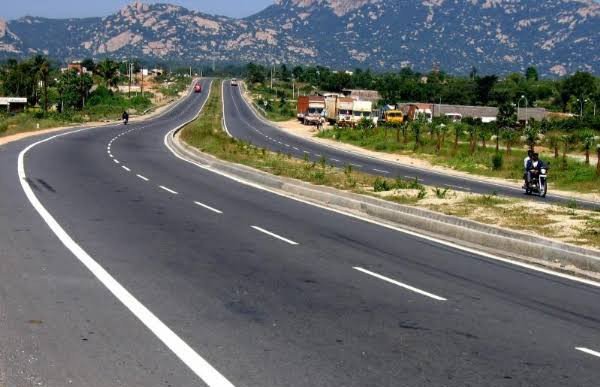
The Lagos-Abidjan Expressway is a proposed cross-border coastal transport corridor spanning approximately 1,028 kilometers spanning five West African countries: Ivory Coast, Ghana, Togo, Benin and Nigeria, with the aim of promoting regional trade and economic integration.
The corridor is part of a wider coastal route linking Dakar and Lagos and is integrated into the Trans-African highway network, strengthening connectivity between the continents. It connects some of Africa’s largest and most economically active cities and covers the majority of West Africa’s population.
The expressway is expected to cost $15.6 billion and is planned as a six-lane, dual-carriage road, with construction expected to begin in 2026 and be completed around 2030, according to reports.
Also read: Lagos-Abidjan expressway project enters operational phase
Spanning five countries, the highway will cover 144 km in Ivory Coast, 90 km in Togo, 127 km in Benin, 520 km in Ghana and 82 km in Nigeria.
The Economic Community of West African States (ECOWAS) and the African Development Bank Group recently held a two-day orientation and information session for the 10-member Board of Directors of the Abidjan-Lagos Corridor Management Authority (ALCoMA).
The program reviewed results from technical studies of the planned highways, along with presentations on trade and transport facilitation, spatial development initiatives, value chains, logistics systems, and anchor economic hub projects. The African Development Bank Group mobilized approximately €600 million for the project, with additional support from the Japan International Cooperation Agency (JICA) and the Global Environment Facility, contributing €103 million and €6.4 million respectively.
The World Bank Group played a catalytic role in the project’s preparation, providing $25 million in technical assistance and early-stage support to move the activity toward feasibility and completion.
Also read: Lagos-Abidjan Corridor Boosts West African Trade
Facilitating trade and connectivity
In a bid to boost trade under the African Continental Free Trade Area (AfCFTA), the Lagos-Abidjan Expressway is designed to accelerate the movement of goods and people, reduce logistics costs and foster industrial growth, with an estimated 70 million people expected to directly benefit from the improved transport corridor.
The corridor aims to foster economic growth in the region by connecting major ports, supporting industrial hubs in agriculture, mining and manufacturing, and helping local businesses more competitively access large-scale markets.
“Highways are more than just a means of transportation; they are meant to stimulate industrialization and foster economic hubs across regions,” said Mike Salaou, Director of Infrastructure and Urban Development at AfDB.
Salaou said the project will foster inclusive growth by linking urban centers, secondary cities and rural areas in the five countries.


