


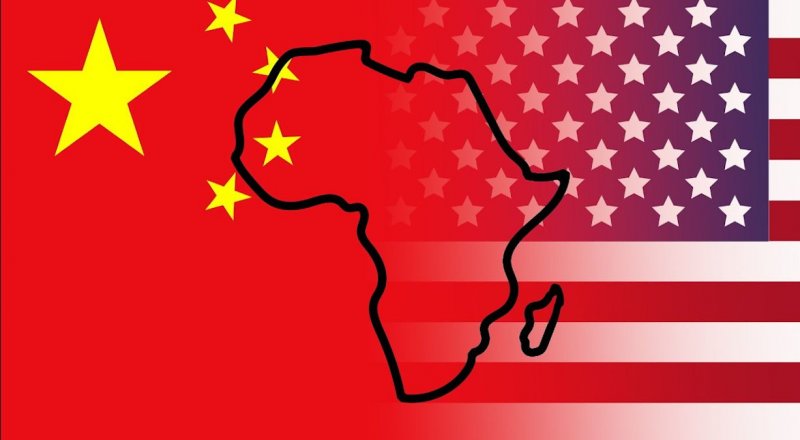
When discussing China’s global rise, attention usually shifts to the United States, Europe, Asia, or the South China Sea. But the quiet center of China’s geopolitical gravity lies far to the south. Africa, long considered a peripheral region, is transforming into one of the major arenas of the 21st century. And China is already there, not with an army, but with capital, railways, universities, ports, communications networks, and long-term funding. Rather than conquering territory, the Chinese government is occupying niches, infrastructure, and minds.
Why is China spending hundreds of billions of dollars on projects from Egypt to South Africa? Because Africa is no longer just a region of interest, but a strategic key to the future world order for Beijing.
China is the world’s second largest economy and the planet’s largest industrial center. But industrial hubs cannot function in a vacuum. We need fuels, metals, rare earth elements, oil, food, new markets, and a young workforce. Africa offers all these at once. For Beijing, the continent is a long-term strategic asset with an importance comparable to that of the Middle East or Central Asia.
Let’s start with resources. China consumes more than half of the world’s industrial metals. Electric vehicles, solar panels, and modern battery systems require cobalt, lithium, manganese, and graphite. More than 60-70% of the world’s cobalt reserves are located in the Democratic Republic of Congo, where Chinese companies already control much of the mining. For Beijing, this is a technological security issue, and China’s green energy transition could face risks if these resources come under the control of competitors. Therefore, China is working proactively to secure its future supply chain before it becomes a bottleneck.
Guinea has one of the world’s largest bauxite resources, Zambia supplies copper, Tanzania helium and Namibia uranium. Oil and gas comes from Nigeria, Angola and Algeria. China is building not only mines and drilling platforms, but also ports and roads connecting ports to China. Infrastructure is the artery for the flow of resources to Asia’s industrial hubs.
However, resources are only the first layer. The second is the market. Africa is the youngest and fastest growing continent on Earth. The United Nations predicts that by 2050, a quarter of humanity will live there. They are the future consumers of China’s smartphones, electric buses, fintech services, construction materials, solar power plants, and even cultural content. China is not waiting for this market to form; it is forming it now.
In Africa, Tecno, Infinix, and Huawei dominate smartphone sales. The Nairobi-Mombasa Standard Gauge Railway in Kenya was built by the China Road and Bridge Corporation. The Lamu port project, a power plant in Ethiopia, a bridge in Mozambique, and the Lagos-Ibadan expressway in Nigeria were all funded or built by the Chinese government. But infrastructure is more than just concrete. It creates habits. If our railways, networks and service systems are made in China, their maintenance and upgrades will also remain made in China. This is a long-term effect, measured in generations rather than months.
Another pillar is soft power. China offers scholarships to African students, funds higher education partnerships, opens Confucius Institutes, and invites future politicians, engineers, and military personnel to study in Beijing. Upon their return, many of them join state institutions, private companies, and government organizations to maintain ties with China. Influence grows quietly through education and people-to-people exchanges, not through grandiose ideological slogans.
Diplomatically, Africa is even more important. The continent has 54 sovereign states, which means 54 votes at the United Nations, climate summits and multilateral forums. On issues such as Taiwan, human rights resolutions, sanctions, and trade negotiations, China enjoys reliable support from countries that have benefited from its infrastructure, loans, and development projects. Instead of exporting ideology, China exports concrete, fiber optic cables, and power grids. This pragmatic model is attractive to African governments seeking unconditional development.
The Belt and Road Initiative gives Africa a strategic role in China’s new global connectivity initiative. Djibouti’s port and free trade zone, China’s first overseas military installation, the Addis Ababa-Djibouti Railway, the modernization of Namibia’s Walvis Bay, and the coastal infrastructure of Kenya and Tanzania are all nodes in the new transport map. Beijing is linking East and Central Africa to the Indian Ocean, creating a corridor for oil, minerals and manufactured goods. The person who built the hallway controls its movement.
Source: www.scmp.com
Critics call this expansion “debt trap diplomacy” and argue that loans can lead to political dependence. The case of Sri Lanka is frequently cited by Western analysts. However, the situation in Africa is more nuanced. Infrastructure financing may be large, but many African countries are enjoying things they have lacked for decades, including highways, ports, power plants and digital networks. The problem is long-term. Who will repair and modernize these systems in 15 or 20 years? Most likely, Chinese companies will once again become more dependent on them, structurally rather than coercively.
Another important layer is technology. China is not just selling smartphones, it is building Africa’s digital backbone. Huawei and ZTE are among the major suppliers of 3G, 4G, and now 5G networks. Chinese solutions are increasingly being used in surveillance cameras, smart city systems, and cybersecurity infrastructure. Africa will become a huge testing ground, where China can train AI models, collect data, and refine digital technologies at scale. Soft power merges with digital power.
Geopolitically, Beijing behaves differently from past Western colonial powers. China does not redraw borders or impose ideological models. Instead, it is building a system of dependencies rooted in infrastructure, including ports that rely on Chinese cranes, power grids that rely on Chinese engineers, and railways that use Chinese locomotives and spare parts. Even if the political leadership changes, the physical architecture remains Chinese by design.
Why would Africa accept this? First, there are limited alternatives. Western funds often involve lengthy bureaucratic processes and political situations. China will arrive faster and build faster. In Europe, a railway might take 15 years to plan, but in Beijing it will be completed in four years. Second, many African leaders prefer partners who do not interfere in domestic politics. China’s message is simple: “We build. You choose how to govern.” In a world of conditional aid and political pressure, this is appealing.
But addiction comes with risks. When a country becomes a major builder, financier, and technology provider, its influence becomes enormous. But geopolitics is not about fairness, it’s about profit. And China is skillfully playing its own interests.
Strategically, Africa is not only a supply country, a future consumer market, but also a demographic driver of the 21st century. By 2100, the population could exceed 4 billion. This continent will shape the world’s labor markets, food systems, migration flows, and industrial demand. Whoever integrates with Africa today will influence the structure of the world tomorrow. The Chinese government understands this and is investing now.
Simply put, Africa represents the world that China wants to help shape: one that is young, rich in resources, connected to the rest of the world through corridors built by the Chinese government, and less dependent on Western institutions. If Eurasia is China’s industrial core, Africa is China’s second lungs, providing growth, markets, and international legitimacy.
Through infrastructure, education, markets, ports, digital networks, rare metals, and oil fields, China is not buying territory, it is buying time and influence. And this investment is for the long term. It’s not a year. Not 10 years. It’s a generation.
Africa gives China something that cannot be bought on the stock exchange: future power. And power in the 21st century is measured not by armies, but by who builds the paths for others to walk.
News.AZ
