


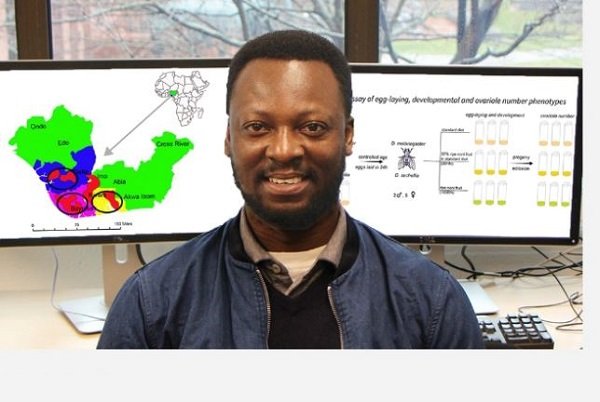
•Nigerian OAU and Harvard University scientist Olakunle Jayesimi talks about building Africa’s future through AI and metabolomics
• Says the most sustainable way to transform Africa is to train young people in high-end technologies such as artificial intelligence (AI) and metabolomics
From the ancient land of Ijebu to the hallowed halls of Harvard University, Dr. Olakunle Jayesimi’s journey is more than just a personal success story. It is a blueprint for the continent’s scientific revolution, a testament to the ingenuity of Nigerians, and a beacon of hope for the future of science and education on the continent. A proud alumnus of Obafemi Awolowo University (OAU), Dr. Jaiyesimi is currently a postdoctoral fellow at Harvard University’s Extaver Institute, using cutting-edge ‘metabolomics’. This field is transformative enough to answer many of biology’s unanswered questions.
Through two initiatives, STEMxAfrica and its grassroots arm, STEMxClubs, Dr. Jaiyesimi is on a mission to demonstrate that Africa is the future center of education and STEM innovation, among others.
Why metabolomics is important
At the core of Jaiyesimi’s expertise is metabolomics, a field he describes as biology’s ultimate precision tool.
“While genomics tells us what could happen based on our DNA, metabolomics reveals what’s actually going on in our bodies right now. If our genes tell us what we can become, metabolomics tells us what our bodies and environment have become,” explains Dr. Jayeshmi.
By studying the unique chemical fingerprints associated with and left behind by cellular processes, his research addresses important United Nations Sustainable Development Goals (SDGs). With support from the Motsepe Presidential Acceleration Fund, he is using fruit flies as biosensors to detect the metabolic effects of oil pollution in the Niger Delta. It is an early warning system for human health and environmental safety (SDG 3: Health and Well-being).
In May 2024, he traveled to Ogoniland in Port Harcourt, Nigeria, to study fruit flies, soil, plants, and water in the area using metabolomics. Metabolomics is a tool he loves and one he believes can be used to improve our understanding of the world around us.
Empowering 54 countries: STEMx Africa roadmap
Dr. Jaiyesimi believes that the most sustainable way to transform Africa is to train young people in high-end technologies such as artificial intelligence (AI) and metabolomics, rather than relying solely on political change.
Along with other African metabolomics experts based around the world, he founded Metabolomics Africa, a professional association of African metabolomics experts dedicated to increasing access to metabolomics on the African continent (https://metabolomicsafrica.org).
Like a chess master, Tunde Onakoya is teaching children from slums to become chess masters, and Jaiyesimi is using STEMxAfrica to train secondary school students across Africa in metabolism and AI, with the aim of positioning them as future African scientists who will leverage AI and metabolomics in solving Africa and the world’s challenges.
STEMxAfrica was launched in Nigeria on September 25 and has already begun its journey to the continent in partnership with relevant authorities including the Nigeria Teachers Organization, the Senior Special Assistant on Intergovernmental Affairs of Nigeria, Dr. Olanrewaju Smart, the National Association of Private School Managers, the Model Islamic Schools Association, the Islamic Secondary School Managers Association and the formidable Educational Development Association.
It will expand to Ghana in November 2025, and is already scheduled to launch in Tanzania in February 2026.
The goal, he says, is to replicate the tes model in all 54 African countries.
“These students are not just learning theory; they are being trained to become members of Metabolomics Africa, a professional association that provides local solutions for food security (SDG 2: Zero Hunger) and personalized and predictive medicine,” Jayesimi said.
