


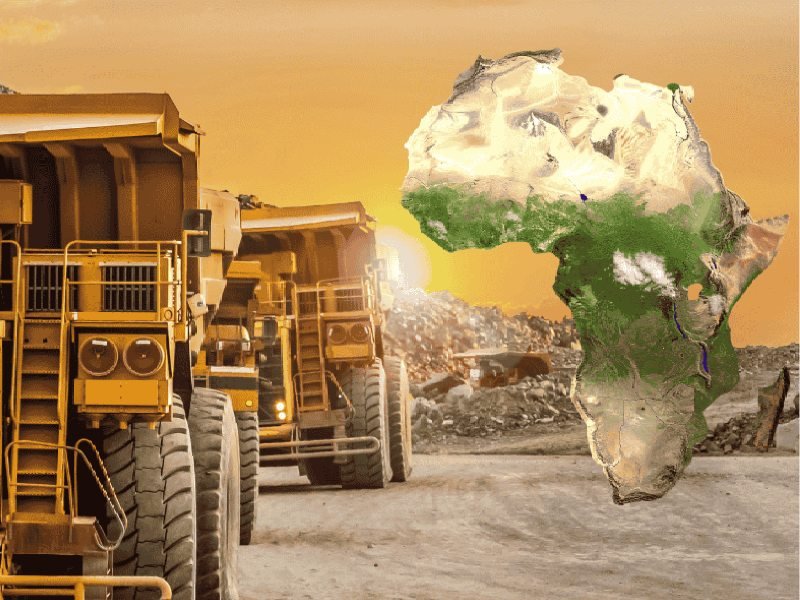
African mining ministers are pushing for coordinated resource production to protect value.
Benefits and domestic industrialization are now central policy priorities in Africa
Regional integration and diversified investment partnerships are essential to reduce vulnerability to global volatility.
Africa holds 30% of the world’s critical minerals, putting the continent at the center of an escalating geopolitical competition between China, the United States, Europe and other world powers seeking to secure supply chains.
African mining ministers outlined in Cape Town last week how the conflict is reshaping national mining strategies and how governments intend to convert global demand into long-term economic leverage.
Market impact: Increasing competition strengthens Africa’s bargaining power
South Africa’s Minerals and Petroleum Resources Minister Gwede Mantashe has warned of rising geopolitical tensions as major economies compete for access to minerals.
“Geopolitical tensions are rising due to increased competition. We will protect our resources,” Mantashe said.
He stressed the need for African producers to adjust production volumes and engage strategically with neighboring countries to avoid oversupplying markets and weakening commodity pricing power.
For major producers such as South Africa, the world’s largest producer of platinum group metals and chromium, managing supply discipline and trade partnerships is central to maintaining global influence.
Meanwhile, Louis Watum Kabamba, Minister of Mines of the Democratic Republic of the Congo, identified global competition as a strategic opportunity.
The Democratic Republic of the Congo, which has an estimated $24 trillion in untapped mineral resources and is already the world’s largest cobalt producer and Africa’s leading copper producer, is using competition to negotiate infrastructure investments and industrial development.
In late 2025, the DRC partnered with the United States to leverage U.S. investment and technical expertise to boost mineral production, develop local mineral beneficiation infrastructure, and expand mineral exports through enhanced trade ties with the United States.
“In our agreement with the United States, we are negotiating from a position of strength,” Kabamba said, referring to a continuing framework with global partners. “It’s not about supplying raw materials, it’s about building value.”
Zambia’s Mines Minister Paul Kabuswe echoed the move to aggressive negotiations as the country aims to produce 3.1 million tonnes of copper per year by 2031.
“Our focus is on what is in Zambia’s interest at the negotiating table. What is important is a win-win outcome,” Kabuswe said.
Investment challenges: unstable trade regimes and policy fragmentation
Ministers acknowledged that the unpredictable global customs regime and changing geopolitical alliances pose risks to African exporters.
“We have an unpredictable tariff regime,” Mantashe said, stressing the need to diversify trading partners to reduce the impact of unilateral policy changes.
Beyond global instability, internal fragmentation remains a structural challenge.
Emmanuel Alma Kofi Buah, Ghana’s Minister of Lands and Natural Resources, said isolated legal frameworks and uncoordinated national interests weaken Africa’s collective bargaining power.
“African integration is not just political, it is also a strategic economic vision,” Bua said, urging harmonization through frameworks such as the African Mining Vision and regional mining laws.
Mitigation strategies: benefits, regional corridors, and cross-border industrialization
A consistent theme among ministers was the need to move from extractive-led growth to value-added industrialization.
Namibia’s Deputy Minister of Industry, Mines and Energy, Gaudencia Krone, said the benefits were not an aspirational goal but a national strategic priority.
“As demand increases, Namibia wants to position itself not just as a supplier of raw materials, but as a strategic partner for global investors,” Krone said.
Nigeria’s Minister of Solid Minerals Development, Henry Arake, has called for the development of cross-border industrial corridors funded at the regional level.
“We don’t want corridors to export raw materials. We want factories across borders to create jobs and common value,” Arake said.
Guinea’s Environment Minister Jami Diallo added that mixed public-private capital structures are central to implementing the country’s long-term diversification strategy, such as the Simandou 2040 economic growth plan.
Strategic shift: from resource provider to industrial power
Through discussions, ministers suggested a concerted change in stance. Africa will no longer position itself as a mere supplier of raw materials, but as an emerging industrial partner seeking infrastructure, manufacturing capacity and greater value retention.
They argued that global competition for critical minerals is impactful, but only if managed through coordinated policies, diverse partnerships, and disciplined market strategies.
