


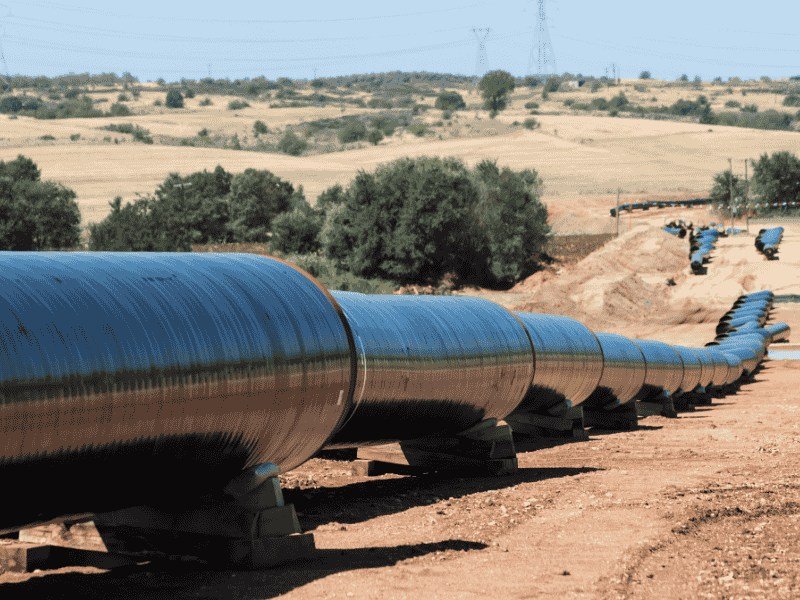
In February, the Zambian Cabinet approved two new cross-border pipelines to be developed as public-private partnerships (PPPs): the Tanzania-Zambia Multi-Product Pipeline (TZMPP) and the Namibia-Zambia Refined Petroleum and Natural Gas Pipeline (NZPGP). This move advances Zambia’s transition to a multi-corridor supply model, reducing dependence on a single import route.
Tanzania pipeline builds on TAZAMA legacy
TZMPP will run parallel to the existing 1,710km TAZAMA pipeline from Dar es Salaam to Ndola. TAZAMA has been jointly owned by Zambia and Tanzania since 1968 and currently transports approximately 800,000 tonnes of diesel annually. The new pipeline will transport multiple finished products, including gasoline, jet fuel and kerosene, with an annual production capacity of 7 million tons.
Zambia’s fuel consumption is projected to reach 3.7 million tonnes per year by 2030. TAZAMA’s open access policy, launched in April 2025, has already reduced pump prices by about 33% by allowing multiple oil marketing companies to compete for pipeline capacity. A feasibility study conducted in 2023 estimated the project cost at nearly $2 billion.
Namibia Link aims to revitalize local industry
The NZPGP will link the Atlantic port of Walvis Bay with Lusaka, transporting both refined petroleum products and natural gas. The gas component is targeted for gas-to-power applications in Zambia and is expected to have a production capacity of 350 million cubic feet per day.
Pipelines move forward as Namibia moves towards first oil. TotalEnergies aims to make a final investment decision on the Venus field in the first half of 2026, with first production expected in 2029-2030. Gulp’s Mopane field, with an estimated recoverable resource of up to 1.1 billion barrels, will enter a three-well evaluation campaign in 2026 under the management of TotalEnergies.
Access to Namibia’s burgeoning oil and gas market will provide future energy security for Zambia’s expanding copper mining sector and will also be enhanced by a major upgrade to the country’s electricity transmission system.
Is regional infrastructure the key to Africa’s energy independence?
The pipeline approval comes as a wave of regional infrastructure projects nears a key milestone. Tanzania’s East African Crude Oil Pipeline (EACOP) is targeted to reach 79% completion in December 2025, with first oil exports in October 2026. Tanzania also broke ground on a $273 million fuel storage expansion at Dar es Salaam port in March, adding 36% to oil receiving capacity and reducing vessel wait times from 22 days to seven days. The country’s $42 billion LNG project, backed by 57 trillion cubic feet of reserves, aims to conclude a host government agreement by mid-2026.
The Lobito Corridor, which connects the DRC and Zambia’s Copperbelt to Angola’s Lobito Port, has attracted more than $6 billion in global investment, and Zambia’s greenfield rail segment is scheduled to break ground in early 2026.
Investment in pipelines, railways and ports is now concentrated in southern and eastern Africa, creating the physical infrastructure that will enable energy independence. For both landlocked producing countries and transit economies, connectivity has emerged as a prerequisite for reliable supply.
