


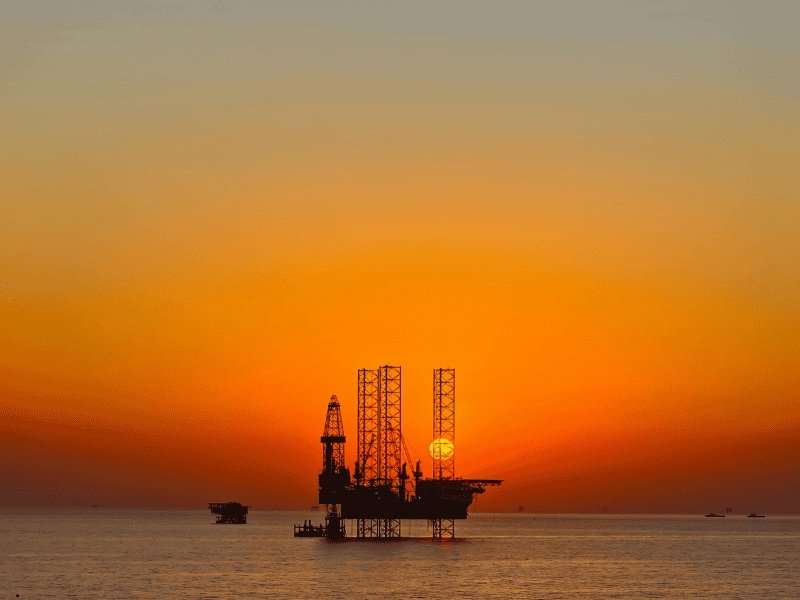
The acquisition by the State Oil Company of the Republic of Azerbaijan (SOCAR) to acquire a 10% interest in the Balein oil and gas field off the coast of Ivory Coast is the state oil company’s third international upstream investment within two years and its first on the African continent. The transaction follows the acquisition of ADNOC’s SARB and a 3% participating interest in the UAE’s Umm Lulu offshore field in May 2024, and a 10% interest in Israel’s Tamar gas field in June 2025. SOCAR’s decision to invest in emerging gas fields like Balein highlights the growing attractiveness of Africa’s upstream assets for sovereign energy companies outside the continent.
The Baleine deal will reduce Eni’s operating stake from 47.25% to 37.25%, but the Italian giant will remain as project operator. Vitol holds 30% and Ivory Coast’s state oil company Petrosi holds 22.75%. The transaction is the first asset transaction resulting from three Memorandums of Understanding (MOU) signed in 2024 by Eni and SOCAR, covering energy security, upstream exploration and production, greenhouse gas emissions reduction, and biofuel production.
SOCAR concluded more than 25 international agreements in 2024 alone, when Azerbaijan hosted COP29, with an estimated total value of more than $8 billion. The Baleine acquisition fits a consistent pattern across these deals. In other words, SOCAR takes a minority position in the production of assets operated by established international oil companies (IOCs) and gains exposure to production revenues and reserves while leaving technical and regulatory responsibilities to the operators.
A field built for growth
Barein is Ivory Coast’s largest hydrocarbon discovery, confirmed in 2021, 20 years after the country’s last commercial offshore discovery. Eni used a step-by-step development approach to move from discovery to first commercialization in less than two years. Phase 1 saw the deployment of a refurbished floating production, storage and offloading (FPSO) unit rated at 15,000 barrels per day. The second phase, which came online in late 2024, increased total production to more than 62,000 barrels per day of oil and 75 million cubic feet of gas. Phase 3, currently under study, is targeting 150,000 barrels of oil per day and 200 million cubic feet of gas per day.
SOCAR will enter Balein at a time when the field is in production and operational risks have been mitigated, but before Phase 3 production increases are realized. The company’s acquisitions in the UAE and Israel followed the same structure.
Africa’s first net-zero upstream project
Baleine is Africa’s only upstream development with Scope 1 and 2 net zero designation. Eni and Petroci have achieved their status through gas access, reduced flaring, and domestic offset programs such as a cookstove distribution initiative that has reached more than 600,000 people and a conservation program that covers 14 inland forest reserves. For investors subject to increasingly stringent ESG reporting requirements, the sector’s emissions profile is a key consideration, along with production credentials.
All relevant gas from Phase 1 onwards will be delivered onshore via a dedicated pipeline feeding directly into the Ivorian national grid. This domestic supply capability supports the Ivorian government’s active role in the project and gives Petrosi’s 22.75% stake operational importance beyond its revenue benefits. Direct government involvement in how oil fields are operated and production allocated is a stabilizing factor for co-investors and reduces regulatory and political risk over the life of the asset.
Eni’s model and its implications for upstream finance in Africa
Eni’s approach to Baleine follows a dual exploration model, under which the company sells a minority stake in producing assets and recycles capital while retaining operating rights. Vitol acquired 30% in September 2025 and SOCAR four months later. Both transactions reduced Eni’s exposure to a single asset while bringing in partners with separate commercial interests. As a commodity trading company, Vitol enjoys distribution proximity. SOCAR is acquiring production-weighted reserves outside the Caspian Sea as turmoil in the Middle East increases claims to upstream assets in Africa.
In March 2026, a SOCAR delegation, including President Lovshan Najaf, met with Petrosi management, the Ivorian Ministry of Mines, Petroleum and Energy, and the Directorate General of Hydrocarbons in Abidjan to discuss development stages, production logistics and commercial arrangements. Completion of the transaction remains subject to regulatory approvals.
