


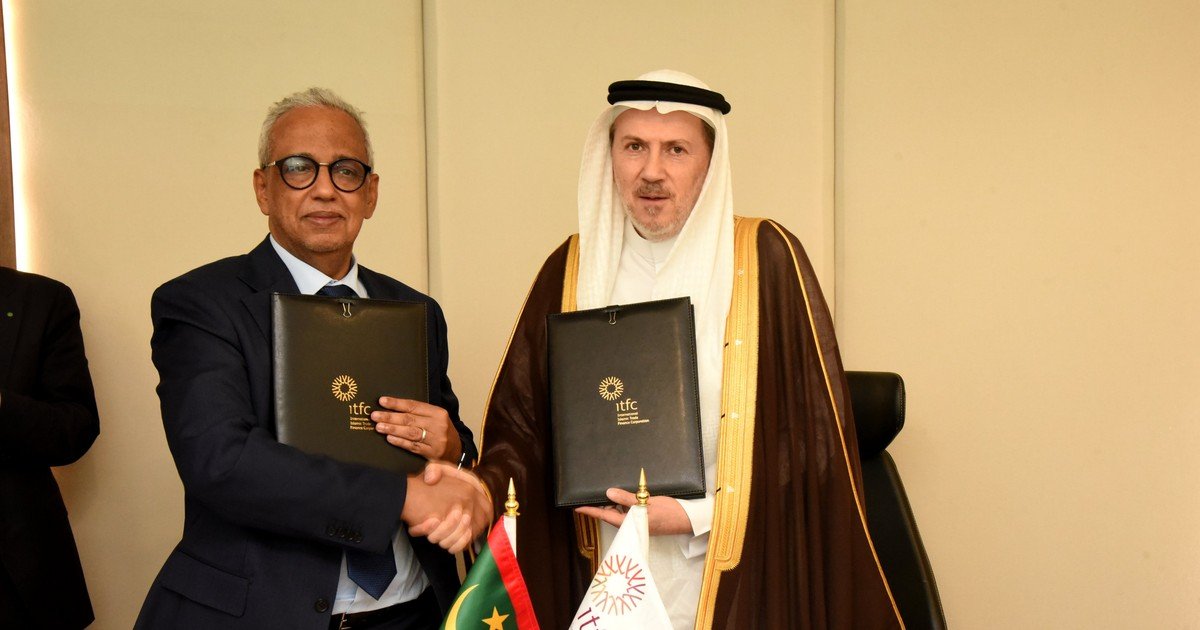
The agreement, which covers the period 2026 to 2030, was signed in Jeddah during the official visit of Mauritania’s Economic Development Minister Abdallah O. Suleiman O. Sheikh Sidia. ITFC is the trade finance arm of the Islamic Development Banks (IsDB) Group.
The framework aims to mobilize finance and technical assistance to support Mauritania’s economic development priorities, particularly energy supply, banking sector liquidity, and private sector growth.
Under the agreement, ITFC will help finance the import of energy goods, a key priority for Mauritania as it strives to stabilize energy supplies and support industrial activity.
The facility will also provide trade finance instruments and letter of credit confirmation lines to local banks, enabling them to support companies involved in import and export activities.
Small and medium-sized enterprises (SMEs) are also expected to benefit from the program through expanded access to financing to support business growth and strengthen domestic value chains.
Technical assistance initiatives complement the funding package. These programs will focus on increasing agricultural productivity and strengthening trade facilitation in strategic areas of Mauritania’s economy.
Mauritania has maintained a partnership with ITFC since it began operations in 2008. The country’s cumulative loan approvals during this period exceeded $1.2 billion, supporting sectors such as energy, agriculture, and trade infrastructure.
Officials say the new framework will build on that relationship while increasing financial support for Mauritania’s trade ecosystem.
Abdallah O. Suleiman O. Sheikh Sidia, Mauritania’s Minister of Economic Development, said: “This agreement will help mobilize critical financial resources to support national development priorities and promote sustainable economic growth.”
ITFC CEO Adeeb Yusuf Al Ahma said the agreement reflects the organization’s broader goal of using trade finance to promote economic development in member countries.
“This agreement reflects ITFC’s continued commitment to supporting member countries through trade-led development,” he said.
Promoting trade and investment
Trade finance systems are often used in emerging and frontier economies to enhance the ability of companies to participate in global trade by securing liquidity for exports and imports.
For Mauritania, a resource-rich West African country whose economy is heavily dependent on primary products such as iron ore, gold and fishing, improved access to trade finance could help expand commercial activities and diversify the economy.
The agreement also strengthens cooperation between Mauritania and institutions within the Islamic Development Bank Group that finance development projects in member countries.
The framework is expected to support Mauritania’s efforts to expand regional trade and improve economic resilience over the next five years by strengthening financing capacity and improving companies’ access to trade instruments.
