


More private companies in South Africa are now generating their own electricity, but some are choosing to buy power from suppliers to take advantage of cheaper rates and green electronics, signaling a shift beyond the widespread use of solar and backup power.
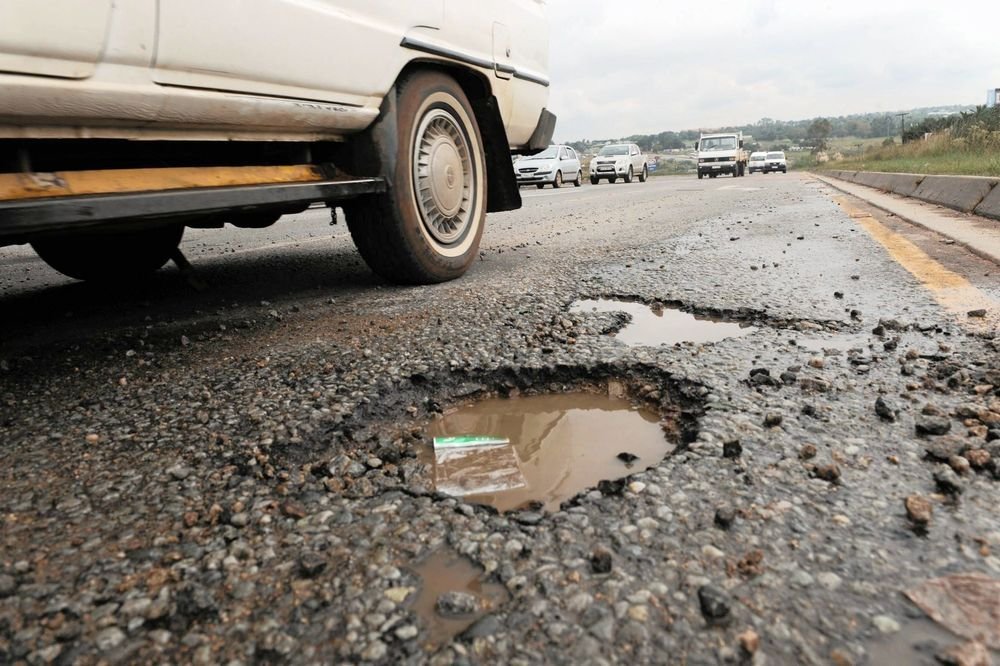
This ultimately reduces dependence on national resources as the private sector innovates and adapts to overcome infrastructure bottlenecks such as load shedding, load shedding, poorly maintained roads and water supply issues.
Business Unity South Africa (BUSA) economic policy director Lunga Malloy said other important factors besides load shedding were the affordability and cleanliness of electricity.
“Private sector power purchase agreements are on the rise, with many companies choosing to purchase power from traders to take advantage of cheaper rates and green electronics.
“Another trend is that more companies are generating their own electricity. ERA s2 reform (the Electricity Regulatory Reform Act of 2024) made this possible by removing licensing requirements and allowing companies to generate electricity by simply registering with NERSA,” Malloy said.
He added that research conducted by BUSA, part of Business for South Africa (B4SA), shows that without load reductions, transport and logistics remain the main constraint to meaningful and sustainable economic growth.
Malloy said BUSA assesses private sector resilience using a combination of policy impact tracking, sectoral investment flows and direct feedback through member forums.
“One of the most tangible indicators is the growth in private capital investment in clean energy, logistics reform, and infrastructure resilience. Although BUSA does not collect company-level data, we have seen significant progress in the logistics and renewable energy sectors.”
“For example, railway companies are opening new lines under a reformed regulatory framework, and clean energy companies are using mixed finance models to scale up their operations. These are not isolated cases. They reflect changes in the way companies are structurally adapting to South Africa’s operating environment,” he said.
He added that BUSA envisions South Africa’s private sector leading the way in building a more inclusive, adaptive and competitive economy.
“Moving from ‘reacting’ to ‘guiding’ requires three key ingredients: policy coherence and implementation coherence, scalable access to finance, particularly in climate change adaptation and infrastructure, and collaborative institutions that unite governments, businesses and civil society around common economic goals.”
“We are focused on strengthening the enabling conditions for businesses large and small to drive sustainable development and job creation,” Malloy said.
He added that BUSA recognizes that small and medium-sized enterprises (SMMEs) face some of the most serious challenges in today’s economy.
“We advocate for inclusive procurement and transformation-led infrastructure reforms to open up market access for small businesses, enterprise development incentives to help small businesses invest in energy resilience and productivity improvements, and capacity building and knowledge transfer delivered through partnerships with sector bodies and public bodies.”
“We will continue to push for reforms to ensure that small and medium-sized enterprises are not only protected but also empowered as contributors to the nation’s economic recovery,” he said.
Malloy said some practices, such as joint working groups that align business and government on implementing reforms, show strong potential for broader replication and have proven effective in areas such as energy and freight logistics. The financial and risk-sharing models used by clean energy companies provide templates that can be replicated in areas such as water infrastructure and low-carbon transportation. Innovation partnerships between corporations, SMEs, and research institutions are helping to bridge the gap between high-level policy and on-the-ground impact.
He added that BUSA is working to codify and disseminate these practices through sector councils and advocacy platforms.
He said BUSA’s key policy recommendations focus on delivering certainty, freeing up capital and strengthening implementation capacity.
These include:
Streamline permitting processes and reduce delays for infrastructure and energy projects. Expanding well-designed public-private partnerships, particularly in transport, water and digital infrastructure. Ensure regulatory consistency, especially in areas undergoing reform, such as logistics and energy. Expand investment incentives that reward innovation, localization, and transformation. He said a predictable and well-executed policy environment is essential to attracting the long-term investment needed to foster growth and employment.
Malloy said that since May 2023, B4SA, through the National Logistics Crisis Committee (NLCC), has been actively working with government agencies and state-owned enterprises (SOCs) to stabilize and improve Transnet’s performance (rails, terminals/ports) and drive structural reforms.
“The basic principles of this dual approach are encapsulated in the Freight Logistics Roadmap and Private Sector Participation Framework, approved by Cabinet in December 2023. Structural reform efforts are focused on introducing third-party private rail operators and promoting private sector investment in rail and port infrastructure through private sector participation (PSP),” Malloy explained.
On addressing challenges through private sector efforts, he said the main private sector efforts lie in the value of B4SA’s partnership with government institutions through the NLCC.
This engagement mechanism also enables deep and transparent analysis of the challenges facing rail, ports and road transport.
Malloy emphasized that leveraging performance analysis across all major corridors (coal, ore, manganese, chrome, containers) enables B4SA and its customers to contribute to the development of solutions through action labs and deep dives, with each solution having clear roles and responsibilities.
“The scope of private sector support for the railways includes: Security deployment (personnel and drones), primarily on coal lines and ore corridors. Mutual Cooperation Agreements (MCAs) to enable the private sector to procure emergency spares and equipment to address operational challenges.
“We will provide planning expertise and skills to partner with Transnet in scheduling ‘maintenance outages’. We will develop joint funding and cooperation policies to enable customer financial support to facilitate critical Transnet maintenance programmes. Supporting critical corridor restoration plans and schedules,” Malloy said.
Additionally, as evidence of the strength of the partnership, Transnet has authorized the deployment of certain skilled and experienced professionals to B4SA to provide support to the freight rail, port terminal, engineering and procurement sectors, he said.
“In the ports/terminals, significant work has been undertaken between B4SA and Transnet Port Terminals (TPT) and the support has been well received. The private work is centered around supporting world-class operational processes, workshop programs, coordination between customers and TPT executives, and equipment support at the Ports of Durban and Cape Town,” Malloy added.
Efficient Group Chief Economist Dawee Ludt said if a country fails, the private sector has no choice but to invest in alternative infrastructure.
“So South Africa is short on savings and investment, but officially we are seeing investments in, for example, solar panels. These are investments that should not have been made because the state was supposed to provide this kind of thing. So the cost to the South African economy because of this is significant,” said Ruudt.
He added that the private sector is actually doing a pretty good job, and has recently been involved with state-run organizations such as Eskom and Transnet.
Ruudt said the most vulnerable sectors are those directly dependent on the state, such as manufacturing, agriculture and mining, because these sectors depend on electricity and railways. He added that they have overcome many of these issues in recent months and years.
He said his estimates for economic growth forecasts for this year, next year and the year after are actually quite weak.
“So my growth forecast is generally less than 1%, because of the destructive nature of economic policies by states and governments, and of course the destructiveness of previous policies and the inefficiency of states, incompetence and corruption, etc.,” Ruudt said.
Professor William Gumede, a governance expert at Wits University, said failing states and infrastructure was undermining economic growth, development and even entrepreneurship, as the lack of rule of law made it difficult to set up businesses.
Gumede said businesses cannot trust the police and must hire private public services such as private security.
“Due to state failure, the police are powerless. So doing business in state failure is even more costly, and even engaging with the state is more expensive, because many companies have to bribe people for basic documents and so on. And on the other hand, the cost of doing business also increases,” he said.
Mr Gumede highlighted that many policies and regulations in South Africa are against the growth of businesses.
(email protected)
