


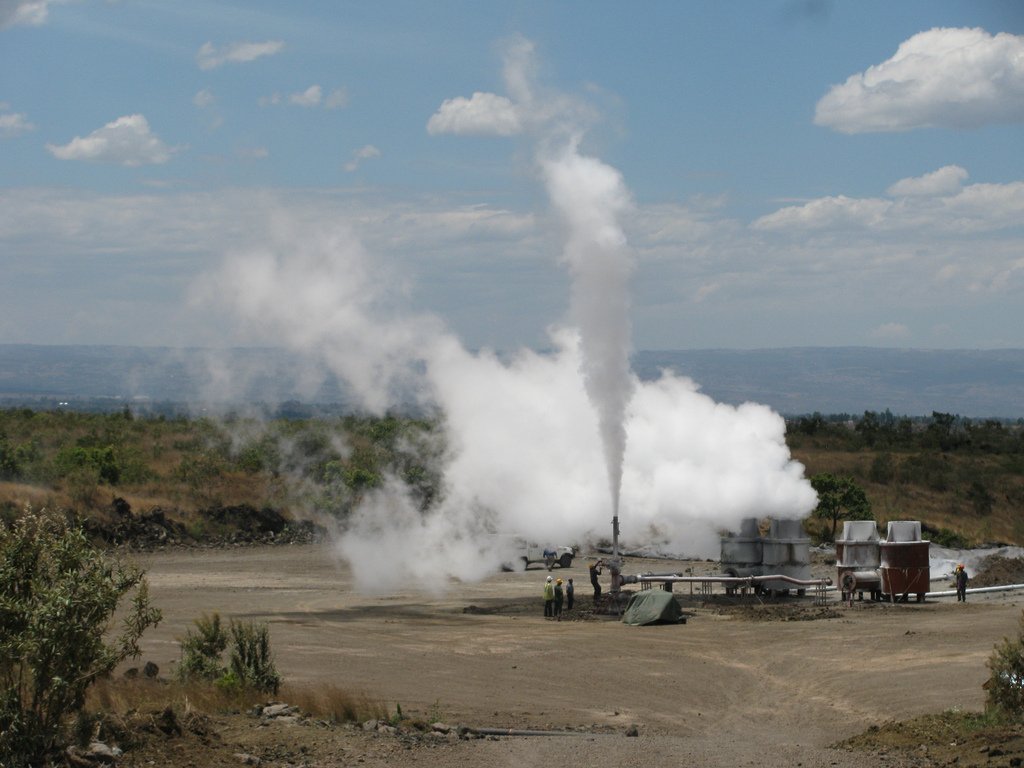
A $16.5 million loan has been approved to strengthen baseload power and support Kenya’s transition to clean energy. The project will complete the first phase of the Menengai geothermal field with an installed capacity of 105 MW. The power plant is expected to deliver low-cost electricity and significant climate benefits for 25 years.
The African Development Bank Group has approved a $16.5 million loan to support the development of the 35MW Olpower TwentyTwo geothermal power plant in Kenya. Approved in November, the project is a flagship renewable energy investment that will strengthen Kenya’s baseload power generation capacity and accelerate the country’s clean energy transition.
The power plant is being developed by OrPower Twenty Two Limited, an independent power producer operating in the Menengai geothermal field north of Nakuru town, about 180 kilometers north-west of Nairobi. This will be the third geothermal power plant in the Menengai field and will complement the operational 35MW Sosian Menengai power plant and the 35MW Globerek Menengai project currently under construction with separate bank financing.
Once completed, the three power plants will realize the full potential of the 105 MW phase of the Menengai geothermal field. The field itself was developed through an earlier loan of $145 million provided by the African Development Bank to the geothermal developer.
The Geothermal Development Company, a government-owned organization, is responsible for drilling, production, and supplying steam to power plants. Kenya Power and Lighting Company, also state-owned, will be the sole offtaker under a 25-year power purchase agreement.
In addition to increasing installed capacity, the project is expected to provide affordable and reliable baseload power to the national grid with one of the lowest tariffs in the country. Once fully operational, the plant will generate approximately 301 gigawatt-hours of clean energy per year, improving grid stability, diversifying the energy mix, and reducing reliance on expensive diesel-based power generation.
The project will also provide significant climate benefits, with an estimated 1.9 million tonnes of greenhouse gas emissions avoided over the life of the 25-year power purchase agreement.
Wale Shonibare, Director of Energy Finance Solutions, Policy and Regulation at the African Development Bank, said the project demonstrates the value of public-private cooperation in geothermal development. He pointed out that government-led resource development enables private investment in power generation, allowing geothermal developers to secure stable revenues from steam sales while the private sector produces electricity efficiently.
Qi Jingwen, director of OrPower Twenty Two Limited, said the company is honored to build the Menengai geothermal power plant using the next generation geothermal technology developed independently. He added that support from international financial institutions will enable deeper participation in green energy development across Africa.
The project supports the World Bank’s energy priorities and is consistent with Kenya’s broader development agenda under Pillar 1 of the Mission 300 Energy Compact. This will contribute to the country’s goal of increasing geothermal power generation capacity from 940 MW to 1,824 MW by 2030 and support the goal of achieving 100% clean energy through private sector investment.
The African Development Bank loan is expected to be complemented by additional financing from the International Finance Corporation, bringing total project debt to $64.4 million out of an estimated total project cost of $91.9 million.
Author: Brian Groenendaal
