


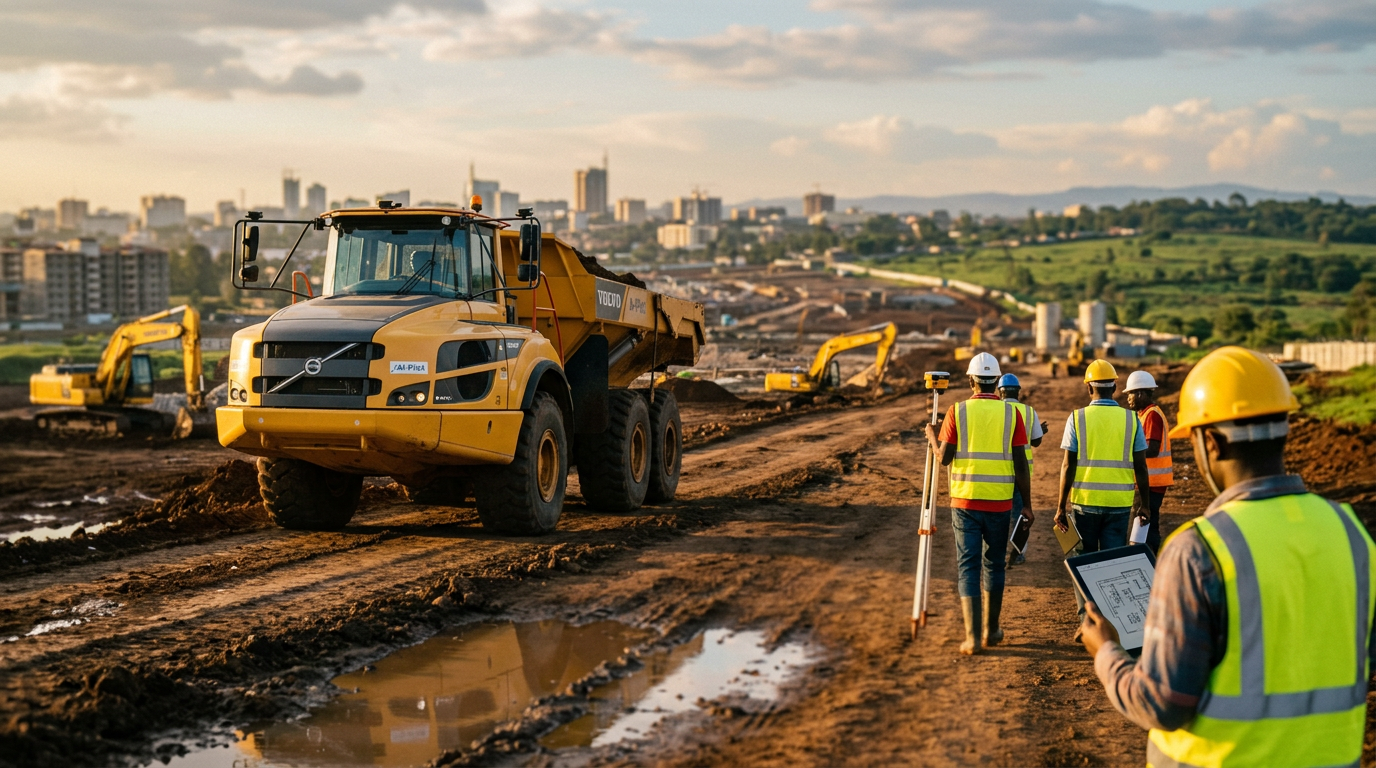
As the global construction industry gathers for CONEXPO 2026, the spotlight shifts from raw horsepower to the quiet intelligence of AI, signaling a transformative era for infrastructure projects across East Africa.
The ferocious roar of diesel engines, once the universal soundtrack of construction sites, is increasingly being augmented by the noise of data processors and autonomous navigation systems. At CONEXPO 2026, the industry won’t just be showing off big cranes and high-speed excavators. It reveals a structural shift towards autonomy and artificial intelligence. For a country like Kenya, which is currently in a race to build thousands of affordable homes and expand its highway network, this technological leap presents both a huge opportunity and a challenge.
“So what?” This global trend is immediate and tangible. Project delays and budget overruns have historically plagued large-scale infrastructure in Kenya. AI-enabled logistics, predictive maintenance and autonomous heavy equipment could theoretically shave years off major project schedules and billions of shillings in construction costs. However, adopting these technologies requires a workforce that is currently ill-equipped to handle the digital backbone of modern civil engineering.
Nairobi’s autonomous frontier
With mixed-use developments in the Nairobi suburbs, demands for precision are higher than ever. Global manufacturers are now focusing on equipment with semi-autonomous capabilities, machines that can assess sites with millimeter-level accuracy with minimal human intervention. The image of a robotic bulldozer may seem far removed from the local scene on Mombasa Road, but pressure to introduce such efficiencies is growing. As construction companies compete in international tenders, digital twin and AI-managed supply chain integration will be the difference between winning the contract and being left behind.
For the Kenyan construction industry, this means:
Increased efficiency: Automated grading systems increase productivity by up to 30%, leading to savings of millions of KES per project. Sustainability goals: Smart machines optimize fuel consumption and directly support Kenya’s green energy transition goals. Enhanced safety: AI monitoring systems detect on-site risks in real-time and reduce workplace accidents in sectors that currently face high occupational hazards.
Walking the tightrope between regulations and skills
The transition is not without friction. Kenya faces a major skills gap. As machines become increasingly dependent on software, traditional blue-collar construction workers, the backbone of Kenya’s economy, are at risk of being displaced unless a major upskilling effort is launched. It’s no longer enough to know how to operate a hydraulic excavator. Operators need to understand digital interfaces, sensor diagnostics, and remote fleet management.
There is also the issue of cost. The initial capital investment for autonomous equipment is high. For local contractors, the cost of one high-tech vehicle can reach hundreds of millions of KES. Without specific financial incentives, such as government-backed equipment leasing schemes or tax breaks for high-tech construction tools, these innovations risk widening the gap between large international conglomerates and local small businesses.
The way forward: building smarter
Integrating AI into construction is not just a “nice to have” luxury. It is the inevitable future of urban development. The urgency of modernizing the construction value chain cannot be overstated as Kenya moves forward with initiatives such as Konza Technopolis and large-scale affordable housing projects. By leveraging the lessons learned and technologies from CONEXPO 2026, Kenya’s construction sector has a unique opportunity to leapfrog traditional development hurdles and build the infrastructure of the future with unprecedented precision. Machines are getting smarter. It’s time for the industry to follow suit.
The future of construction is about more than just being built. It is calculated, connected and increasingly autonomous.
