Close Menu
Xsum NewsXsum News

    Stay Updated.

    Get the latest Africa-focused business & infrastructure news and more directly to your inbox.

    What's Hot

    How South African businesses are tackling infrastructure challenges

    Dangote Cement vows to make Africa self-sufficient in cement production – Nigeria Independent Newspaper

    10 major African cities where rent will be the highest towards the end of the year

    Facebook X (Twitter) Instagram
    Trending
    • How South African businesses are tackling infrastructure challenges
    • Dangote Cement vows to make Africa self-sufficient in cement production – Nigeria Independent Newspaper
    • 10 major African cities where rent will be the highest towards the end of the year
    • Construction of Africa’s largest airport picks up steam
    • Africa to be the most urbanized continent by 2050 needs more investment to prevent slum growth (experts warn)
    • Government failure to improve Egypt’s informal settlements: a brief history
    • Nairobi AI Forum 2026 accelerates AI adoption and impact
    • Mining Review Africa launches French and Portuguese versions to bridge regional digital divide
    X (Twitter) Instagram YouTube LinkedIn TikTok
    Xsum NewsXsum News
    • African Development Bank
    • Africa Finance Corporation
    • All Africa – Construction & Infrastructure
    • Africa Intelligence
    • Construct Africa
    • More
      • Mining Review Africa
      • Energy Capital Power
      • Sustainability & Climate-Resilient Infrastructure
      • Private-Sector Infrastructure Players
      • Urban Development & Housing
    Xsum NewsXsum News
    You are at:Home»Africa Intelligence»New study by TUT and Intel examines workforce training readiness for AI in Africa
    Africa Intelligence

    New study by TUT and Intel examines workforce training readiness for AI in Africa

    Xsum NewsBy Xsum NewsMarch 9, 2026No Comments4 Mins Read0 Views
    Facebook Twitter Pinterest Telegram LinkedIn Tumblr Email Reddit
    Share
    Facebook Twitter LinkedIn Pinterest WhatsApp Email

    pumula mkhize

    Applications of artificial intelligence (AI) are expected to boost the economies of four African countries by $136 billion (R2.3 trillion) by 2030, but a Tshwane University of Technology (TUT) study has found that South Africa is one of the countries least technologically prepared to take advantage of the opportunity.

    AI is expected to boost job opportunities in South Africa, Ghana, Kenya and Nigeria in just six years, but research has found that many sub-Saharan countries are not ready to take advantage of the economic activity brought about by AI adoption.

    The study, conducted by TUT AI Hub in partnership with Intel, was titled “Survey on the AI ​​Status of African Universities” and reviewed the state of AI readiness in African universities. The aim was to better understand the progress countries are making in training their workforces with the skills they need for the future. The study considered academic programs offered in AI, research and development activity, and current funders, among other metrics.

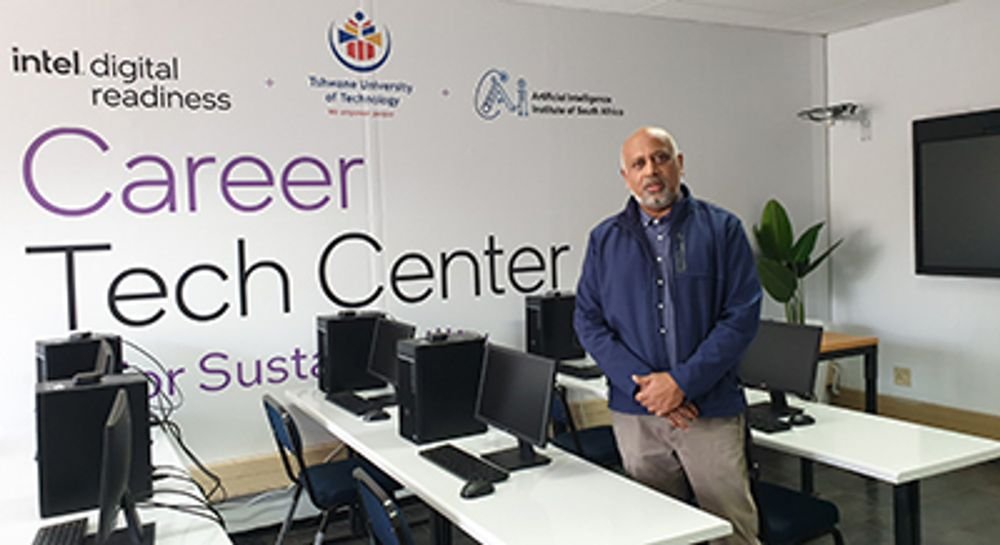
    The study, authored by Professor Anish Kurien, Acting Director of the TUT Hub at the South African Institute of Artificial Intelligence, and Dr. Bienvenu Agbokpont Soglo, Director of Africa Government Affairs at Intel, also provides an indicator of whether the continent is ready to equip its workforce with AI skills.

    TUT’s research builds on research published in 2023 by the Access Partnership and Google, which predicted that AI applications could bring economic benefits worth up to $136 billion to South Africa, Ghana, Kenya and Nigeria.

    Although South Africa is working hard to develop an AI framework, it lags behind countries such as Morocco, Mauritius, Rwanda and Senegal in terms of policy and regulation.

    Mr. Kurien emphasized that a proper human capital development strategy on AI is needed across the nation to drive the country’s economy.

    “So if we say we have an AI workforce, how do we get that workforce? We need to train them and make them workplace-ready. What we did in our research was to gauge how ready Africa is in terms of training, research and development, and investment in AI,” Kurien said.

    He said the study considered four regions of the continent (North, South, East and West) and major countries within each region were selected to examine their preparedness.

    The study found that pure AI programs at the undergraduate level are generally limited across the continent. Most programs in AI are within a computer science environment. The study further found that AI-focused programs are primarily present within master’s level programs across Africa, including South Africa. Therefore, there is an urgent need to create new programs at the undergraduate level to foster AI skill development.

    South Africa now has five public universities offering AI-focused master’s programs, marking a positive step towards AI readiness. In addition, TUT is part of a national effort to create AI capabilities, along with the University of Johannesburg, the Central University of Technology, the Military Academy of Saldanha Bay, and the University of Stellenbosch. These four universities are home to four of AIISA’s current AI hubs, which aim to transform South Africa’s workforce through AI technology.

    AIISA is an initiative of the National Ministry of Communications and Digital Technologies and was established as one of the recommendations of the Presidential Commission Report on the 4IR.

    Explaining the role of the hub, Professor Kurien said South Africa needs to provide training to its workforce if it is to deliver on its national agenda of creating AI capabilities that will drive the economy. He said the government is using AIISA as a national-level mechanism to promote economic development in the AI ​​field.

    He said TUT has a strong interest in exploring AI-based solutions for the agriculture, healthcare, education and motor manufacturing sectors.

    Kurien rejected the myth that AI will increase unemployment.

    “It’s a new era of a new revolution, but there is an opportunity to create more jobs in that regard. Machines need to be created, and for that we need human intervention. And for all that to happen, new categories of jobs will be created for this new era,” he said.

    If you have any comments about this article, please contact us on WhatsApp 071 485 7995.

    Africa examines Intel readiness study training TUT workforce
    Share. Facebook Twitter Pinterest LinkedIn Reddit WhatsApp Telegram Email
    Previous ArticleCONEXPO 2026: AI revolution to reshape construction in Kenya | Streamline feeds
    Next Article BUA boss tasks African leaders with large-scale processing and industrial transformation
    Xsum News
    • Website

    Related Posts

    Dangote Cement vows to make Africa self-sufficient in cement production – Nigeria Independent Newspaper

    April 29, 2026

    Africa to be the most urbanized continent by 2050 needs more investment to prevent slum growth (experts warn)

    April 24, 2026

    Mining Review Africa launches French and Portuguese versions to bridge regional digital divide

    April 17, 2026
    Leave A Reply Cancel Reply

    Top Posts

    African Development Bank Group and Nedbank Group sign multi-billion rand funding partnership to transform housing access and boost African trade

    December 19, 202529 Views

    A United Continent on the Move: Ambassador Kouyateh’s Call for an African Logistics Renaissance

    November 20, 202529 Views

    Eni secures multi-million dollar loan for African FLNG project

    January 26, 202622 Views

    African Development Fund and WHO collaborate to save Sudan’s health system

    November 17, 202522 Views
    Don't Miss
    Private-Sector Infrastructure Players May 2, 2026

    How South African businesses are tackling infrastructure challenges

    More private companies in South Africa are now generating their own electricity, but some are…

    Dangote Cement vows to make Africa self-sufficient in cement production – Nigeria Independent Newspaper

    10 major African cities where rent will be the highest towards the end of the year

    Construction of Africa’s largest airport picks up steam

    Stay In Touch
    • Twitter
    • Instagram
    • YouTube
    • LinkedIn
    • TikTok

    Stay Updated.

    Get the latest Africa-focused business & infrastructure news and more directly to your inbox.

    About Us
    About Us

    Xsum News is Africa’s digital window into the future of business. We tell stories of innovation, enterprise, and investment that are shaping the continent’s economic rise. African Business, Added Up.

    X (Twitter) Instagram YouTube LinkedIn TikTok
    Our Picks

    How South African businesses are tackling infrastructure challenges

    Dangote Cement vows to make Africa self-sufficient in cement production – Nigeria Independent Newspaper

    10 major African cities where rent will be the highest towards the end of the year

    Most Popular

    African Development Bank praises Algeria’s development model, aims to replicate its success across the continent

    Considering the redefinition of African capital by UBA and Arauba

    G20 Energy Investment Forum brings together Africa’s top finance, insurance and technology leaders

    © 2026 Xsum News. All Rights Reserved.
    • 🌍 About Xsum News
    • 📬 Contact us
    • Privacy Policy
    • Terms & Conditions
    • Disclaimer

    Type above and press Enter to search. Press Esc to cancel.