


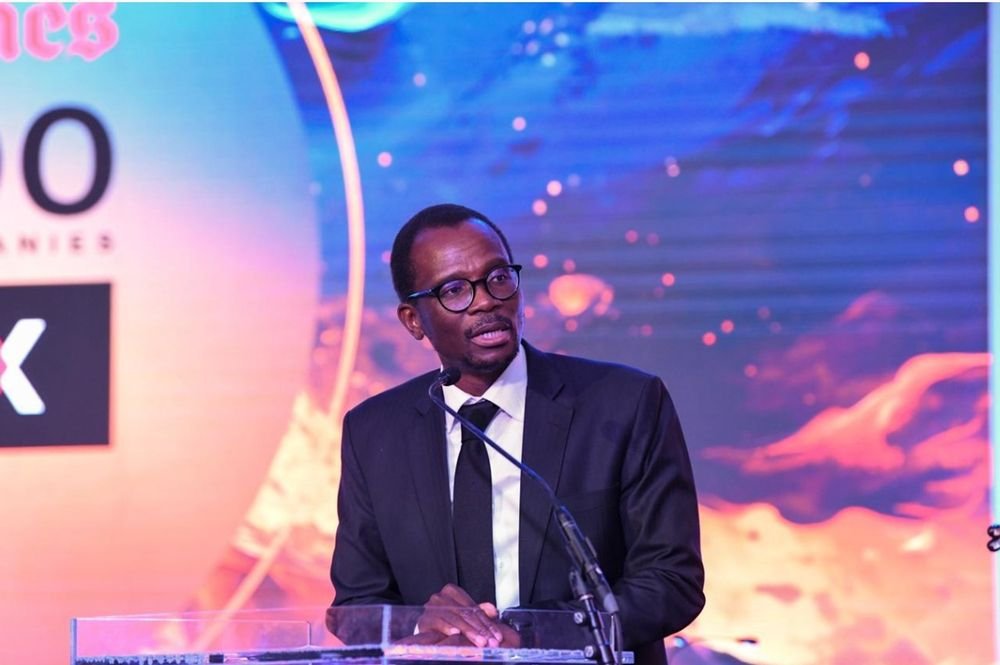
Deputy Finance Minister David Masondo, in partnership with the Public Investment Corporation (PIC), is on a charm offensive to woo industry leaders to support the government’s call for the private sector to fill a huge gap in infrastructure development funding.
Mr Masond, speaking at last night’s Sunday Times Top 100 Companies awards ceremony, said the government needed to accelerate investment in infrastructure vital to economic growth.
Mr Masondo said the private sector needs to play a key role in bridging this gap, given the fiscal constraints facing governments.
“The key question is how do we enable private capital to flow into South Africa’s infrastructure sector? As a government, we will continue to respect the role of fund managers in trying to generate returns for asset owners,” Masondo said.
“We will continue to respect asset owners’ discretion to choose the asset classes that provide them with the best returns. We need more incentives and financial structures that make private sector investment in infrastructure more attractive.”
In the 2024 Medium-Term Budget Policy Statement, Finance Minister Enoch Godongwana announced several initiatives to attract private sector infrastructure investment.
These include the introduction of the revised PPP Regulations, which aim to simplify the rules governing PPPs.
The Treasury is also working with the World Bank to create a Credit Guarantee Vehicle (CGV) with a credit guarantee insurance instrument to systematically de-risk large government infrastructure projects without the need for government guarantees.
This first pilot of the CGV will take place on electricity transmission infrastructure to avoid off-taker risks faced by the private sector when making investments related to the National Transmission Company of South Africa (NTCSA).
Once established and fully understood by the market, we plan to expand CGV to other infrastructure programs such as municipal water and electricity distribution.
“As a government, we intend to issue infrastructure products such as bonds, bilateral transactions and project finance to raise private capital. These products are in the listed and private sectors,” Masondo said.
Mr Masondo, Administrator of the Public Sector Retirement Fund, said the PIC plays a central role in funding South Africa’s infrastructure deployment and its involvement is critical to ensuring the long-term sustainability and success of these infrastructure projects.
PIC operates on a triple bottom line approach that balances social, environmental and financial benefits.
Mr Masondo said PIC was not seen as a ‘rescue’ institution, but was positioned as an anchor investor in South Africa’s infrastructure environment, acting as a catalyst to attract other domestic and international investors as well as institutional investors.
He said the PIC has been instrumental in supporting South Africa’s infrastructure development through significant investments in the debt market, particularly in state-owned enterprises (SOEs).
“These investments are critical in enabling these companies to finance critical infrastructure projects, thereby contributing to the country’s economic growth and development,” Masondo said.
“In addition, PIC has made significant investments in renewable energy projects under South Africa’s Renewable Energy Independent Power Producer Procurement Program (REIPPPP).
“By funding solar, wind and other renewable energy initiatives, PIC is contributing to diversifying South Africa’s energy mix, strengthening energy security and reducing carbon emissions.”
business report
